
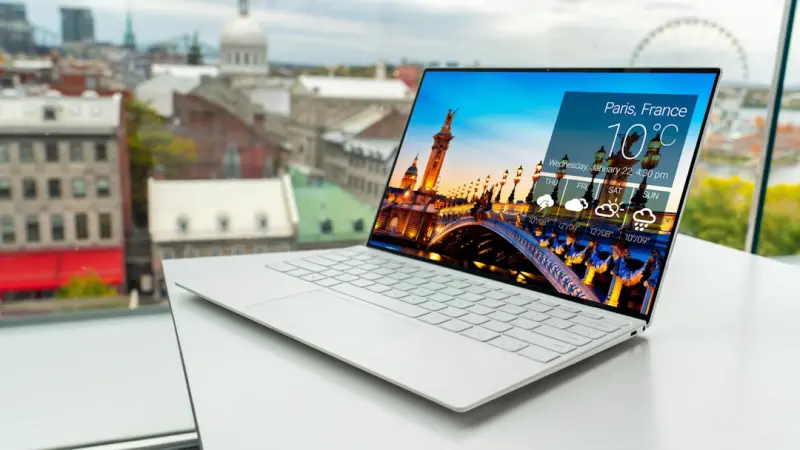
When you fire up a laptop these days, it’s no longer just a box of silicon and a keyboard. It’s becoming a living extension of your brain—a personal AI co‑pilot that anticipates your needs, curates information, and safeguards your data in real time. The shift from “hardware‑first” to “intelligence‑first” is subtle but seismic, and it’s reshaping how professionals across every industry think about their primary workstation.
The Quiet Revolution Inside the Chassis
Historically, laptop upgrades meant a bigger battery, a sharper screen, or a faster processor. Those milestones were tangible, measurable, and easy to market. Today, the most valuable upgrade is invisible: a neural engine that runs locally, a suite of on‑device models that learn from your habits, and a security fabric that adapts to emerging threats without a single click.
Think of it as moving from a static tool to a dynamic partner. While you type a report, the AI suggests relevant data points, flags contradictory statements, and even drafts citations—all while keeping the content encrypted on the device. When you switch to a design app, the same engine re‑optimizes GPU usage to maintain fluid performance, all without draining the battery.
Why On‑Device AI Is a Game‑Changer
The buzz around cloud‑based AI has been loud, but the real advantage for laptops lies in processing data locally. A recent internal discussion highlighted that moving AI workloads to the edge of the network reduces latency dramatically, but the On‑Device AI: Turning Mobile Apps Into Privacy‑First Powerhouses article already proved the principle with smartphones. Laptops, with their larger thermal envelopes and more powerful CPUs, can push that envelope even further.
- Speed. Real‑time language translation, instant code linting, and live data visualizations happen in milliseconds because the data never leaves the laptop.
- Privacy. Sensitive corporate documents stay on the machine, encrypted by a hardware root of trust. This aligns perfectly with modern Zero Trust frameworks that assume breach and verify continuously.
- Reliability. When the internet is flaky, your AI doesn’t lose its mind. Offline models keep delivering value, ensuring productivity never stalls.
Redefining the Laptop Purchase Decision
Buyers now ask different questions:
- What AI accelerators does the laptop have? (Dedicated NPU, Tensor cores, or integrated inference chips.)
- Can the device run encrypted models without exposing keys to the OS?
- How does the manufacturer handle model updates—over‑the‑air, or via a secure local repo?
Manufacturers that treat AI as a first‑class citizen are already seeing a shift in market perception. Instead of “lightweight” or “gaming‑grade,” we’re hearing terms like “cognitive‑grade” and “knowledge‑centric.” The narrative is moving from raw specs to intelligence capacity.
Architectural Shifts: From CPU‑Centric to Edge‑Centric
The classic laptop architecture placed the CPU at the core, with GPU and storage as satellites. The emerging model mirrors the When the Edge Becomes the Brain philosophy: the edge—here, the laptop itself—takes on processing that used to be the domain of centralized servers.
In practice, this means:
- Hybrid Memory Management. A portion of RAM is reserved for model weights, allowing instant inference without swapping.
- Secure Enclave Expansion. Dedicated silicon zones isolate AI workloads, preventing side‑channel attacks.
- Dynamic Power Allocation. The power controller intelligently routes energy to the AI accelerator only when needed, preserving battery life.
Real‑World Use Cases That Illustrate the Shift
Creative Professionals
Graphic designers no longer need to manually search for stock assets. Their laptop suggests relevant images, vectors, and color palettes based on the current project context. Video editors receive automated shot‑matching suggestions, and sound engineers get real‑time noise‑cancellation tuned to the ambient environment.
Data Scientists
Running Jupyter notebooks on a laptop used to be a compromise—large datasets meant constant cloud trips. Now, with on‑device AI, a data scientist can preprocess, model, and visualize terabytes of data locally, thanks to compressed, quantized models that fit within the laptop’s memory footprint.
Enterprise Knowledge Workers
Imagine a sales rep preparing for a client call. Their laptop scans the latest CRM entries, drafts a tailored agenda, and highlights potential objections—all while ensuring the client’s data never leaves the device. The AI learns from each interaction, improving future suggestions.
Security Implications: A Double‑Edged Sword
Embedding powerful AI inside a laptop raises security stakes. An attacker who compromises the AI pipeline could manipulate suggestions, inject misinformation, or exfiltrate data subtly. This is where Zero Trust principles become crucial: each AI request must be authenticated, and model integrity verified before execution.
Manufacturers are responding with:
- Signed model bundles that the OS verifies before loading.
- Hardware‑rooted attestation that proves the AI accelerator is in a trusted state.
- Continuous monitoring that flags anomalous inference patterns indicative of tampering.
Future Outlook: The Convergence of AI and Hardware Innovation
The next wave will see laptops that not only run AI but also evolve with it. Adaptive hardware—where the silicon reconfigures itself based on the workloads you run most often—will become mainstream. Think of a laptop that reshapes its internal interconnects to prioritize AI inference during a design sprint, then reverts to high‑performance CPU tasks when you compile code.
In parallel, software ecosystems will mature. Open standards for AI model packaging, versioning, and distribution will allow developers to ship “AI plugins” that users can install just like a regular app, with the OS handling secure sandboxing automatically.
What Should You Do Now?
If you’re evaluating a new laptop, consider the following checklist:
- Does the device ship with a dedicated AI accelerator?
- Are the AI models on the device signed and verifiable?
- Can you update models without exposing raw data to the cloud?
- Is the manufacturer transparent about the data they collect from AI workloads?
For IT leaders, it’s also time to rethink procurement policies. Instead of focusing solely on CPU cores and RAM, include AI capability metrics—like TOPS (trillions of operations per second) for on‑device inference—in your scoring matrix.
Conclusion: Embrace the Intelligent Companion
The laptop of tomorrow is less about raw horsepower and more about cognitive horsepower. By integrating secure, on‑device AI, manufacturers are turning a static workstation into a proactive partner that learns, protects, and accelerates your work. The era of “just a laptop” is fading; in its place rises a personal knowledge engine that travels with you, adapts to you, and safeguards what matters most.

Seth Samual is a name that's quickly becoming synonymous with compelling and insightful writing. As a freelance writer, Seth has carved a niche for himself by delivering high-quality content across a diverse range of subjects.
Related Posts
The Green Revolution in PC and Laptop Manufacturing: A Sustainable Future
The PC and laptop industry is undergoing a green revolution, with manufacturers prioritizing sustain... Read More
Building a Laptop That Grows With You: The Case for Upgradeable, Sustainable PCs
Explore the benefits of modular, upgradeable laptops—extended lifespan, performance flexibility, a... Read More
Modular Laptops: Building a Portable Powerhouse You Can Actually Upgrade
Modular laptops let users upgrade CPUs, GPUs, and other components without replacing the entire devi... Read More
Top Posts

The Sustainable Shopper’s Playbook: How I Turn Everyday Purchases Into Planet‑Friendly Wins
Michelle Fisher shares her personal journey to eco‑friendly shopping, revealing strategies, tech tools, and community swaps that turn ordinary purchases into ...Read More

Side Projects: The Secret Engine Powering Modern Career Growth
Explore why side projects are the new career catalyst, learn how to pick the right one, and turn personal initiatives into measurable professional growth....Read More

Turning Recurring Payments into Growth Engines: A Business Leader’s Guide to Subscription Success
Discover a step‑by‑step guide to building profitable subscription models, from pricing psychology to tech stack, and unlock sustainable growth for your busi...Read More
The Evolution of Eco-Cleaning: How Technology is Revolutionizing the Way We Clean
The world of cleaning is evolving rapidly, with a growing emphasis on eco-friendly and sustainable practices. Learn how technology is driving this revolution an...Read More
0 Comments
Post Comment
You will need to Login or Register to comment on this post!