
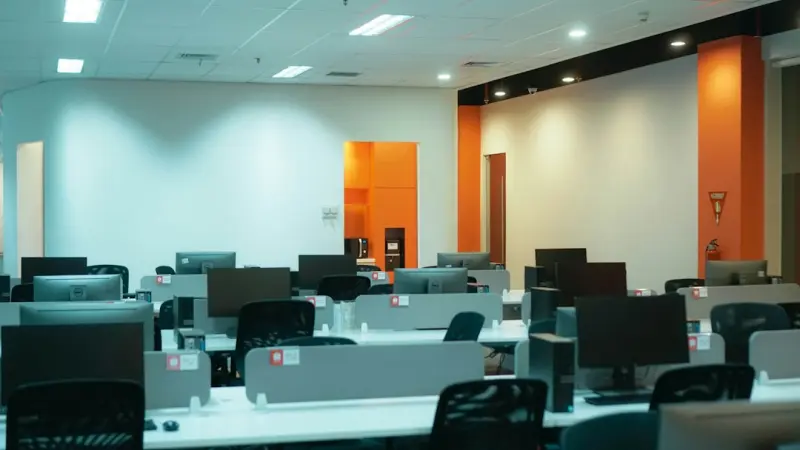
From Ownership to Subscription: How Appliance‑as‑a‑Service Is Transforming Workspaces
When I first walked into a coworking space in downtown Seattle, I expected the usual lineup of desks, coffee makers, and a lone office printer humming in the background. What caught my eye, however, was a sleek, modular coffee station that looked more like a piece of contemporary art than a piece of equipment. A discreet sign read, “Your coffee, on a subscription. No contracts, no hassle.” That moment sparked a realization: the era of owning every appliance in the office is waning, and a new model—Appliance‑as‑a‑Service (AaaS)—is taking its place.
In the same way that software moved from perpetual licenses to subscription SaaS, hardware is undergoing a parallel shift. Companies, especially those that prioritize agility and sustainability, are opting to lease smart appliances—coffee machines, refrigerators, air purifiers, even industrial-grade dishwashers—through subscription models that bundle maintenance, upgrades, and analytics into a single monthly fee.
Why the Shift Matters for Modern Businesses
Capital expenditure (CapEx) vs. operational expenditure (OpEx): Traditional appliance purchases require a hefty upfront investment, tying up cash that could be better allocated to growth initiatives. AaaS turns that expense into predictable OpEx, aligning costs with revenue cycles.
Continuous innovation: Just as SaaS providers roll out new features, AaaS vendors regularly refresh hardware. Subscribers automatically benefit from the latest energy‑efficient models without the need to manage a costly upgrade cycle.
Data‑driven insights: Smart appliances generate a wealth of operational data—from energy consumption to usage patterns. This data can be fed into broader analytics platforms, empowering facilities managers to make informed decisions about space planning, workforce comfort, and sustainability goals.
The Technological Backbone of AaaS
Behind the seamless experience of “just press a button and get coffee” lies an ecosystem of connectivity, cloud services, and predictive maintenance algorithms. A few key components power this transformation:
- IoT connectivity: Every appliance is equipped with a low‑power network module, often leveraging Wi‑Fi, LoRaWAN, or emerging edge‑first architecture to ensure low‑latency data transmission.
- Cloud analytics: Usage metrics are streamed to cloud platforms where machine‑learning models detect anomalies, predict component wear, and schedule service visits before a breakdown occurs.
- Unified dashboards: Facility managers can monitor all subscribed appliances from a single interface, adjusting settings, ordering consumables, and reviewing cost breakdowns in real time.
This tech stack mirrors the evolution we’ve seen in SaaS, where network‑as‑strategy reimagines how services stay connected and resilient. By treating appliances as extensible services rather than static assets, businesses unlock the same flexibility that modern software delivers.
Sustainability Gains That Go Beyond the Green Label
One of the most compelling arguments for AaaS is its environmental impact. Subscription models incentivize vendors to design appliances that last longer, consume less power, and are easier to recycle. Because the vendor retains ownership, they are motivated to:
- Implement modular designs that allow parts to be swapped rather than discarding whole units—an approach championed in Modular Momentum.
- Optimize energy consumption through AI‑driven load balancing, ensuring devices operate only when needed.
- Adopt a circular economy mindset, refurbishing returned units for resale or repurposing components in new models.
The result? Lower carbon footprints for both the provider and the subscriber, and a clear line of accountability for sustainability performance.
Real‑World Case Studies: From Start‑Ups to Fortune 500s
Tech start‑up co‑working hubs: A rapidly growing AI research lab needed high‑performance coffee machines and climate‑controlled storage for sensitive hardware. By signing up for a subscription, they avoided the capital outlay and received weekly maintenance visits. The data collected from the appliances helped them fine‑tune office temperature, reducing cooling costs by 12%.
Mid‑size manufacturing firm: Facing aging refrigeration units that threatened product quality, the firm switched to an AaaS model that bundled smart sensors with the appliances. The sensors alerted managers to temperature deviations in real time, preventing waste and enabling compliance with stricter food‑safety standards.
Global consulting giant: With offices in 30 countries, the firm sought a standardized approach to office amenities. AaaS allowed them to deploy a uniform set of smart appliances across locations, ensuring consistent user experience and simplifying vendor management.
Challenges to Anticipate—and How to Overcome Them
While the benefits are compelling, the transition isn’t without hurdles:
- Integration complexity: Connecting appliances to existing enterprise resource planning (ERP) systems can be daunting. Choosing vendors that support open APIs and standard data formats eases this process.
- Data security: As devices transmit operational data, ensuring encryption and compliance with privacy regulations is essential. Look for providers that adhere to industry‑standard certifications (e.g., ISO 27001).
- Vendor lock‑in: Subscription contracts can span several years. Negotiate clear exit clauses, device ownership transfer options, and transparent pricing structures.
Addressing these concerns early on—through pilot programs and thorough SLA reviews—helps organizations reap the upside of AaaS without compromising on control or security.
The Future Outlook: What’s Next for Appliance‑as‑a‑Service?
As the subscription mindset permeates every layer of business, we can expect AaaS to evolve in three exciting directions:
- Bundled ecosystems: Imagine a “smart office bundle” that includes lighting, HVAC, and appliances, all managed through a single dashboard, delivering a holistic view of workplace health.
- AI‑powered personalization: Future appliances will learn individual preferences—adjusting brew strength based on time of day or optimizing air filtration based on employee health data.
- Marketplace dynamics: Third‑party developers could create add‑ons for existing appliances, similar to SaaS plugins, expanding functionality without hardware changes.
These trajectories suggest that the line between software and hardware will continue to blur, reinforcing the idea that the next competitive advantage lies in how well a company can orchestrate its entire “service stack”—digital and physical alike.
Getting Started: A Practical Checklist for Decision‑Makers
Ready to explore AaaS for your organization? Use the following checklist to guide your evaluation:
- Define objectives: Is your primary goal cost reduction, sustainability, or employee experience?
- Audit existing assets: Identify appliances that are nearing end‑of‑life or consuming disproportionate energy.
- Research vendors: Look for providers with robust IoT platforms, transparent data policies, and a track record of modular hardware.
- Pilot in a low‑risk environment: Test the model in a single office or department before scaling.
- Measure outcomes: Track metrics such as total cost of ownership, energy savings, downtime, and employee satisfaction.
By following these steps, you’ll position your organization to capture the agility, insight, and sustainability gains that AaaS promises.
Conclusion: Embracing a Service‑First Mindset for Physical Assets
The shift from ownership to subscription isn’t just a financial maneuver; it reflects a deeper cultural change. Companies that adopt Appliance‑as‑a‑Service are signaling that they value flexibility, data‑driven decision‑making, and environmental stewardship. As the line between the digital and physical realms continues to dissolve, the organizations that master this hybrid approach will set the benchmark for the modern workplace.

Ryan Stuart is a seasoned freelance features writer, editor, and professional photographer with a passion for exploring the world and capturing its beauty through words and images.
Related Posts
Smart Kitchen Appliances: The Data‑Driven Edge for Modern Professionals
Smart kitchen appliances are moving beyond convenience to become strategic, data‑rich tools that e... Read More
When Your Refrigerator Starts Talking: The Unexpected Benefits of Connected Appliances
A deep dive into the rise of smart refrigerators and other connected appliances, highlighting realâ€... Read More

How to Future‑Proof Your Home with Smarter Appliances
Explore how smart appliances transform daily chores, cut energy costs, and stay secure—plus budget... Read More
Top Posts
The Rise of Hybrid Creative Labs: Redefining Speed and Impact for Media Agencies
Hybrid Creative Labs blend agency talent, client marketers, and freelancers into shared spaces, enabling rapid co‑creation, new performance metrics, and a cul...Read More

AI as the Co‑Pilot for Smarter B2B Decision‑Making
A practical guide on integrating AI as a co‑pilot in B2B SaaS, covering insight generation, human‑in‑the‑loop validation, continuous learning loops, and...Read More

The Power of Networking in Sustainability: How Connections Can Create a Better Future
Learn how networking in sustainability can help create a better future by building meaningful relationships, overcoming challenges, and working together towards...Read More

Decoding Google’s AI Playbook for SaaS Leaders
A deep dive into practical ways SaaS teams can harness Google’s AI suite—from generative Docs to Vertex AI churn models—turning complex workflows into gro...Read More
0 Comments
Post Comment
You will need to Login or Register to comment on this post!