
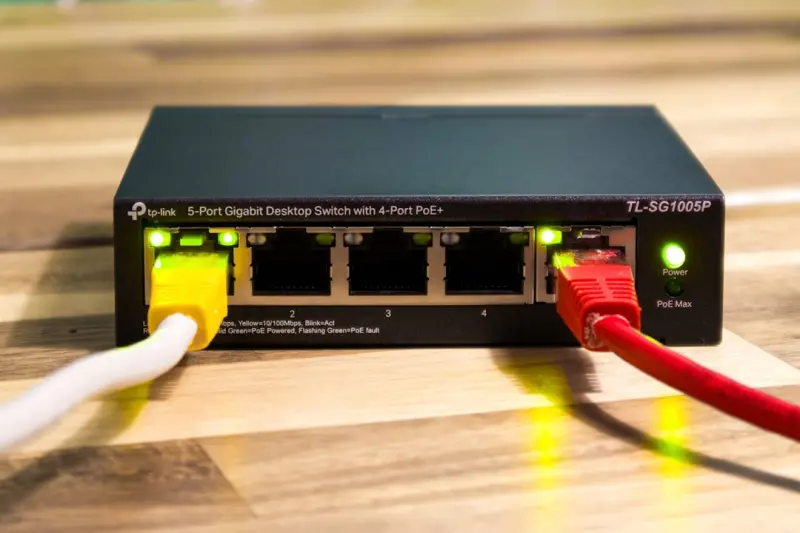
Why Edge‑First Networking Is the Secret Sauce Behind Modern Digital Experiences
When I first stepped into a data‑center back in college, the hum of racks felt like the beating heart of the internet. Fast forward a few years, and I’m now watching livestreams of concerts, collaborating on 3‑D models with teammates across continents, and ordering groceries that arrive in under thirty minutes—all without a hitch. The magic? It isn’t just faster broadband or more servers; it’s a strategic shift to edge‑first networking that’s turning latency from a dreaded metric into a competitive advantage.
From Centralized Silos to Distributed Intelligence
For decades, enterprises built massive, monolithic data‑centers, assuming that pulling everything to a single “brain” was the most efficient way to process data. That model worked when workloads were predictable and user bases were localized. Today, the reality is starkly different:
- Remote workforces are the norm, not the exception.
- IoT devices generate petabytes of data at the edge every day.
- Consumers expect sub‑second responses, especially for AR/VR, gaming, and real‑time analytics.
These forces have forced us to rethink networking architecture. Instead of a single, massive hub, we now distribute compute, storage, and networking capabilities closer to where the data originates—right at the edge. This shift isn’t just technical; it’s a cultural transformation that requires new mindsets, tooling, and governance.
The Business Imperative: Speed, Security, and Scale
Let’s break down the three pillars that make edge‑first networking a must‑have:
- Speed – Reducing the round‑trip time between a user’s device and the processing node can shave milliseconds off latency. For a real‑time bidding platform, that difference can translate directly into revenue.
- Security – Processing data locally means fewer hops across public networks, limiting exposure. When combined with zero‑trust principles, edge nodes become fortified checkpoints that verify every request.
- Scale – By offloading work to distributed nodes, central data‑centers avoid bottlenecks, allowing organizations to support explosive growth without massive CAPEX.
In my own consulting projects, I’ve seen companies that ignored these benefits get left behind by competitors that embraced edge architectures. It’s not a “nice‑to‑have”; it’s a strategic imperative.
How Edge‑First Networks Differ From Traditional CDN Strategies
Many readers conflate edge networking with content delivery networks (CDNs). While CDNs excel at caching static assets—images, videos, scripts—edge networking is far more ambitious. It brings compute, AI inference, and even storage to the edge. Think of a retail chain that runs inventory‑optimization algorithms on a local gateway, instantly reacting to sales spikes without routing data back to a central cloud.
To illustrate, consider a generative‑AI engine that personalizes product recommendations in real time. By deploying the inference model on edge nodes, the retailer reduces latency, cuts bandwidth costs, and complies with data‑locality regulations—all while delivering a seamless shopper experience.
Key Enablers of Edge‑First Networking
Achieving a truly distributed network isn’t as simple as buying a few micro‑data‑centers. It requires a stack of interoperable technologies:
- Software‑Defined WAN (SD‑WAN) – Provides intelligent routing, ensuring traffic takes the most efficient path to the nearest edge node.
- Network Function Virtualization (NFV) – Allows firewalls, load balancers, and other services to run as virtual appliances on edge hardware.
- Container Orchestration at the Edge – Tools like Kubernetes‑edge or K3s enable developers to deploy micro‑services wherever they’re needed.
- Zero‑Trust Networking – Enforces identity‑centric policies, crucial when you have dozens of distributed points of presence.
- Observability Platforms – Unified monitoring, tracing, and logging that give a single pane of glass across central and edge environments.
When these pieces click together, you get a fluid, adaptive fabric that can scale with demand and evolve without massive overhauls.
Case Study: A Global SaaS Provider’s Edge Migration
One of my recent engagements involved a B2B SaaS platform that delivered real‑time analytics to manufacturers. Their legacy architecture relied on a handful of cloud regions, causing latency spikes for plants in remote locations. The solution?
- Deploy edge gateways at each plant, equipped with lightweight compute nodes.
- Implement an SD‑WAN overlay to route sensor data directly to the nearest gateway.
- Run AI inference locally to flag equipment anomalies before they become downtime events.
- Sync only aggregated insights to the central cloud for long‑term storage.
Within six months, the client reported a 40% reduction in alert latency and a 25% decrease in bandwidth costs. Moreover, because data never left the premises, they easily met regional data‑privacy regulations—a win on both performance and compliance fronts.
Designing for Resilience: Redundancy at the Edge
Edge nodes are often placed in less controlled environments—think factory floors or retail stores. That reality demands a fresh take on resilience:
- Multi‑Node Clustering – Grouping edge nodes together ensures that if one fails, the others pick up the load automatically.
- Local Caching – Critical data should be cached locally so services can continue operating during brief connectivity losses.
- Self‑Healing Automation – Scripts that monitor health metrics and trigger restarts or failovers without human intervention.
In practice, I’ve seen teams use intent‑driven networking to declaratively define resilience policies. By describing “what” they need (e.g., 99.9% uptime) rather than “how” to achieve it, the system automatically provisions redundant paths and resources.
The Human Element: Upskilling Teams for Edge‑Centric Workflows
Technology alone won’t unlock the full potential of edge‑first networking. Teams must evolve from a “central‑first” mindset to one that embraces distributed thinking. Here’s how I help organizations make that transition:
- Cross‑Functional Workshops – Bring network engineers, developers, and security folks together to co‑design edge use cases.
- Hands‑On Labs – Provide sandbox environments where engineers can spin up edge clusters, experiment with NFV, and practice zero‑trust policies.
- Mentorship Programs – Pair seasoned network architects with emerging talent to accelerate knowledge transfer.
The result is a culture where edge considerations are baked into every product roadmap, not bolted on as an afterthought.
Future‑Proofing: Edge Meets AI, 5G, and Beyond
We’re standing at the convergence of three transformative trends:
- AI at the Edge – Tiny, efficient models that can infer on device‑level data, enabling things like predictive maintenance without cloud round‑trips.
- 5G Connectivity – Ultra‑low latency and massive bandwidth that make edge deployments feasible even in mobile environments.
- Serverless Edge Computing – Platforms that let you run functions on demand, paying only for compute time, dramatically lowering operational overhead.
When you combine these, the edge becomes a living, breathing extension of your core infrastructure—capable of scaling on demand, learning from local data, and delivering experiences that were once unimaginable.
Getting Started: A Pragmatic Roadmap
If you’re inspired to explore edge‑first networking, here’s a step‑by‑step framework I recommend:
- Identify High‑Impact Use Cases – Look for workloads where latency, bandwidth, or data‑locality are critical (e.g., AR/VR, IoT analytics, real‑time personalization).
- Map Existing Network Topology – Understand current paths, bottlenecks, and security zones.
- Prototype with a Single Edge Node – Deploy a sandbox gateway, run a pilot workload, and measure performance gains.
- Implement Intent‑Driven Policies – Use tools that let you declare desired outcomes (e.g., “all video streams must route through the nearest edge node”).
- Scale Incrementally – Gradually roll out to additional sites, leveraging automation to ensure consistency.
- Establish Continuous Observability – Deploy a unified monitoring stack that aggregates metrics from both central and edge environments.
By tackling the journey in bite‑size phases, you mitigate risk while demonstrating quick wins to stakeholders.
Final Thoughts: The Edge Is Not Just a Trend—it’s a Paradigm Shift
When I first heard the term “edge” back in the early days of networking, it sounded like a buzzword destined to fade. Today, it’s the backbone of the digital experiences that define our personal and professional lives. From the moment you stream a live concert to the instant you receive a predictive alert on a factory floor, the edge is silently doing the heavy lifting.
If you’re still anchored to a centralized mindset, you’re likely to miss out on the speed, security, and scalability that modern enterprises demand. Embrace the distributed future, empower your teams, and let the edge become the secret weapon that propels your organization ahead of the competition.

Lauren Miller is a true outdoors enthusiast who has found her passion in the trades. When she's not working hard on the job, you can find her writing, camping, fishing, and exploring all that nature has to offer. A dedicated partner to her wife Beth, Lauren loves nothing more than spending quality time together and experiencing the great outdoors side by side.
Related Posts

Rethinking Connectivity: How Network‑as‑Code Empowers Modern SaaS Teams
Network‑as‑code turns traditional networking into a programmable, version‑controlled asset, en... Read More

Cutting Through the Digital Clutter: How Curated Networks Elevate Business Growth
Discover a fresh approach to B2B SaaS networking that prioritizes intentional connections over sheer... Read More

The Power of Networking in Sustainability: How Connections Can Create a Better Future
Learn how networking in sustainability can help create a better future by building meaningful relati... Read More
Top Posts

The Role of Industrial Products in Sustainable Development
The industrial sector plays a crucial role in shaping our environmental future. Learn how industrial products can contribute to sustainable development and crea...Read More
The Importance of Sustainable Living for Kids and Teens
Sustainable living is crucial for kids and teens. Learn how to raise eco-conscious kids and promote a healthier lifestyle. Discover practical tips and strategie...Read More

AI Shopping Assistants: Your New Personal Concierge
AI shopping assistants combine contextual data, preference modeling, and seamless checkout to turn tedious buying into a rapid, budget‑friendly experience, fr...Read More

Developer Experience (DevX): The New Competitive Edge in Software
A deep dive into DevX, the emerging metric that’s reshaping software development, boosting team morale, and delivering faster, higher‑quality products....Read More
0 Comments
Post Comment
You will need to Login or Register to comment on this post!