
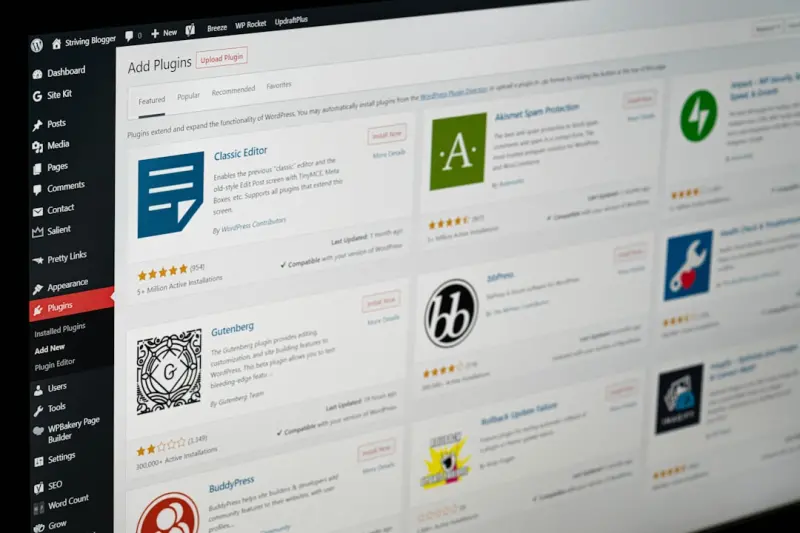
Why Plugins Are the New Playbooks for SaaS Innovation
When I first started tinkering with SaaS products, the idea of “plug‑and‑play” felt like a buzzword for a distant future. Today, plugins are the backstage crew that keep the show running smoothly, and they’re no longer limited to adding a calendar widget or a chat box. They’re full‑blown playbooks that let product teams experiment, iterate, and ship features at breakneck speed without rewriting core code.
The Evolution from Add‑Ons to Autonomous Business Units
Remember the days when a plugin was just a thin slice of JavaScript you bolted onto a page? Those were the “nice‑to‑have” days. Fast‑forward to now, and plugins have matured into micro‑services with their own roadmaps, analytics, and even revenue models. In many SaaS ecosystems, a plugin can be the difference between a product that feels static and one that feels alive—adapting to user needs the moment they surface.
Composable SaaS: Building with Lego Bricks
Think of your platform as a baseplate. Each plugin is a Lego brick that snaps in, adds functionality, and can be swapped out without tearing the whole structure apart. This composability does three things:
- Accelerates time‑to‑market: Teams can focus on core differentiators while leveraging third‑party plugins for ancillary features.
- Reduces technical debt: By offloading maintenance to the plugin owner, you keep your core lean and avoid the dreaded “spaghetti code.”
- Creates new revenue streams: Marketplace models let you charge for premium plugins, turning extensions into profit centers.
The real magic happens when you treat each plugin as a product in its own right—complete with user research, KPI dashboards, and iterative releases.
How to Curate a Healthy Plugin Ecosystem
Just because you can install anything doesn’t mean you should. A thriving plugin marketplace needs guardrails:
- Quality Assurance Framework: Implement automated tests that run against every new plugin submission. A continuous integration pipeline that checks for security vulnerabilities, performance regressions, and API contract compliance is essential.
- Clear Documentation Standards: A plugin should be self‑describing. Provide schema definitions, usage examples, and versioning guidelines up front.
- Revenue Sharing Model: Be transparent about how revenue is split. Developers need to see a clear path to monetization, which fuels a richer ecosystem.
- Community Governance: Encourage user reviews, rating systems, and a public roadmap for the marketplace. Peer feedback acts as a natural filter for quality.
Security: The Unsexy Yet Critical Piece
One of the biggest objections to third‑party plugins is security. A single compromised add‑on can become a backdoor into your entire platform. Here’s how to mitigate risk:
- Enforce OAuth scopes that limit what a plugin can access.
- Require code signing and periodic re‑certification.
- Run plugins in isolated containers or sandboxed environments.
- Provide a revocation API so admins can instantly disable a rogue plugin.
In practice, these measures become part of your orchestrating SaaS tools strategy—treating plugins like any other service in your stack, with observability, logging, and alerting baked in.
Data Governance Across Plugins
Every plugin that touches user data must comply with your data‑handling policies. Adopt a data‑first approach where each plugin declares its data schema and lifecycle. This way, you can:
- Run automated data‑privacy checks before a plugin is approved.
- Ensure GDPR, CCPA, and industry‑specific compliance is enforced at the marketplace level.
- Provide users with granular consent controls for each plugin.
When you align plugin data flows with your platform’s overall data strategy, you not only protect users but also unlock richer analytics—allowing you to see which extensions drive the most engagement or revenue.
Case Study: Turning Plugins into Product Differentiators
One of our early adopters—a collaborative design SaaS—wanted to add AI‑assisted image tagging without overhauling their core engine. They built a dedicated tagging plugin that leveraged a third‑party vision API. The results were immediate:
- Feature adoption jumped 42% in the first month.
- Customer churn decreased by 15% because users loved the new searchability.
- The plugin generated a separate revenue stream, contributing 8% to overall ARR.
This example shows how a well‑engineered plugin can become a competitive moat, rather than just a peripheral feature.
Designing Plugins for Scale
When you think about scaling a plugin, ask yourself the same questions you’d ask of a core service:
- Does it have horizontal scalability built in?
- Can it handle multi‑tenant isolation without cross‑talk?
- Is the API versioning strategy robust enough for backward‑compatible upgrades?
Invest in observability tooling—metrics, tracing, and logs—so you can monitor plugin health in real time. Remember, a plugin that crashes silently can erode trust faster than any bug in the core product.
Monetizing Plugins Without Alienating Users
The marketplace model offers three primary monetization paths:
- Freemium: Core functionality is free; premium features unlock via a subscription.
- Revenue Share: You take a cut of each transaction the plugin generates.
- Pay‑Per‑Use: Metered billing based on API calls or data processed.
Transparency is key. Clearly display pricing, usage limits, and any associated fees before a user installs a plugin. This builds trust and reduces sticker shock.
Building a Brand Narrative Around Plugins
Plugins aren’t just technical add‑ons; they’re extensions of your brand’s story. When you frame your marketplace as a hub of innovation partners, you attract developers who share your mission. This synergy can be articulated through a brand narrative architecture that positions your platform as the canvas, and plugins as the brushstrokes that bring users’ unique visions to life.
Future‑Proofing: AI‑Enhanced Plugin Development
While AI has already reshaped many SaaS verticals, its role in plugin development is just budding. Imagine a plugin that writes its own unit tests, or one that auto‑optimizes its performance based on real‑time usage patterns. The next wave of plugins will be self‑optimizing agents that learn from the environment, reducing the maintenance burden on developers.
But don’t jump in blindly. Ensure that any AI‑driven logic is auditable and that you retain human oversight—especially when dealing with compliance‑sensitive data.
Getting Started: A Checklist for Your First Plugin
If you’re ready to dip your toes into the plugin ecosystem, follow this starter checklist:
- Define the problem: What user pain point does the plugin solve?
- Sketch the API contract: Outline inputs, outputs, and error handling.
- Build a sandboxed prototype: Use containerization or serverless functions.
- Write comprehensive docs: Include setup steps, code samples, and versioning notes.
- Run security scans: Static analysis, dependency checks, and penetration testing.
- Publish to the marketplace: Follow your platform’s submission guidelines.
- Monitor and iterate: Gather usage data, solicit feedback, and release updates.
Remember, the goal isn’t just to launch a plugin—it’s to embed it into your product’s DNA, making it an indispensable part of the user journey.
Conclusion: Embrace the Plugin Mindset
The plugin renaissance is more than a technical trend; it’s a cultural shift toward modularity, collaboration, and rapid experimentation. By treating plugins as first‑class citizens—complete with their own product processes, security postures, and revenue models—you unlock a new dimension of agility for your SaaS business. So, the next time you think about adding a feature, ask yourself: “Can this be a plugin that empowers our ecosystem and fuels growth?” The answer will often surprise you.

When it comes to the world of blogging and writing, Rose DesRochers is a name that stands out. Her passion for creating quality content and connecting with her audience has made her a trusted voice in the industry. Aside from her skills as a writer and blogger, Rose is also known for her compassionate nature.
Related Posts

Plug‑In Power: How Modular Extensions Are Redefining Enterprise SaaS
Plugins are no longer afterthoughts; they’re strategic assets that drive speed, revenue, and scala... Read More
Unlocking the Hidden Potential of SaaS Plugin Ecosystems
A deep dive into designing, governing, and marketing a SaaS plugin ecosystem that transforms thirdâ€... Read More

Curating a Purpose‑Driven Plugin Suite: From Onboarding to Future‑Proofing
Discover a fresh, narrative‑driven approach to plugin strategy—onboarding rituals, lifecycle man... Read More
Top Posts

The Anniversary Renewal Cycle: Turning Milestones Into Fresh Starts
Learn how to transform each anniversary into a meaningful renewal with the Anniversary Renewal Cycle—simple reflection, creative re‑imagination, and purpose...Read More

The Evolution of Sustainable Email Marketing: A New Era of Digital Communication
Sustainable email marketing is not just a trend; it's a necessity. Learn how to adopt sustainable practices, reduce waste, and create engaging campaigns that dr...Read More

Unplugging the Noise: Curating a Lean Software Stack for Modern Teams
A practical guide to decluttering your software ecosystem, featuring data‑driven audits, a value‑fit scorecard, and a retirement playbook to keep teams agil...Read More

Raising Curious, Confident Kids in a Digital Age
A fresh take on modern parenting, offering hands‑on tips to foster curiosity, confidence, and digital balance for kids, while staying true to family values....Read More
0 Comments
Post Comment
You will need to Login or Register to comment on this post!