
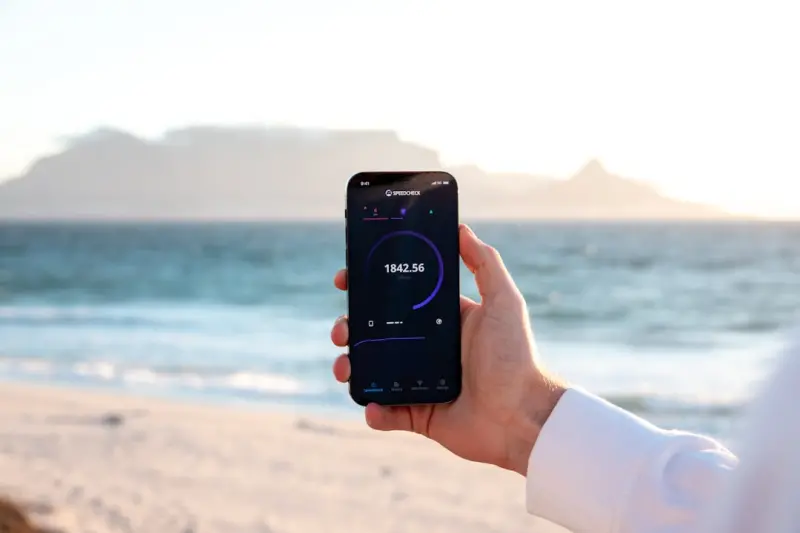
When I first held a smartphone that could change its vibration pattern on the fly, I felt like a child discovering a new language. It wasn’t just a buzz; it was a nuanced conversation—soft taps for a new email, a rhythmic pulse for a calendar reminder, and a deep, resonant thump when my heart rate spiked during a run. This is the quiet power of adaptive haptics, a technology that’s turning the humble vibration motor into a sophisticated sensory channel.
The Evolution From Simple Buzzes to Dynamic Touch
Early smartphones used the same motor for every notification: a single, uniform buzz that announced everything from a missed call to a low‑battery warning. Designers quickly realized that this one‑size‑fits‑all approach was noisy—literally and figuratively—and left users desensitized. Over the past few years, manufacturers have been embedding more refined actuators, such as linear resonant actuators (LRAs) and piezoelectric elements, that can produce a wider palette of frequencies, amplitudes, and waveforms.
What’s remarkable is that these hardware upgrades are being paired with intelligent software that learns from you. Your phone can now detect when you’re in a meeting and automatically switch to a discreet, low‑frequency pulse for incoming messages, while preserving a louder, more urgent pattern for emergency alerts. It’s a subtle, yet profound shift toward a more context‑aware device.
Why Adaptive Haptics Matter for Accessibility
For users with visual impairments, haptic feedback isn’t just a convenience—it’s a lifeline. Traditional screen readers translate text to speech, but speech can be intrusive in public spaces. Adaptive haptics offers a private, tactile alternative. Imagine navigating a map where each turn is guided by a unique vibration pattern: a short tap for a left turn, a long pulse for a right, and a double‑tap for a U‑turn.
Developers are beginning to embed these patterns directly into app APIs, allowing third‑party applications to communicate complex data through touch. A financial dashboard, for instance, could assign a gentle rising pulse to indicate a modest profit, and a sharp, descending thump for a loss. This tactile encoding reduces cognitive load and makes data consumption faster for everyone, not just those with disabilities.
Creating Emotional Resonance Through Touch
Beyond functional alerts, adaptive haptics is opening a new frontier in emotional design. Music apps now sync vibrations to bass beats, letting you feel the rhythm in your fingertips. Gaming experiences use precise haptic cues to simulate the recoil of a virtual gun or the texture of an in‑game surface. Even meditation apps employ slow, wave‑like pulses that mimic breathing, enhancing relaxation without a single sound.
These experiences are built on a foundation of structured data. By categorizing each vibration pattern with metadata—intensity, duration, frequency—designers can create libraries that are searchable and reusable across platforms. The result is a growing ecosystem of “haptic emojis” that developers can plug into any app, enriching user interaction without reinventing the wheel each time.
How Machine Learning Powers the Haptic Conversation
The magic really happens when artificial intelligence steps in as an AI co‑pilot for your phone’s haptic engine. Machine learning models analyze your usage patterns, environmental context, and even biometric signals to predict the optimal vibration for any given scenario.
- Context Awareness: If the ambient noise level is high, the phone may choose a stronger, more distinct pattern to cut through the clamor.
- Behavior Prediction: Noticing that you usually glance at the screen after a certain type of notification, the system can pre‑emptively dim the display and replace the visual cue with a subtle haptic prompt.
- Health Integration: When paired with wearable health sensors, the phone can deliver calming vibrations in response to rising stress markers, acting as a discreet wellness coach.
These AI‑driven adaptations are not static; they evolve with you. Over weeks, the system refines its model, learning that you prefer a soft, quick tap for calendar events but a longer, more pronounced buzz for messages from family. The result is a deeply personalized tactile language.
Design Challenges: Balancing Power, Battery, and Perception
Implementing adaptive haptics isn’t without hurdles. High‑fidelity vibrations consume more power, and developers must be mindful of battery life. Moreover, not every user perceives subtle differences the same way. Some people have a higher tactile threshold, requiring stronger impulses, while others might find intense vibrations uncomfortable.
To address these issues, manufacturers are offering calibration tools within the OS settings. Users can run a short “haptic test” that plays a range of patterns, allowing the device to map individual sensitivity levels. This calibration data feeds back into the AI model, ensuring that every vibration is both effective and comfortable.
Future Directions: From Fixed Motors to Fluid Haptics
Looking ahead, the next wave of smartphones may abandon traditional vibration motors altogether. Emerging technologies like electro‑active polymers and microfluidic haptic surfaces can create fluid, continuous motion across the phone’s chassis. Imagine a phone that can simulate the feeling of wind across its screen as you scroll through a weather app, or a subtle ripple that follows your finger as you swipe.
These “fluid haptics” promise a richer, more immersive experience, blurring the line between the visual and the tactile. Combined with the already‑powerful AI engines, future devices could dynamically shape their surface to convey information—turning the entire phone into a responsive canvas.
Practical Tips for Users Ready to Embrace Adaptive Haptics
If your device already supports advanced haptic feedback, here are some steps to get the most out of it:
- Explore Settings: Dive into the sound & vibration menu and enable “adaptive haptics” or “advanced vibration patterns.” Many phones hide these options under “Developer Options” or “Accessibility.”
- Calibrate Your Sensitivity: Run the built‑in haptic test to ensure the phone tailors vibrations to your perception.
- Download Haptic‑Enabled Apps: Look for apps that advertise “haptic feedback,” “tactile notifications,” or “vibration customization.” Popular categories include meditation, fitness, and gaming.
- Integrate with Wearables: Pair your phone with a smartwatch that shares haptic data, creating a coordinated multi‑device tactile language.
- Give Feedback: Developers rely on user data to refine patterns. When an app’s vibration feels off, use the feedback option to help improve the experience.
By taking these steps, you’ll turn your smartphone into a truly multimodal companion—one that not only sees and hears but also feels the world around you.
Conclusion: A New Language Emerges
The smartphone has long been a visual and auditory medium. Adaptive haptics is rewriting that narrative, granting our devices a third sense that speaks directly to our skin. Whether you’re a developer seeking fresh ways to convey data, an accessibility advocate championing inclusive design, or simply a curious user eager for richer interaction, the tactile frontier holds promise.
As the technology matures, we’ll see phones that anticipate our needs, respond with nuanced touch, and create emotional connections through vibration. The next time your phone whispers a reminder with a gentle pulse, remember: you’re participating in a quiet revolution, where the language of touch is finally being spoken aloud.

When it comes to the world of blogging and writing, Rose DesRochers is a name that stands out. Her passion for creating quality content and connecting with her audience has made her a trusted voice in the industry. Aside from her skills as a writer and blogger, Rose is also known for her compassionate nature.
Related Posts
Why 2026 Is the Year Smartphones Finally Go Green
In 2026, smartphones are shedding their carbon footprint. Discover the green innovations, consumer d... Read More
Why Sustainable Smartphones Matter More Than Ever
I’m diving into the hidden environmental costs of our phones and sharing practical ways to pick, u... Read More
The Hidden Trade‑offs of Smartphone Obsolescence: A Deep Dive into Repair, Rights, and Real‑World Impact
Smartphones are more than gadgets; they're central to our data, environment, and daily life. This po... Read More
Top Posts

Nomadic Workcations: Blending Business Travel with Adventure
Brad Hays shares a fresh perspective on “workcations,” showing how to transform routine business travel into immersive adventures that boost creativity, str...Read More
Navigating Online Safety in 2026: A Sustainable, Human‑Centric Playbook
A 2026 roadmap to online safety that merges eco‑friendly tech, AI threat awareness, and community education for a resilient digital experience....Read More

From Blog to Knowledge Hub: 8 Tactics to Turn Content into Community
Learn how to shift from posting for clicks to building a living knowledge hub with evergreen content, interactive micro‑learning, guest expert spots, and a su...Read More

Designing a Hybrid Wedding That Connects Every Guest, Near and Far
Hybrid weddings combine live celebrations with digital experiences, creating an inclusive, data‑driven, and eco‑friendly event that engages every guest, no ...Read More
0 Comments
Post Comment
You will need to Login or Register to comment on this post!