

Embracing a Failure‑Friendly Mindset: How B2B SaaS Can Turn Mistakes into Market Wins
When I first joined a fast‑growing SaaS startup, my onboarding checklist read like a litmus test for optimism: “Be ready to iterate, fail fast, and celebrate the learning.” At the time, “fail fast” sounded like a buzzword tossed around in stand‑up meetings, but it quickly became the compass that guided every product decision. The paradox? The more we let ourselves stumble, the more we discovered hidden revenue streams, customer love, and a culture that actually wanted to solve problems rather than just ship features.
In the hyper‑competitive world of B2B SaaS, the pressure to deliver flawless releases can feel like a high‑wire act without a safety net. Yet the most resilient companies I’ve seen treat failure not as a blemish, but as a data point—an insight that fuels the next iteration. Below, I’ll walk you through a practical framework for institutionalizing a failure‑friendly mindset, why it matters for your bottom line, and how to weave it into every layer of your organization.
The Business Case for Controlled Failure
Before we dive into tactics, let’s confront the elephant in the boardroom: failure costs money. That’s true, but so does inaction. When a product team spends months polishing a feature that no one needs, the opportunity cost eclipses any savings from avoiding missteps. A failure‑friendly culture flips the equation:
- Speed to market. By removing the stigma around early missteps, teams ship prototypes faster, gather real‑world data, and iterate with purpose.
- Customer trust. Clients appreciate transparency. When you openly share what’s working—and what isn’t—you position yourself as a partner rather than a vendor.
- Innovation velocity. Teams that feel safe to experiment generate more ideas, and statistically, more of those ideas become profitable products.
In other words, a well‑managed failure engine can become a profit engine. It’s not about courting chaos; it’s about engineering learning loops that accelerate growth.
Three Pillars of a Failure‑Friendly Framework
Think of these pillars as the three legs of a sturdy stool—remove one, and the whole thing wobbles.
1. Psychological Safety First
Psychological safety is the foundation. If a developer fears ridicule for a broken demo, they’ll hide errors, and the whole feedback loop stalls. Leaders can nurture safety by:
- Celebrating “good failures” in retrospectives—those that yielded actionable insights.
- Using neutral language: replace “mistake” with “learning opportunity.”
- Documenting and sharing post‑mortems openly, not as blame sheets but as knowledge assets.
When you talk about failure in the same tone you talk about success, the cultural barrier crumbles.
2. Structured Experimentation Playbooks
Random trial‑and‑error is a recipe for wasted resources. Instead, adopt a playbook that defines:
- Hypothesis. What problem are you solving? What metric will prove you’re on the right track?
- Minimum Viable Test (MVT). The smallest slice of product you can release to validate the hypothesis—think feature flags, sandbox environments, or limited‑beta cohorts.
- Success Criteria. Quantitative thresholds (e.g., 5% uplift in activation) that decide whether to double‑down or pivot.
- Learnings Repository. A centralized wiki where each experiment’s outcome is logged, searchable, and cross‑referenced.
For teams already leveraging modular architectures, a plugin strategy can serve as a natural scaffold for these experiments, letting you drop in, test, and roll back components with surgical precision.
3. Data‑Driven Decision Gates
Data is the neutral arbiter that transforms a “failed” experiment into a strategic decision. Build dashboards that surface key experiment metrics in real time, and set pre‑defined gates:
- Go/No‑Go. A simple “green/red” flag based on whether success criteria are met.
- Iterate/Scale. If the experiment exceeds expectations, plan a rollout roadmap; if it falls short, schedule a rapid iteration sprint.
When data drives the conversation, emotions take a back seat, and the organization can move forward without the usual “what‑if” paralysis.
Integrating Failure‑Friendly Practices Into Existing Workflows
Now that the framework is clear, the challenge is embedding it into the day‑to‑day rhythm of a SaaS business. Below are practical touchpoints where you can insert failure‑friendly habits without overhauling your entire stack.
Product Roadmapping Sessions
Allocate 10–15% of each roadmap cycle to “exploratory lanes.” These are earmarked buckets for high‑risk, high‑reward ideas that will be tested as MVTs. By visualizing them alongside “core” initiatives, you signal executive buy‑in and protect them from being eclipsed by urgent feature requests.
Quarterly OKRs
Instead of traditional output‑only objectives (“launch feature X”), blend in outcome‑focused OKRs that reward learning, such as “Validate three new pricing hypotheses with n pilot customers.” This aligns incentives with the failure‑friendly mindset.
Engineering Sprints
Introduce a “sandbox sprint” every other month where the sole deliverable is a prototype or an experiment, not a polished feature. Pair this with a AI‑first development platform to accelerate code generation and reduce the time to test.
Customer Success Check‑Ins
Turn failure into a collaborative story with your clients. During QBRs (Quarterly Business Reviews), share experiment results—both wins and flops—and invite feedback on next steps. This transparency builds trust and often uncovers hidden use cases you wouldn’t have imagined.
Case Study: Turning a “Failed” Beta Into a New Revenue Stream
At a mid‑size SaaS firm I consulted for, the product team launched a beta of an AI‑driven analytics dashboard. Early adopters reported confusing UI and low adoption, prompting the team to label the beta a “failure.” Instead of shelving the project, the team applied the failure‑friendly framework:
- Post‑mortem. They documented specific friction points—complex navigation, ambiguous metrics, and lack of onboarding.
- Experiment. Over the next two weeks, they released three micro‑updates as separate feature flags: a guided tour, a simplified view mode, and a customizable metric picker.
- Data Review. Each flag’s usage was tracked. The guided tour increased activation by 12%, while the simplified view lifted daily active users by 8%.
- Decision. They combined the two highest‑impact changes, re‑branded the module as “Analytics Lite,” and launched it as a paid add‑on.
The result? Within three months, “Analytics Lite” generated $1.2M in ARR—far surpassing the original dashboard’s projected revenue. The “failure” became a cornerstone product, all because the team treated the beta’s shortcomings as data, not defeat.
Common Pitfalls and How to Dodge Them
Even the most well‑intentioned teams can trip up. Here are the traps I see most often, and quick fixes.
- Over‑Experimentation. Running too many tests simultaneously dilutes focus. Limit active experiments to a manageable number (usually 3–5 per team).
- Skipping Documentation. When experiments vanish into the ether, the organization loses the learnings. Mandate a one‑page summary for every test, stored in a shared repository.
- Rewarding Only Success. If bonuses are tied solely to successful launches, teams will hide failures. Adjust compensation models to include “learning impact” scores.
- Neglecting Customer Voice. An experiment that looks great on internal metrics but alienates users is a false positive. Always embed a customer feedback loop.
Scaling the Mindset: From Team to Enterprise
Embedding a failure‑friendly culture at the team level is the first step; scaling it across the enterprise requires governance and storytelling.
Leadership Sponsorship
Executives must publicly champion experiments—share their own “fails,” allocate budget for sandbox initiatives, and include learning metrics in board decks.
Cross‑Functional Learning Hubs
Create a monthly “Learning Lab” where product, engineering, sales, and support teams present recent experiments. This cross‑pollination surfaces patterns that single teams might miss.
Technology Enablement
Invest in tooling that supports rapid prototyping: feature flag services, low‑code platforms, and AI‑assisted code generation. When the technical friction is low, the cultural friction becomes the real differentiator.
Conclusion: Failure as a Strategic Asset
In the world of B2B SaaS, the biggest risk isn’t failing; it’s pretending you can avoid it. By deliberately engineering psychological safety, structured experiments, and data‑driven gates, you turn every misstep into a stepping stone. The payoff isn’t just incremental—it's the emergence of a resilient, innovative organization that can pivot with confidence and seize market opportunities before competitors even see them coming.
So the next time a prototype crashes, a beta underperforms, or a client pushes back, ask yourself: What’s the lesson? Capture it, share it, and let it fuel the next wave of growth. After all, the most successful SaaS companies aren’t the ones that never fall; they’re the ones that rise, learn, and iterate—faster and smarter every time.

Sanji Patel has dedicated 25 years to the SEO industry. As an expert SEO consultant for news publishers, he emphasizes providing both technical and editorial SEO services to news publishers worldwide. He frequently speaks at conferences and events globally and offers annual guest lectures at local universities.
Related Posts

Adaptive Learning Platforms: The Secret Weapon for Faster B2B Sales Wins
Adaptive learning platforms personalize sales training in real time, slashing onboarding costs and b... Read More

How Internal Knowledge Can Become Your Business’s Secret Weapon
Turning static documentation into a dynamic, searchable, and cross‑functional asset can give B2B S... Read More
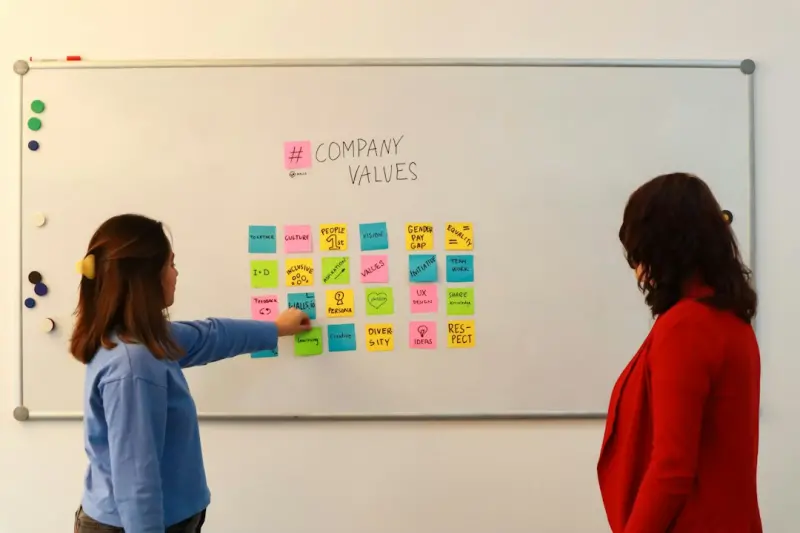
Why Business Leaders Should Rethink Value Creation Through Stakeholder Capitalism
Stakeholder capitalism reshapes the traditional profit‑first model, integrating ESG metrics, emplo... Read More
Top Posts

When Code Becomes a Partner: Navigating the Era of Autonomous Development
Autonomous development is turning code into a collaborative partner. This article examines the evolution from AI assistants to fully autonomous systems, outline...Read More

AI‑Augmented Storytelling: Turning Data Into Human‑Centric Narratives
Explore a fresh approach to content creation where AI works as a co‑author, turning data into human‑centric narratives that boost engagement, personalizatio...Read More

Video Deepfakes: The New Frontier of B2B Scams
A deep dive into the rise of AI‑driven video deepfakes targeting enterprises, with real‑world examples, detection tactics, and a cultural playbook to safegu...Read More

Protecting the Innocent: A Comprehensive Guide to Kids' Online Safety
As a parent, ensuring your child's online safety is crucial. Learn how to protect them from cyberbullying, online predators, and explicit content with our exper...Read More
0 Comments
Post Comment
You will need to Login or Register to comment on this post!