
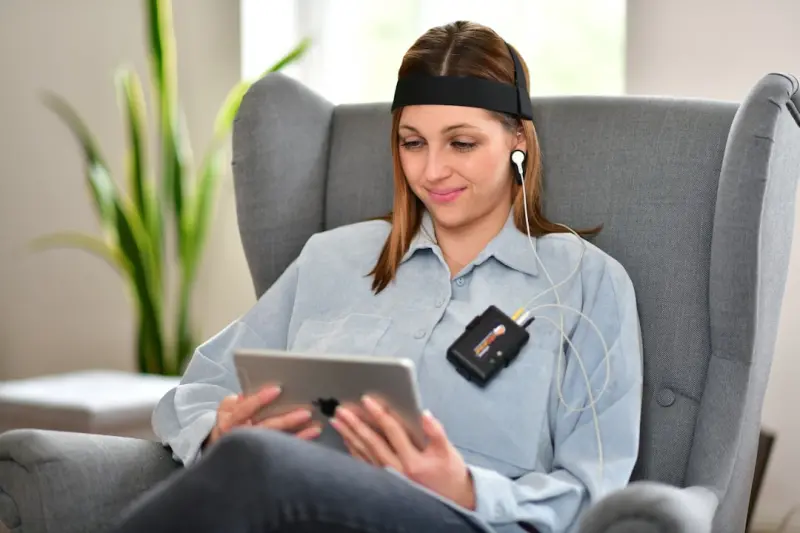
Why Your Wrist Might Be the Smartest Stress Coach You’ve Ever Had
When I first slipped a sleek band onto my wrist, I thought it was just another fitness tracker promising to count steps and log sleep. What I didn’t anticipate was that the tiny device would become my personal stress‑management guru, nudging me toward healthier habits before I even realized I was tensing up.
In the age of remote work, endless video calls, and the perpetual ping of notifications, our nervous systems are on constant overdrive. Traditional solutions—meditation apps, occasional yoga sessions, or a quick walk around the block—are valuable, but they’re reactive. They wait for the stress to manifest before offering relief.
Enter biofeedback wearables. These gadgets don’t just record data; they interpret physiological signals in real time, turning raw metrics into actionable insights. By monitoring heart‑rate variability (HRV), skin conductance, and even subtle changes in posture, they give us a window into our autonomic nervous system—the very engine that drives our fight‑or‑flight response.
The Science Behind the Sensors
HRV is the gold standard for assessing stress resilience. A higher variability indicates a flexible nervous system capable of adapting quickly, while a lower reading suggests rigidity and chronic tension. Skin conductance, measured in microsiemens, spikes when sweat glands activate—a direct proxy for emotional arousal. Modern wearables blend these signals with accelerometer data to differentiate between “I’m excited about a new project” and “I’m physically exhausted after a marathon meeting.”
What makes this tech truly revolutionary is the closed‑loop feedback. The moment the device detects a dip in HRV or a surge in conductance, it delivers a gentle haptic cue—often a subtle vibration—that prompts you to pause, breathe, or shift posture. Over weeks, your brain starts associating that vibration with a calm, restorative action, effectively training your nervous system to self‑regulate.
From Data to Daily Rituals
Data in isolation is meaningless. The real value lies in translating those numbers into habits that stick. Here’s how I integrated wearable insights into my daily routine:
- Morning Calibration: After waking, I spend two minutes breathing with the device’s guided rhythm. The wearable records baseline HRV, establishing a personal “resting” benchmark.
- Mid‑Day Micro‑Check‑Ins: Every time the device buzzes during a conference call, I silently inhale for four seconds, hold for four, and exhale for six. The haptic cue becomes a micro‑pause that prevents stress from snowballing.
- Evening Wind‑Down: The band tracks my skin conductance during the last hour of work. If it stays elevated, I trigger a “lights‑off” mode that dims my screen, dims the room’s lights, and plays low‑frequency ambient tones to signal my brain that it’s time to unwind.
This pattern of preemptive interventions is far more effective than waiting for a burnout crisis to surface.
Why Remote Teams Need Biofeedback—And How to Scale It
Remote work has shattered the physical boundaries of the office, but it hasn’t eliminated the social and psychological pressures that come with collaboration. In fact, the lack of in‑person cues can amplify stress, as teammates struggle to read tone or gauge workload.
When I shared my wearable experience with my team, the response was immediate. We decided to run a pilot where each member received a device and a shared dashboard that displayed collective stress trends—anonymized, of course. The results were eye‑opening:
- Team‑wide HRV dipped during product launch sprints, highlighting a hidden overload.
- Micro‑breaks increased by 42% after we introduced a Micro‑Celebrations in Remote Teams framework, pairing brief haptic prompts with a quick round of gratitude shout‑outs.
- Overall satisfaction scores rose as employees felt the organization cared about their mental well‑being, not just output.
The key takeaway? Biofeedback wearables become a shared language for stress, turning a personal health metric into a team‑level conversation without breaching privacy.
Choosing the Right Device—Beyond the Gimmicks
Not all wearables are created equal. Here are the criteria I used to separate the hype from the helpful:
- Clinical Validation: Look for devices with peer‑reviewed studies supporting their HRV and skin conductance algorithms.
- Real‑Time Feedback: The value is lost if you only receive a daily summary. Immediate haptic cues are essential for in‑the‑moment regulation.
- Integration Capabilities: APIs that feed data into productivity suites or wellness platforms enable broader analytics.
- Battery Life & Comfort: A device that needs daily charging defeats the purpose of seamless monitoring.
Brands like Whoop, Oura, and the newer Wavelet Pro have earned strong reputations, but the market is evolving rapidly. I recommend trial periods to assess comfort and data fidelity before committing to a fleet purchase.
Complementary Practices That Amplify Wearable Benefits
While wearables are powerful, they shine brightest when paired with evidence‑based practices:
- Box Breathing: Four‑second inhale, hold, exhale, hold. This technique directly boosts HRV.
- Micro‑Movement: Simple stretches every hour improve circulation and reset posture‑related stress signals.
- Digital Boundaries: Use the device’s “do‑not‑disturb” schedule to enforce screen‑free windows, reinforcing the calm cues.
- AI‑Powered Learning Paths: Platforms like AI‑Powered Learning Paths can personalize mindfulness modules based on your physiological data, ensuring the content matches your current stress level.
Integrating these habits transforms the wearable from a passive monitor into an active coach, guiding you toward lasting resilience.
Addressing Common Concerns
“Isn’t this just surveillance?” – When implemented transparently, biofeedback data remains personal. Companies should aggregate metrics, avoid identifying individuals, and give employees full control over data sharing.
“What if I become obsessed with the numbers?” – The goal is to develop an intuitive sense of your body’s signals, not to chase perfect scores. Periodic “data holidays” where you disable tracking can recalibrate your relationship with the device.
“Do wearables replace professional care?” – Absolutely not. They are a complement, not a substitute, for therapy, medical consultation, or psychiatric support when needed.
The Future: From Personal Devices to Ambient Health Ecosystems
Imagine an office where the lighting, temperature, and even background music adjust in real time based on collective biometric trends. As wearables become more ubiquitous, we’ll see integration with smart building systems, creating environments that anticipate stress and proactively mitigate it.
In the next wave, we may see “health‑first” workspaces where the default state is calm, and the only trigger for heightened alertness is a clear, mission‑critical need—not an endless cascade of notifications.
Takeaway: Your Body Is the Best Data Source—Listen to It
We spend billions on analytics to understand markets, customers, and competitors. Yet we often neglect the most valuable data source we have: our own physiology. Biofeedback wearables hand us that data in a digestible, actionable form, turning stress from an invisible enemy into a visible, manageable signal.
If you’ve been skeptical, start small. Grab a device, set a single daily haptic cue, and notice the ripple effect on focus, mood, and productivity. You might be surprised at how a tiny vibration on your wrist can shift an entire workday from frantic to focused.
Remember, the most powerful health interventions don’t require massive time commitments or expensive retreats. They live on your wrist, whispering guidance exactly when you need it.

Brad Hays is a freelance writer known for his versatile skill set and ability to craft compelling content across a wide range of industries.
Related Posts

Beyond Calories: Harnessing Ambient Tech for Holistic Health
Discover the quiet revolution of ambient technology—how subtle environmental cues like lighting, s... Read More
The Connection Between Sustainability and Mental Health
The connection between sustainability and mental health is clear. Learn how embracing sustainable pr... Read More

How Sustainable Living Fuels Your Wellness Journey
Explore the powerful link between sustainable living and personal health, and learn actionable steps... Read More
Top Posts

Why Seniors Are the Unexpected Leaders in Digital Mentorship
Seniors are emerging as powerful digital mentors, using patience, storytelling, and community trust to teach technology, foster intergenerational bonds, and cha...Read More

Unleashing WordPress as a B2B Collaboration Hub
Learn how to repurpose WordPress from a simple publishing tool into a powerful B2B collaboration hub using custom post types, Gutenberg blocks, headless archite...Read More

Smart Kitchen Appliances: The Data‑Driven Edge for Modern Professionals
Smart kitchen appliances are moving beyond convenience to become strategic, data‑rich tools that enhance productivity, cut costs, and support employee wellbei...Read More
The Future of Tech: How Sustainable Practices are Revolutionizing the Industry
The tech industry is facing increasing pressure to adopt sustainable practices that minimize its impact on the environment. Learn about the intersection of tech...Read More
0 Comments
Post Comment
You will need to Login or Register to comment on this post!