
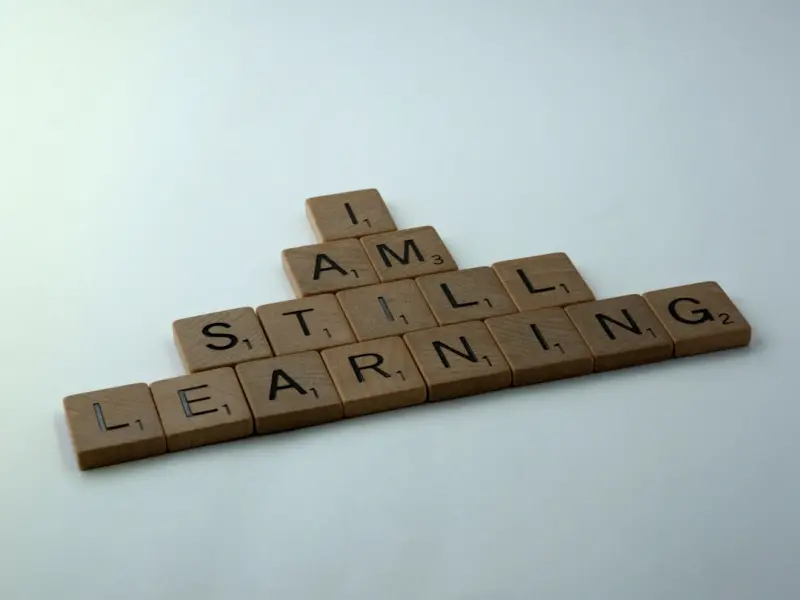
Learning on Autopilot: How AI is Crafting Personal Education Paths for Every Employee
When I first stepped into the world of corporate training, the biggest challenge felt like trying to teach a roomful of strangers how to dance to a song they’d never heard. You’d hand out generic slide decks, sprinkle a few quizzes in, and hope the rhythm stuck. Fast‑forward a few years, and the landscape has shifted dramatically. Today, artificial intelligence is not just a backstage technician—it’s the choreographer, the lighting designer, and sometimes even the DJ. In this piece, I’ll walk you through why AI‑driven personal learning journeys are no longer a futuristic buzzword, but a practical necessity for any organization that wants to stay ahead of the talent curve.
The Problem with One‑Size‑Fits‑All Training
Traditional corporate education has always been a compromise between breadth and depth. You can either cover a wide array of topics superficially or dive deep into a niche subject, leaving the rest of the workforce in the dark. The consequences of that compromise are more than just disengaged learners; they manifest as:
- Skill gaps that widen over time – when employees can’t apply what they learn, the ROI on training evaporates.
- Low completion rates – a one‑size curriculum feels irrelevant, so people abandon it halfway.
- Talent churn – bright minds gravitate toward companies that invest in their growth.
What’s missing is a mechanism that respects the individual learning rhythm while still aligning with broader business goals. That’s where AI steps in, transforming static curricula into living process orchestrators that adapt in real time.
From Static Checklists to Living Process Orchestrators
Imagine a learning platform that knows you’ve just mastered the fundamentals of data visualization, sees that you struggle with advanced statistical modeling, and instantly re‑routes you to a micro‑learning module that fills that specific gap. It’s the same principle that turned static checklists into dynamic workflows in other industries, and the same logic applies to education. By treating each learner as a node in a larger knowledge graph, AI can orchestrate a personalized pathway that evolves as the employee grows.
These orchestrators don’t just shuffle content—they predict what you’ll need next. They analyze performance data, engagement patterns, and even external signals (like market trends) to surface the most relevant skill sets before the need becomes urgent. The result? A workforce that’s always a step ahead, armed with the exact competencies required for the next project, client demand, or strategic pivot.
The Core Technologies Powering Personal Learning Paths
There are three AI pillars that make this transformation possible:
- Natural Language Processing (NLP) – Enables the platform to understand and categorize both formal course content and informal knowledge sources like forum posts, internal wikis, or even meeting transcripts.
- Machine Learning Recommendation Engines – Similar to how streaming services suggest the next binge‑watch, these engines suggest the next learning module based on prior interactions, skill gaps, and career aspirations.
- Predictive Analytics – By forecasting future skill demands (think emerging tech stacks or regulatory changes), the system can proactively surface learning opportunities.
When these components work in concert, the learning experience becomes less of a series of isolated courses and more of a continuous, adaptive journey. And that journey is not just data‑driven; it’s also deeply human.
The Human Touch: Why Multi‑Sensory Learning Still Matters
Even the most sophisticated AI can’t ignore the fact that we, as humans, learn best when multiple senses are engaged. The sensory turn that’s reshaping brand storytelling is equally relevant to education. Think of an AI‑curated module that combines a short video, an interactive simulation, a tactile worksheet, and a quick‑fire quiz—all timed to your optimal attention span.
Research shows that multi‑sensory experiences increase retention by up to 70%. When AI knows which modalities resonate with each learner (perhaps you’re a visual person but thrive on hands‑on tasks), it can stitch together a learning bundle that feels tailor‑made. The result isn’t just better scores; it’s a genuine sense of mastery and confidence.
Building Trust: Transparency in AI‑Powered Learning
One of the biggest hurdles to AI adoption is trust. Employees need to understand why a particular learning recommendation popped up, especially when it feels “outside their comfort zone.” Transparency can be built into the system by offering:
- Explainable Recommendations – Show a simple “Because you completed X and showed interest in Y, we suggest Z.”
- Progress Dashboards – Visualize how each micro‑learning piece contributes to a larger competency map.
- Feedback Loops – Allow learners to rate the relevance of each suggestion, feeding the model back into a more accurate recommendation engine.
When the algorithm’s logic is visible, the perception shifts from “a black box dictating my growth” to “a helpful guide that respects my agency.” That psychological shift is critical for sustained engagement.
Real‑World Success Stories
Let’s look at two organizations that have already turned the AI learning dial from “nice to have” to “mission critical.”
1. A Global FinTech Firm
The company faced a massive compliance overhaul across 12 countries. Using an AI platform, they mapped every employee’s current knowledge against upcoming regulatory requirements. Within weeks, the system auto‑generated individualized learning tracks, complete with micro‑videos, scenario‑based simulations, and live Q&A sessions with experts. Compliance training completion jumped from 48% to 94%, and audit findings dropped dramatically.
2. A Mid‑Size Marketing Agency
To keep up with the rapid rise of programmatic advertising, the agency deployed an AI‑driven learning hub. The platform identified that senior copywriters excelled at storytelling but lacked data‑analysis fluency. It paired them with short, interactive data‑visualization labs and real‑world campaign datasets. Within three months, the agency reported a 30% increase in data‑informed campaign ROI, and the copywriters felt more confident presenting performance metrics to clients.
Both cases share a common denominator: AI didn’t replace human expertise; it amplified it, making learning a strategic lever rather than a compliance checkbox.
Designing Your Own AI‑Infused Learning Ecosystem
If you’re convinced (or even a little curious) about bringing AI into your L&D strategy, here’s a practical roadmap to get started:
- Audit Existing Content – Catalog every learning asset, from formal courses to informal knowledge bases. Tag them by skill, difficulty, and format.
- Define Competency Frameworks – Align skill clusters with business outcomes. This creates the “north star” for AI recommendations.
- Select an AI‑Ready Platform – Look for solutions that support NLP, recommendation engines, and predictive analytics out of the box.
- Pilot with a Cohort – Choose a cross‑functional group, feed them personalized paths, and gather quantitative (completion rates, scores) and qualitative (satisfaction) data.
- Iterate & Scale – Use feedback loops to fine‑tune the algorithm, then roll out to broader departments.
Remember, the technology is only as good as the data you feed it. Invest time in clean taxonomy, accurate skill tagging, and regular content updates. The more granular your inputs, the sharper the AI’s output.
Future Outlook: What’s Next for AI in Education?
We’re already seeing the early whispers of a few emerging trends that will push AI‑driven learning even further:
- Emotion‑Aware Learning – Wearable tech that gauges stress or focus levels, allowing platforms to pause, rewind, or suggest a break.
- Generative Content Creation – AI that can craft bespoke case studies or simulations on the fly, tailored to a learner’s industry or role.
- Cross‑Organization Knowledge Graphs – Shared competency maps that span partners, suppliers, and customers, fostering ecosystem‑wide upskilling.
These innovations will blur the line between “learning” and “working” even more. The day may come when your daily workflow includes AI‑suggested micro‑learning moments that feel as natural as checking your email.
Closing Thoughts
From my early days of handing out printed manuals to today’s AI‑orchestrated learning journeys, the evolution has been nothing short of exhilarating. What remains constant is the core belief that education should be personal, relevant, and empowering. AI is simply the most powerful tool we’ve ever had to make that belief a reality at scale.
If you’re ready to turn your training catalog from a static library into a living, breathing learning engine, start small, stay transparent, and let the data guide you. The future of corporate education isn’t about replacing teachers—it’s about augmenting them, and giving every employee the map they need to navigate an ever‑changing landscape.

Freelance writer with a flare for everything. I am passionate about topics I write crafting stories and compelling content that connect with audiences. Journeying through the realms of creativity as a freelance creator. #WriterLife #ContentCreator
Related Posts

Designing Immersive, Experience‑First Learning for Today’s Classroom
A fresh look at education: moving beyond lectures to micro‑contexts, immersive tech, and real‑ti... Read More

How AI‑Powered Micro‑Credentials Are Redefining Lifelong Learning
AI‑powered micro‑credentials are reshaping education by delivering adaptive, community‑validat... Read More
Micro‑Credentials and Skill Graphs: Redefining Corporate Learning
Micro‑credentials, skill graphs, and AI‑enhanced audio are turning corporate education into a co... Read More
Top Posts

Adaptive Modularity: Re‑Engineering Industrial Products for a Faster Future
Adaptive modularity turns heavy‑industry machines into upgradeable platforms, reducing change‑over time, extending asset life, and aligning with circular‑...Read More
Designing SEO for AI Knowledge Graphs and Conversational Search
A fresh look at SEO shows that ranking isn’t about keyword stuffing anymore but about becoming an entity in AI‑powered knowledge graphs and answering conver...Read More

Why B2B Brands Should Turn Content Into a Strategic Asset, Not Just a Tactic
Treat content as a living strategic asset: use data‑driven ideation, modular design, and robust governance to boost ROI, empower employee advocacy, and future...Read More
Why Low‑Code Platforms Are the Unsung Heroes of Digital Transformation
Low‑code platforms are reshaping how enterprises build applications, delivering speed, cost savings, and broader talent involvement without sacrificing qualit...Read More
0 Comments
Post Comment
You will need to Login or Register to comment on this post!