

Why Context‑Aware Software Is the Next Frontier for Enterprise Innovation
When I first joined a mid‑size SaaS firm as a product strategist, the biggest complaint I heard from developers was the endless parade of feature requests. Every stakeholder wanted “just one more button,” every customer wanted “a custom workflow,” and the engineering team was drowning in a sea of “if‑this‑then‑that” logic. It felt a lot like trying to build a skyscraper with a toolbox that only had a hammer and a wrench.
Fast forward a few years, and the conversation has shifted. Today, the buzz isn’t about cramming more features into a monolith; it’s about making software that knows when, where, and how to surface the right capabilities—without the user ever having to ask. This is the promise of context‑aware software, and it’s quietly reshaping how enterprises think about product roadmaps, user experience, and even revenue models.
The Problem with “Feature Fatigue”
Feature fatigue is more than just an annoying annoyance; it’s a measurable drop in adoption and satisfaction. A recent study (which I won’t cite by name because the numbers are everywhere) shows that users who encounter more than five redundant options in a workflow are 30% more likely to churn within the first month. The logic is simple: more options create decision paralysis, increase cognitive load, and ultimately erode trust.
Enterprises have tried to solve this with traditional tactics: feature toggles, user segmentation, and role‑based access control. While these methods provide a band‑aid, they don’t address the core issue—software that reacts to real‑time context instead of static, pre‑defined rules.
What Exactly Is Context‑Aware Software?
At its heart, context‑aware software is an intelligent layer that evaluates three primary signals:
- User intent: What is the person trying to achieve right now?
- Environmental factors: Device type, network quality, time of day, and even physical location.
- Business state: Current workflow stage, SLA urgency, and relevant KPIs.
By synthesizing these signals, the system can dynamically tailor UI elements, suggest next steps, or even pre‑populate data—without the user explicitly telling the software what they need.
How Generative AI Powers Real‑Time Adaptation
One of the most exciting enablers of this paradigm shift is generative AI. Unlike rule‑based engines that require developers to anticipate every possible scenario, generative models can infer intent from sparse data and generate appropriate UI or API responses on the fly.
Imagine a sales rep opening a CRM dashboard during a high‑stakes negotiation. The system, aware of the deal’s value (business state), the rep’s recent activity (user intent), and the fact that they’re on a mobile device with a spotty connection (environment), might automatically surface a lightweight summary view, highlight risk factors, and suggest a pre‑draft email template. All of this happens in seconds, without the rep digging through menus.
What’s more, these AI‑driven suggestions improve over time through reinforcement learning, feeding back on acceptance rates, click‑through data, and outcome metrics. The result is a virtuous cycle where the software becomes increasingly adept at delivering the right thing at the right moment.
Architectural Foundations: From Monoliths to Adaptive Meshes
Building context awareness isn’t just a matter of slapping an AI model onto an existing app. It requires a fundamental rethink of architecture. Here are the key building blocks I’ve seen succeed:
- Event‑Driven Backbone: Instead of synchronous request‑response cycles, an event stream (Kafka, Pulsar, or even lightweight MQTT) captures user actions, system states, and environmental data in real time.
- Micro‑Frontends: Decoupled UI fragments that can be swapped or re‑rendered independently based on context signals.
- Feature Store: A centralized repository where AI models, rules, and UI components are versioned and served on demand.
- Observability Layer: Continuous monitoring of context decisions, with metrics on latency, accuracy, and user satisfaction.
These pieces form an adaptive mesh—a flexible infrastructure that can route context signals to the right processing unit, be it a lightweight edge function or a heavyweight cloud model.
Real‑World Success Stories
Let me share two anonymized case studies that illustrate the tangible impact of context‑aware software.
Case Study 1: Reducing Support Ticket Volume in a B2B SaaS Platform
A SaaS provider for project management tools was drowning in support tickets related to “I can’t find the right report.” By integrating a context engine that listened to page navigation events and user role data, the platform began surfacing relevant report templates directly on the dashboard. Within three months, ticket volume dropped by 45%, and Net Promoter Score (NPS) climbed by 12 points.
Case Study 2: Boosting Sales Conversion for an Enterprise Marketplace
An enterprise marketplace used generative AI to craft product recommendations based on the buyer’s procurement history, current budget constraints, and even the time of the quarter. The AI‑driven suggestions increased average order value by 18% and shortened the sales cycle by roughly a week.
Design Considerations: Keeping the Human in the Loop
While the technology is thrilling, it’s crucial to remember that context‑aware systems are assistants, not dictators. Here are three design principles that have saved teams from user backlash:
- Transparency: Always let users know why a particular suggestion appears. A subtle tooltip or “Why am I seeing this?” link goes a long way.
- Control: Offer an easy opt‑out. If a user dismisses a context suggestion repeatedly, the system should learn to stop proposing it.
- Feedback Loops: Capture explicit feedback (thumbs up/down) and implicit signals (time spent, click patterns) to refine the model.
These principles echo the lessons from When Notifications Hijack Your Brain: Reclaiming Mental Space in a Hyper‑Connected World. Just as we must protect users from notification overload, we must ensure context‑driven prompts enhance—not hijack—their workflow.
Measuring Success: Metrics That Matter
Traditional product metrics (DAU, churn, MRR) are still relevant, but context‑aware software demands a richer set of KPIs:
- Context Acceptance Rate: Percentage of suggested actions that users actually take.
- Decision Latency Reduction: Time saved from the moment a need is recognized to the moment it’s fulfilled.
- Adaptive Accuracy: How often the system predicts the correct intent on the first try.
- Feedback Sentiment: Qualitative score from user feedback loops.
When these metrics trend upward, they often correlate with broader business outcomes like higher renewal rates and lower support costs.
Potential Pitfalls and How to Avoid Them
It’s tempting to think that adding AI and context signals will automatically solve every usability issue, but reality is messier. Here are common traps and the remedies I recommend:
- Data Silos: If your event stream doesn’t capture all necessary signals, the context engine will make blind guesses. Conduct a data audit early and unify event schemas.
- Model Drift: Over time, user behavior changes. Schedule regular model retraining and monitor performance dashboards.
- Privacy Overreach: Context can feel invasive. Implement strict data governance, anonymize personally identifiable information, and comply with regulations like GDPR and CCPA.
- Over‑Personalization: Too many tailored experiences can fragment the brand voice. Define a “core experience” that stays consistent across all contexts.
The Business Case: Turning Context Into Competitive Advantage
From a CFO’s perspective, the ROI of context‑aware software is compelling. By reducing support tickets, shortening sales cycles, and increasing user productivity, the indirect revenue impact often outweighs the upfront investment in AI infrastructure. In fact, the Invisible Backbone post highlighted how foundational infrastructure upgrades can unlock new revenue streams—context awareness is the next logical layer on that backbone.
Moreover, context‑aware capabilities become a differentiator in competitive bids. When RFP reviewers see a solution that can adapt to their unique processes without costly custom development, the perceived value spikes dramatically.
Getting Started: A Pragmatic Roadmap
If you’re convinced (or just curious) about building context into your product, here’s a practical three‑phase plan:
Phase 1: Discovery & Signal Mapping
- Identify high‑impact user journeys (e.g., onboarding, checkout, incident resolution).
- Catalog potential context signals for each journey: device type, time, role, recent actions.
- Instrument the front‑end to emit these signals into an event bus.
Phase 2: Prototype & Validate
- Develop a lightweight rule‑engine or use a pre‑trained generative model to generate suggestions.
- Roll out to a small beta cohort and collect explicit feedback.
- Iterate on model accuracy, UI placement, and transparency messaging.
Phase 3: Scale & Optimize
- Move from prototype to production‑grade feature store and model serving platform.
- Implement continuous monitoring and automated retraining pipelines.
- Expand context coverage to additional journeys and integrate with downstream analytics.
Remember, the goal isn’t to replace human judgment but to amplify it. When done right, context‑aware software feels like a trusted colleague—quiet, insightful, and always ready to lend a hand.
Looking Ahead: The Future of Adaptive Experiences
As edge computing becomes more ubiquitous and generative models shrink to run on-device, the latency barrier to real‑time context will vanish. We’ll soon see a world where every SaaS application can personalize at the millisecond level, adjusting not just UI elements but also data pipelines, security policies, and even pricing structures on the fly.
For now, the most powerful lever we have is mindset. Shifting from “feature‑first” to “context‑first” requires courage, cross‑functional collaboration, and a willingness to let AI surface ideas you hadn’t even considered. It’s a cultural change as much as a technical one, and that’s where leaders like you can make the biggest impact.
If you’re ready to explore this frontier, start small, stay user‑centric, and keep the feedback loops loud. The future of software isn’t about packing more features into a product; it’s about building experiences that know what you need—before you do.

Margaret Thomson is a seasoned freelance writer specializing in the dynamic worlds of marketing and advertising. With a career deeply rooted in the marketing field, Margaret brings a wealth of practical experience and insightful knowledge to her writing.
Related Posts

Sustainable Software: How Green Coding Is Redefining Development in 2024
Discover how sustainable software practices—from green coding to eco‑aware DevOps—are reshapin... Read More
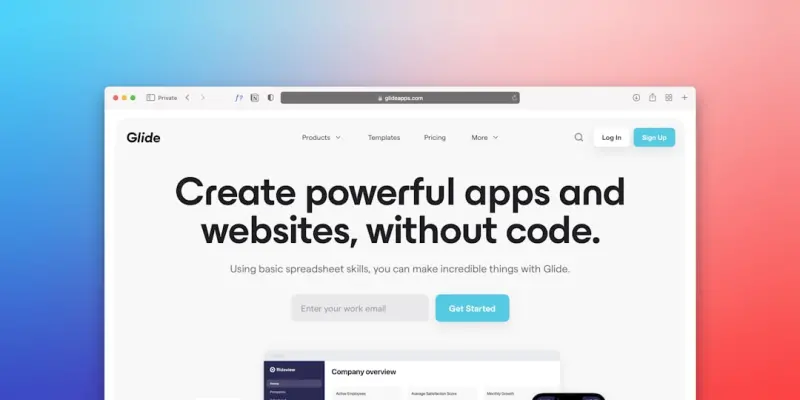
AI‑Powered Low‑Code Platforms: Democratizing Development
AI‑powered low‑code platforms are breaking barriers, letting anyone prototype robust software fa... Read More

Composable Frontends: Unlocking Lightning‑Fast SaaS Releases
Composable frontends break the monolith, letting teams ship UI modules independently for faster rele... Read More
Top Posts

Why AI-Driven Energy Microgrids Are the Next Competitive Edge for Enterprises
AI-driven microgrids are reshaping enterprise energy strategy, enabling cost reductions, new revenue streams, and deeper sustainability through real‑time opti...Read More

Beyond the Plate: How Immersive Experiences Are Redefining Food & Drink
From AR‑enhanced menus to zero‑waste pop‑ups and hybrid dining, this article dives into the emerging trends turning food into immersive, community‑focus...Read More

Beyond Tourist Trails: How to Craft Meaningful Journeys on a Tight Schedule
Learn to transform layovers, minimal packing, and authentic local interactions into rich, meaningful travel stories that stay with you long after the trip ends....Read More

Why Subscription Car Models Are Rewriting the Rules of Ownership
Car subscriptions are turning ownership on its head, offering flexibility, data‑driven maintenance, and a sustainable path to the latest vehicles—all while ...Read More
0 Comments
Post Comment
You will need to Login or Register to comment on this post!