
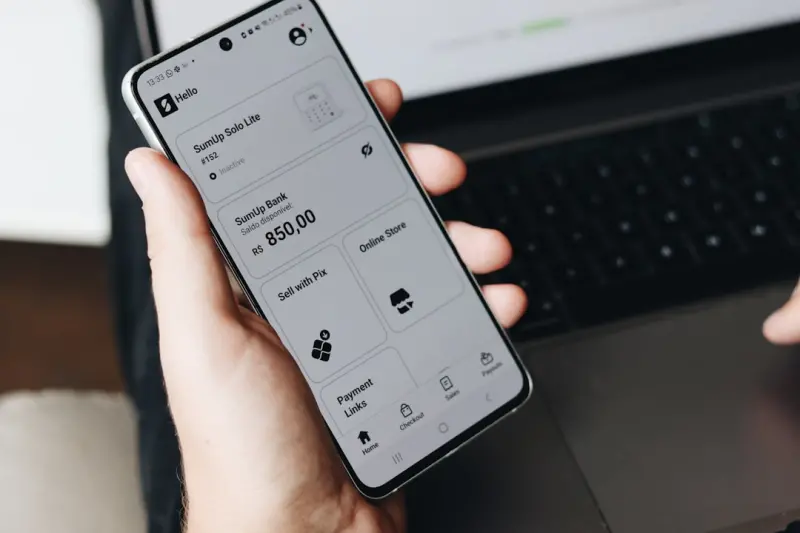
Opening the Door: How Enterprise Mobile Apps Redefine Customer Success
When I first started dabbling in mobile development for my side projects, I never imagined the device in my pocket would become the primary conduit through which B2B customers interact with a SaaS platform. Today, the smartphone is more than a convenience—it’s the new front door for customer success, a dynamic touchpoint that blends data, personalization, and real‑time support into a single, portable experience.
In this post I’ll walk you through why enterprise mobile apps deserve a seat at the strategic table, how they differ from a simple responsive website, and the practical steps you can take to design, launch, and continuously improve an app that truly empowers your customers. Along the way, I’ll sprinkle in some insights from our own research—like the ideas behind AI as your product’s invisible strategist—to show how emerging technologies can be woven into the mobile experience without feeling gimmicky.
The Mobile Moment: Why Timing Matters More Than Ever
Think about the last time you needed to check a metric, approve a workflow, or get a quick answer from a vendor while on the go. Chances are you reached for your phone, not your laptop. This “mobile moment” is a behavioral shift that has three core implications for SaaS companies:
- Instantaneous expectations: Users now expect sub‑second load times and context‑aware information.
- Fragmented workflows: Tasks are no longer confined to a desk; they spill over into commutes, coffee breaks, and field visits.
- Data‑rich interactions: Sensors, location services, and push notifications provide a richer canvas for personalization.
If you continue to treat your mobile presence as an afterthought—merely a responsive version of your web app—you’ll miss out on the strategic advantage that a purpose‑built mobile app offers.
Mobile vs. Responsive Web: The Real Difference
It’s tempting to think a responsive design solves the mobile challenge. It does for readability, but it falls short on three critical fronts:
- Native capabilities: Mobile operating systems expose APIs for push notifications, biometric authentication, offline storage, and device‑level security that a web page simply can’t tap into.
- Performance: Native code (or well‑optimized hybrid frameworks) can pre‑cache data, reduce round‑trip latency, and deliver smoother animations—key for keeping users engaged.
- Context awareness: GPS, accelerometer, camera, and even Bluetooth can be leveraged to surface the right feature at the right moment, something a generic browser can’t reliably do.
In short, a mobile app is not a smaller website; it’s a distinct product layer that can unlock experiences your customers can’t get elsewhere.
Designing for Enterprise: The Three Pillars of a Successful Mobile App
Enterprise mobile apps must balance the rigor of corporate security with the fluidity of consumer‑grade UX. I’ve found that success rests on three pillars: Purpose‑Driven Flow, Adaptive Security, and Data‑Infused Personalization.
1. Purpose‑Driven Flow
Every screen should answer a single, well‑defined question: “What does the user need to achieve right now?” Avoid feature bloat by mapping out the most common tasks your customers perform on the web and distilling them into micro‑flows that can be completed in under two minutes. A useful exercise is to conduct “mobile shadowing” sessions—observe a user in the field, note interruptions, and redesign the flow to be interruption‑tolerant.
2. Adaptive Security
Enterprise customers demand compliance, encryption, and auditability. Mobile security is a layered problem:
- Device enrollment: Leverage Mobile Device Management (MDM) or Enterprise Mobility Management (EMM) solutions to enforce passcodes and remote wipe.
- Zero‑Trust authentication: Combine biometrics (fingerprint, facial recognition) with short‑lived tokens from your identity provider.
- Data protection: Use on‑device encryption and sandbox storage for any cached data, and ensure all API traffic is TLS‑encrypted.
When security feels seamless—thanks to native biometric prompts, for example—users are more likely to adopt the app without friction.
3. Data‑Infused Personalization
This is where the magic of AI and analytics meets the mobile screen. By feeding real‑time usage data into a recommendation engine, you can surface the most relevant dashboards, alerts, or actions. Think of a sales rep who receives a push notification showing the top‑performing product for a specific territory, or a support manager who sees a heatmap of unresolved tickets right after opening the app.
Our own research on The Data‑Driven Playbook for Building a Human‑Centric SaaS Brand underscores how data‑centric personalization drives both adoption and satisfaction, and the same principles translate beautifully to mobile.
Building the App: Choosing the Right Development Approach
There are three main paths you can take, each with trade‑offs:
Native Development
Pros: Highest performance, full access to device APIs, best UX. Cons: Requires separate codebases for iOS (Swift/Obj‑C) and Android (Kotlin/Java), higher upfront cost.
Cross‑Platform Frameworks
Tools like React Native, Flutter, or Xamarin let you write once and deploy to both platforms. They strike a balance between speed and native feel, but you may still encounter platform‑specific quirks that need native bridges.
Low‑Code/No‑Code Platforms
Emerging solutions (e.g., Mendix, OutSystems) empower product teams to assemble functional mobile experiences with drag‑and‑drop components. They’re perfect for MVPs or internal tools, yet they can hit scalability ceilings when you need deep native integrations.
My recommendation? Start with a cross‑platform framework for rapid iteration, then transition critical modules to native code as usage data validates the ROI.
Integrating AI Without Overpromising
AI is the buzzword that can either elevate your app or make it feel like a novelty. The sweet spot lies in using AI as a silent helper—much like the concept behind AI as your product’s invisible strategist. Here are three pragmatic use cases:
- Smart Summaries: When a user opens a report on the go, generate a concise, AI‑crafted executive summary that fits a small screen.
- Predictive Alerts: Leverage machine‑learning models to forecast churn risk or usage spikes and push timely alerts to the appropriate stakeholder.
- Contextual Search: Enable natural‑language queries (“Show me last quarter’s net‑new revenue for the APAC region”) and have the backend translate them into API calls.
Key principle: AI should surface insights, not require users to interpret raw data. Keep the interaction frictionless, and let the algorithm work behind the scenes.
Measuring Success: The Mobile‑First KPI Dashboard
Traditional SaaS metrics—ARR, churn, NPS—still matter, but mobile introduces its own set of performance indicators:
| Metric | Why It Matters |
|---|---|
| Daily Active Users (DAU) | Shows adoption frequency and habit formation. |
| Session Length | Indicates whether tasks can be completed quickly or if users are struggling. |
| Push Notification Opt‑In Rate | Measures willingness to receive real‑time communication. |
| Feature Completion Rate | Tracks success of purpose‑driven flows. |
| Crash-Free Sessions | Ensures stability, a non‑negotiable for enterprise trust. |
By aligning these mobile‑specific KPIs with your broader business goals, you can prove the app’s impact on revenue and customer health, securing continued investment from leadership.
Iterative Launch: From Beta to Enterprise‑Wide Rollout
A phased launch mitigates risk and gathers actionable feedback:
- Internal Pilot: Deploy to a small group of power users or internal teams. Capture qualitative feedback on UI nuances and security concerns.
- Closed Beta with Select Customers: Invite a handful of strategic accounts. Offer a dedicated support channel to quickly resolve issues.
- Public Rollout: Once stability benchmarks are met (e.g., < 0.5% crash rate, >80% push opt‑in), release to the wider customer base.
Remember to keep the feedback loop tight—use in‑app surveys, analytics, and support tickets to prioritize improvements. The goal is a living product that evolves alongside user needs.
Case Study: Turning a Mobile Support App into a Revenue Engine
One of our SaaS clients, a cloud‑based IT management platform, launched a mobile app focused solely on ticket triage. Within six months, they observed:
- 30% reduction in average ticket resolution time, thanks to push notifications that routed high‑priority alerts to the on‑call engineer’s device.
- 15% increase in upsell opportunities, as the app surfaced usage analytics that highlighted under‑utilized modules.
- Higher NPS among field technicians, who appreciated the ability to approve changes without returning to a desktop.
The key takeaway? Even a narrowly scoped mobile feature can ripple through the entire customer journey, creating both operational efficiency and revenue upside.
Future‑Proofing: Preparing for the Next Wave of Mobile Innovation
Mobile technology isn’t static. Here are three trends you should keep on your radar:
- 5G & Edge Computing: Faster networks enable richer, real‑time data visualizations and AI inference on the device.
- Augmented Reality (AR) Overlays: Imagine a field engineer pointing a phone at a server rack and instantly seeing maintenance logs superimposed.
- Zero‑UI Interactions: Voice assistants and gesture control could reduce the need for taps, especially in hands‑busy environments.
By designing your mobile architecture with modularity in mind—separating data, business logic, and presentation layers—you’ll be ready to plug in these capabilities without a full rewrite.
Conclusion: Mobile as the New Customer Success Hub
Enterprise mobile apps have graduated from nice‑to‑have to must‑have. They bring customers into the flow of their own work, deliver data‑driven insights at the point of decision, and reinforce the trust that underpins a lasting SaaS relationship. By following a purpose‑first design philosophy, embedding adaptive security, leveraging AI responsibly, and committing to iterative improvement, you can turn a simple mobile screen into a powerful engine for customer success—and, ultimately, for business growth.
So, if you’ve been treating your mobile presence as an afterthought, it’s time to re‑evaluate. Open the door, invite your customers in, and watch how the conversation—and your bottom line—evolves.

In the world of freelance writing, where creativity and adaptability are paramount, Michelle Fisher stands out as a dedicated and versatile professional. With a passion for crafting compelling narratives and a keen eye for detail, Michelle has established herself as a trusted voice.
Related Posts

How Stealthy Mobile Apps Supercharge Enterprise Agility
Mobile apps are evolving from flashy consumer gadgets to silent powerhouses that streamline enterpri... Read More

Modular Mobile Apps: Cutting Bloat, Boosting Agility
A modular approach to mobile development trims app size, accelerates build cycles, and enables rapid... Read More

The Impact of Sustainable Mobile Apps on the Environment
The production and use of mobile apps contribute to e-waste, energy consumption, and carbon emission... Read More
Top Posts

AI‑Driven SEO: From Keywords to Knowledge Graphs
SEO has evolved beyond keyword stuffing. In this deep dive, Karen Edwards explains how AI, structured data, and an observability mindset can transform your SaaS...Read More

Reimagining Interior Spaces with Adaptive Design and Sustainable Materials
A deep dive into how modular layouts, eco‑friendly materials, and data‑driven insights are transforming interior design into a dynamic, inclusive, and susta...Read More

Digital Twins: The Enterprise’s Secret Weapon for Real‑World Insight
Digital twins are no longer limited to high‑tech labs; they’re becoming essential tools for enterprises seeking real‑time operational insight, predictive ...Read More
Beyond Push: Designing Context‑Aware Mobile Experiences
Push notifications are losing their edge; the future lies in mobile apps that intelligently respond to real‑time context, delivering personalized experiences ...Read More
0 Comments
Post Comment
You will need to Login or Register to comment on this post!