
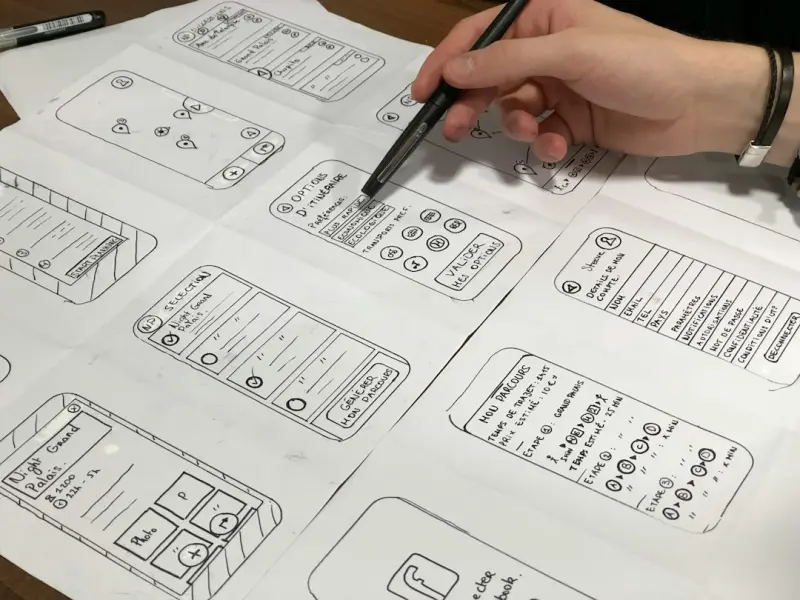
Why “Push‑Only” Is No Longer Enough
When I first launched a side‑project mobile app, the biggest question on my mind was simple: How do I get users to open it? The answer at the time was a barrage of push notifications, each promising a discount, a reminder, or a fresh piece of content. Fast forward a few releases and the push‑only strategy feels dated—users have learned to ignore or even disable notifications, and the market is saturated with apps that scream for attention.
What’s missing is context. The next wave of mobile experiences is shifting from “hey, look at me!” to “hey, I understand you.” It’s about leveraging the device’s sensors, the user’s behavior, and real‑time data streams to deliver moments that feel personal without being intrusive.
The Anatomy of Context‑Awareness
Context‑aware mobile apps synthesize three core data streams:
- Environmental signals – GPS, accelerometer, ambient light, even Bluetooth beacons.
- Behavioral cues – in‑app navigation patterns, time of day usage, and interaction frequency.
- Business intent – the specific outcomes you want the user to achieve, such as completing a purchase, finishing a learning module, or logging a health metric.
When these signals intersect, the app can surface the right content at the right moment. Think of a travel booking app that nudges a user with a “Check‑in reminder” only when they’re within a 1‑kilometer radius of the airport and it’s past 10 a.m. instead of blasting a generic reminder at 9 a.m. regardless of location.
Designing With Privacy at the Forefront
Context is powerful, but it also treads on privacy. The most successful apps treat data as a partnership, not a resource to be mined.
Here’s a quick checklist to keep your design privacy‑first:
- Transparent consent flows – Explain why you need each sensor and how the data will improve the experience.
- Granular controls – Let users toggle specific context sources (e.g., “only use location when I’m actively using the app”).
- Edge processing – Run AI inference on-device whenever possible to avoid sending raw sensor data to the cloud. For a deeper dive on why edge matters, see Beyond the Cloud.
- Data minimization – Store only what you need, and purge it when it’s no longer relevant.
Tech Stack for Real‑Time Context
Building a truly context‑aware app isn’t just about clever UX; it requires a robust, low‑latency backend.
- Edge‑Enabled APIs – Use serverless functions that can be deployed at the network edge, reducing round‑trip time for sensor data.
- On‑Device Machine Learning – Frameworks like TensorFlow Lite or Core ML let you run predictive models locally, enabling instant personalization.
- Event‑Driven Architecture – Stream processing platforms (Kafka, Pulsar) can ingest high‑velocity sensor data and trigger actions in milliseconds.
- Contextual Rules Engine – A declarative system where product managers can define “if‑then” rules without writing code, accelerating iteration.
From Theory to Practice: Real‑World Use Cases
Below are three industries where context‑aware mobile experiences are already reshaping user expectations.
1. Customer Service – Conversational AI Meets Context
Imagine a banking app that detects you’ve just entered a branch (via Bluetooth beacons) and instantly surfaces a chat window offering to answer common questions about loan rates. The conversation feels natural because it’s anchored in your immediate environment.
This approach dovetails nicely with the principles of Voice‑First SEO, where the goal is to make digital interfaces respond to spoken intent. In a mobile context, the same conversational flow can be triggered by sensor data instead of voice, expanding accessibility.
2. Retail – Hyper‑Personalized In‑Store Journeys
Retailers are moving beyond QR codes and static offers. By pairing a shopper’s purchase history with real‑time location data, an app can push a “You might also like” carousel the moment the customer walks past a related aisle. When combined with AR overlays, the experience becomes a guided tour that feels both curated and spontaneous.
3. Health & Wellness – Proactive Coaching
Fitness apps have long used step counts, but the next generation will monitor stress levels (via heart‑rate variability) and suggest a breathing exercise precisely when the user’s stress spikes. This proactive stance transforms the app from a passive tracker into a personal wellness coach.
Common Pitfalls and How to Avoid Them
Even with the best intentions, context‑aware apps can stumble. Here are the most frequent missteps and quick fixes.
- Over‑notification: Sending too many context triggers leads to fatigue. Solution: Implement a throttling algorithm that caps interventions per hour.
- One‑size‑fits‑all rules: Assuming the same context works for all users. Solution: Use adaptive learning models that personalize rule thresholds based on individual behavior.
- Neglecting fallback flows: If a sensor fails, the app should gracefully degrade. Solution: Design fallback content that still adds value without context, such as a generic daily tip.
- Ignoring offline scenarios: Mobile users aren’t always online. Solution: Cache relevant context data locally and sync when connectivity returns.
The Future: Seamless Fusion of Context and Intent
Looking ahead, the line between context and intent will blur. Advances in multimodal AI will let apps interpret a user’s facial expression, voice tone, and touch pressure to infer mood, then respond with the appropriate UI state.
Moreover, the rise of Zero‑Trust Mobile Architectures will ensure that even as data travels between device, edge, and cloud, it remains encrypted and verified at every hop. This will give users the confidence to let apps act on their context without fearing exposure.
Getting Started – A Pragmatic Playbook
If you’re ready to prototype a context‑aware experience, follow these three steps:
- Identify a high‑impact moment – Look for a friction point in your user journey that could benefit from timely assistance.
- Map available signals – List the device sensors, usage patterns, and external APIs you can safely tap into.
- Build a lightweight rule – Start with a simple “if‑then” statement and measure its impact. Iterate quickly, adding AI‑driven nuance as data accrues.
Remember, the goal isn’t to overwhelm users with data but to anticipate their needs in a respectful, helpful manner.
Conclusion – From Push to Predict
Push notifications gave us the first taste of mobile engagement, but the next chapter belongs to apps that predict and personalize based on context. By marrying on‑device intelligence, edge‑centric backends, and a privacy‑first mindset, you can craft experiences that feel less like marketing and more like a trusted companion.
Ready to move beyond the push? Start mapping your users’ moments today, and watch your app become the go‑to tool they reach for—without ever having to ask.

Laura Wilson is a freelance writer specializing in the dynamic and ever-evolving field of health. With a passion for translating complex medical information into accessible and engaging content, Laura brings a wealth of knowledge and a fresh perspective to topics ranging from preventative care and nutrition to cutting-edge research and innovative treatments.
Related Posts

The Unseen Levers Driving Mobile App Adoption in Enterprise SaaS
A deep dive into the quiet, often overlooked tactics that make mobile apps essential for B2B SaaS, c... Read More
Edge‑Powered Mobile Apps: Turning On‑Device Computing into a Business Advantage
Edge computing brings processing closer to the user, slashing latency, enhancing offline reliability... Read More

Low‑Code Mobile Apps: Accelerating Enterprise Innovation
Low‑code mobile development transforms siloed engineering into a democratized innovation engine, l... Read More
Top Posts

Why Real-World Economics Are the New Game-Changer for Virtual Worlds
A deep dive into how modern games borrow real‑world economics—dynamic pricing, scarcity, and player‑driven markets—to boost engagement, create fairer pl...Read More

Silent Hiking: Harnessing Minimalist Tech for Deeper Nature Connections
Silent hiking blends purpose‑first gear, low‑energy devices, and AI‑informed planning to deepen nature connections while keeping safety intact and reducin...Read More

The Intersection of Business and Sustainability: A New Era for Companies
The intersection of business and sustainability is a rapidly evolving space that presents both challenges and opportunities for companies. Learn how businesses ...Read More

When Your Blog Becomes a Growth Engine: Harnessing Micro‑Experiments for Massive Impact
Learn a step‑by‑step framework to turn every blog post into a data‑driven micro‑conversion, using visual storytelling, real‑time audience signals, and...Read More
0 Comments
Post Comment
You will need to Login or Register to comment on this post!