
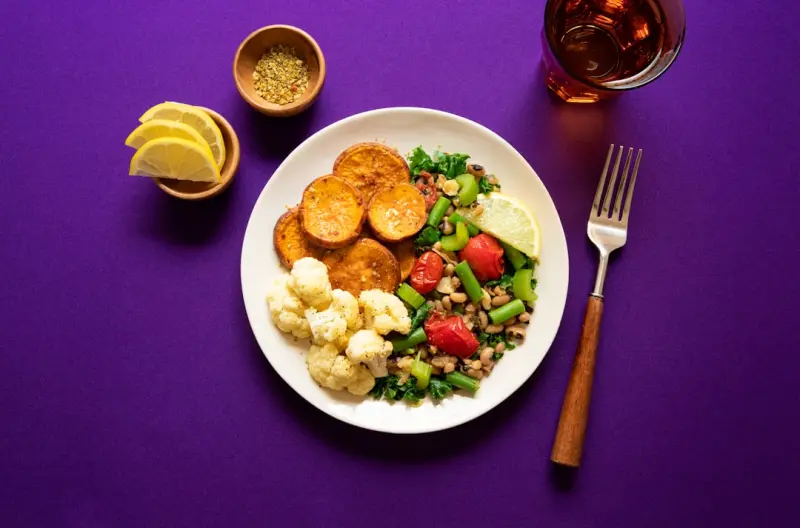
When I first set foot in a farmer’s market armed with nothing but curiosity and a reusable tote, I expected the usual kale, tomatoes, and a few artisanal loaves. What I walked away with, however, was a notebook full of questions about why certain flavors click while others clash, and a sudden urge to turn my kitchen into a modest laboratory where taste becomes an experiment rather than a routine.
Why Flavor Pairing Isn’t Just for Chefs
Most people think flavor pairing is a secret reserved for Michelin‑starred chefs or food scientists with PhDs in molecular gastronomy. In reality, it’s a toolkit anyone can use to inject excitement into everyday meals. The basic premise is simple: ingredients share aromatic compounds, and when those compounds overlap, the flavors harmonize. Think of it as a musical chord—when the notes (or molecules) resonate together, the result is pleasing to the palate.
My first “aha” moment came while making a simple roasted beet salad. I tossed the beets with a splash of orange‑infused olive oil, a pinch of sea salt, and a handful of crumbled feta. The salad sang. Later, I discovered that both beets and oranges contain the compound beta‑ionone, which contributes a subtle, sweet, floral note. The feta, with its tangy acidity, created a contrast that highlighted the shared aroma without overwhelming it.
The Kitchen Lab: Tools and Techniques
Turning my kitchen into a flavor lab didn’t require expensive equipment. Here’s the modest arsenal I rely on:
- Spice rack roulette: I keep a rotating selection of whole spices—cinnamon sticks, star anise, cumin seeds—so I’m constantly reminded to experiment.
- Flavor journal: A small notebook where I log combinations, noting the primary aromatic compounds (a quick Google search helps).
- Infusion jars: Simple glass jars for infusing oils, vinegars, and spirits with herbs or spices, letting me taste the results before committing to a full dish.
- Digital pantry tracker: An app that alerts me when ingredients are nearing expiration, nudging me toward creative pairings rather than waste.
One of the most rewarding practices is the blind taste test. I’ll combine two seemingly unrelated ingredients, blindfold myself, and focus purely on the aroma and texture. This forces my brain to prioritize sensory data over preconceived notions, often revealing delightful matches I’d never consider otherwise.
Science Meets Storytelling: The Narrative Behind Each Bite
Food isn’t just fuel; it’s a storytelling medium. When you understand the science behind a pairing, you can craft a narrative that elevates the dining experience. For instance, serving a dark chocolate mousse with a sprinkle of smoked sea salt isn’t merely about contrasting sweet and salty—it’s a dialogue between the earthiness of cacao and the oceanic whispers of the salt, reminding diners of the journey from cocoa bean to coastal breeze.
In my recent dinner party, I paired roasted cauliflower with a miso‑ginger glaze and a dash of pomegranate molasses. The miso brought umami depth, the ginger added a bright zing, and the pomegranate offered a tart finish. While explaining the dish, I narrated the story of how miso, a fermented Japanese staple, meets the ancient Mediterranean tradition of using pomegranate in sauces—a cultural crossover that sparked lively conversation around the table.
Sustainable Sourcing: From Farm to Fork with Purpose
Flavor exploration goes hand‑in‑hand with responsibility toward the planet. I’ve started sourcing ingredients from local farms that practice regenerative agriculture, which not only reduces carbon footprints but also often yields more robust flavors. When vegetables are grown in healthy soils, their aromatic profiles are richer—a fact supported by both chefs and scientists.
Beyond local farms, I’ve also begun personalized shopping algorithms that recommend produce based on seasonality, carbon impact, and even my past flavor experiments. These tools help me avoid the “same old” supermarket aisle routine and instead discover heirloom varieties that might be perfect for my next culinary experiment.
Zero‑Waste Cooking: Turning Scraps into Stars
Every part of an ingredient can be a flavor catalyst if you know where to look. Carrot tops, once discarded, make a vibrant pesto when blended with olive oil, lemon zest, and a handful of walnuts. Potato skins, when tossed in smoked paprika and roasted, become crispy chips that rival store‑bought versions. Even coffee grounds can be repurposed as a rub for steak, adding a subtle bitterness that balances the meat’s richness.
Implementing a zero‑waste mindset has forced me to be more inventive. It’s no longer about what to cook, but how to maximize every bite’s potential. This mindset aligns perfectly with my ongoing quest for flavor discovery—if something is considered waste, it might just be an untapped aromatic treasure.
Fermentation: The Ancient Art Reimagined
Fermentation has surged back into the culinary spotlight, but it’s more than a trendy buzzword. It’s a natural process that transforms simple ingredients into complex flavor powerhouses. I’ve been experimenting with quick ferments—think kimchi‑style cabbage slaw with a splash of rice vinegar, or lacto‑fermented carrots spiced with cumin and coriander.
The magic lies in the lactic acid bacteria that develop, creating tangy, savory notes that enhance umami. Fermentation also boosts the nutritional profile, making foods easier to digest and increasing probiotic content—a win‑win for taste and health.
Flavor Pairing in Beverages: Beyond the Cocktail
While cocktails often get the spotlight for creative pairings, the same principles apply to non‑alcoholic drinks. I love crafting infused waters using aromatic herbs like rosemary paired with citrus slices—an easy, refreshing option that’s both hydrating and palate‑pleasing.
For a more indulgent treat, I’ve experimented with cold‑brew coffee infused with cardamom pods and a drizzle of honey. The cardamom introduces a floral, slightly spicy nuance that elevates the coffee’s natural bitterness. Serving it over a scoop of vanilla bean ice cream creates a dessert‑like experience without the need for heavy toppings.
Technology Meets Taste: Smart Kitchens and Flavor Exploration
While I’m not a tech guru, I can’t ignore how smart kitchen gadgets are reshaping how we experiment. Devices that monitor temperature and humidity can guide precise fermentations, while connected scales that sync with recipe apps help maintain consistency across batches.
One of my favorite tools is a digital dashboard that tracks the carbon footprint of each ingredient I purchase. By visualizing this data, I’m nudged toward greener choices, such as opting for locally sourced herbs over imported ones, which also happen to be fresher and more aromatic.
Building Community Through Shared Flavor Journeys
Food is inherently social. I’ve started a monthly “Flavor Exchange” with a group of friends, where each person brings an ingredient they’re excited about, and we collectively brainstorm pairings. The result? A rotating menu of unexpected dishes—think beet‑infused hummus, or quinoa tossed with toasted pumpkin seeds and a miso‑maple dressing.
These gatherings have turned into mini‑workshops where we share notes, taste each other’s creations, and even record the experience in a shared Google Doc. Over time, we’ve built a library of flavor pairings that we can reference when planning meals, turning our kitchens into collaborative labs.
Practical Steps to Start Your Own Flavor Adventure
Ready to embark on your own flavor exploration? Here’s a simple roadmap:
- Pick a base ingredient: Choose something you love—maybe a root vegetable, a grain, or a protein.
- Identify its aromatic compounds: A quick online search will reveal the main molecules (e.g., beta‑ionone, cinnamaldehyde).
- Find a complementary ingredient: Look for another food that shares at least one of those compounds.
- Test a small batch: Combine them in a modest portion, note the taste, texture, and aroma.
- Document the process: Write down what worked and what didn’t. Over time, patterns will emerge.
- Scale up and share: Once confident, incorporate the pairing into a full dish and invite friends to taste.
Remember, the goal isn’t perfection—it’s curiosity. Each experiment, successful or not, adds a new data point to your personal flavor map.
The Future of Flavor: A Personal Prediction
Looking ahead, I envision a world where flavor data becomes as commonplace as nutrition facts. Imagine scanning a QR code on a package and instantly seeing suggested pairings, sustainability scores, and even regional recipe variations. Such transparency would empower home cooks to make more informed, adventurous choices while supporting sustainable practices.
Until that day arrives, we can still harness the tools at our disposal—our senses, a dash of scientific curiosity, and a willingness to step outside culinary comfort zones. By treating each meal as a mini‑experiment, we not only enrich our own palates but also contribute to a broader conversation about food, culture, and the planet.
So next time you stand in front of your pantry, ask yourself: “What unexpected partner could this ingredient meet tonight?” The answer might just surprise you, and your taste buds will thank you for the adventure.

Freelance writer with a flare for everything. I am passionate about topics I write crafting stories and compelling content that connect with audiences. Journeying through the realms of creativity as a freelance creator. #WriterLife #ContentCreator
Related Posts
Sipping the Future: Hyper‑Local Ingredients Transform Coffee Culture
Discover how hyper‑local sourcing is reshaping coffee rituals, delivering fresher flavors, lower c... Read More
From Fermentation to Flavor Science: Fresh Ways to Reinvent Everyday Cooking
Explore fresh kitchen alchemy with fermentation, flavor science, zero‑waste pantry pivots, and AIâ... Read More

Sip, Savor, Connect: Redefining Office Refreshments for the Modern Team
A fresh look at how curated office beverages and flavor‑focused rituals can turn the humble fridge... Read More
Top Posts

Google’s Generative Workspace: A New Era for Enterprise Knowledge Flow
Google’s generative Workspace merges AI with familiar tools to streamline knowledge capture, discovery, and collaboration, turning information overload into a...Read More

Level‑Up Your Day: Gaming Mechanics for Real‑World Mastery
Explore how micro‑goals, dynamic difficulty, storytelling, and rapid iteration from modern games can transform everyday work into a rewarding, level‑up expe...Read More
Building Faster, Smarter Front‑Ends with Serverless and Component‑First Workflows
Explore a component‑first, serverless approach to front‑end development that boosts performance, accessibility, and SEO while empowering developers to itera...Read More

Reimagining Celebrations: DIY Immersive Rituals for Modern Families
Turn ordinary milestones into unforgettable moments with DIY immersive rituals that blend technology, storytelling, and sustainable flair—perfect for families...Read More
0 Comments
Post Comment
You will need to Login or Register to comment on this post!