
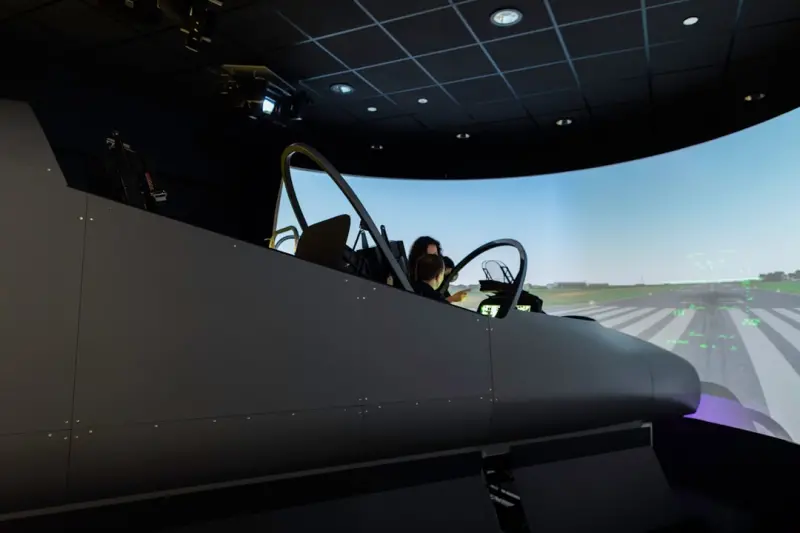
Why Flight Simulators Are the Unexpected Hero of Modern Corporate Training
When most people think about employee education, they picture slide decks, webinars, or maybe a polished LMS. In my two‑decade trek through the SaaS and learning‑tech ecosystems, I’ve seen countless “next‑big‑thing” promises that fizzled out. Yet one technology, born in the cockpit and honed for pilots, is quietly reshaping how we teach complex, high‑stakes skills to knowledge workers: flight simulation.
From the Cockpit to the Conference Room
At first glance, a flight simulator seems worlds apart from a product‑management workshop or a data‑analysis bootcamp. The connection, however, lies in the core challenges both domains face: high risk, low tolerance for error, and the need for rapid skill acquisition. Pilots train in a safe, repeatable environment where mistakes are costly only in virtual points—not in lives or revenue. That same safety net is exactly what corporate learners crave when they grapple with intricate workflows, compliance protocols, or emerging technologies.
What makes simulation so compelling isn’t just the flashy graphics; it’s the embodied cognition it creates. Learners aren’t passively absorbing facts—they’re actively navigating scenarios, making decisions, seeing immediate consequences, and iterating. Research shows that this loop of action‑feedback‑reflection can improve retention by up to 75 % compared with traditional lecture‑based instruction.
The Three Pillars of Simulation‑Driven Learning
- Real‑World Fidelity – High‑resolution models replicate the nuances of the task at hand, whether that’s a sales pipeline, a network topology, or a financial forecasting tool.
- Safe Failure – Learners can experiment without fearing real‑world fallout, encouraging exploration and creativity.
- Instant Data Analytics – Every action is logged, enabling coaches to deliver precise, data‑driven feedback.
When these pillars align, you get a learning experience that feels less like a chore and more like a mission.
Designing a Simulation That Actually Works
Building a compelling simulation is far from a plug‑and‑play exercise. It requires a blend of instructional design, subject‑matter expertise, and technology integration. Below are the steps I’ve found most effective:
- Define Clear Learning Objectives – Know exactly what competency you want participants to demonstrate. Vague goals lead to vague simulations.
- Map Real‑World Processes – Break down the task into discrete steps and decision points. This mapping becomes the backbone of the scenario.
- Choose the Right Tech Stack – Modern engines (think Unity or Unreal) can deliver photorealistic environments, but you don’t always need AAA graphics. Sometimes a well‑crafted 2D interface does the trick.
- Integrate with Existing Systems – Your simulation should speak the language of your current tools. An integrated training platform can pull data from CRM, ERP, or analytics dashboards, making the experience feel seamless.
- Iterate Based on Learner Data – Use the built‑in analytics to refine scenarios, adjust difficulty, and personalize pathways.
Case Study: A SaaS Company’s Journey From Theory to Flight
Imagine a mid‑size SaaS firm that struggled to onboard new customer‑success reps. Traditional onboarding took six weeks, and new hires still missed key renewal triggers. The company decided to build a “customer‑flight‑deck” simulation where reps navigated a virtual client journey, from onboarding to renewal.
Within three months, the average time‑to‑productivity dropped to 2.5 weeks. Moreover, the team discovered that reps who excelled in the simulation also reported higher confidence and lower churn anxiety. The secret? The simulation offered celebrating tiny learning wins after each successful renewal scenario, reinforcing positive behavior without overwhelming the learner.
Why Traditional E‑Learning Can’t Keep Up
Standard e‑learning modules excel at delivering static knowledge—think compliance policies or basic software tutorials. But they falter when you need to develop judgment and situational awareness. Flight simulators, on the other hand, immerse learners in dynamic environments where each decision reshapes the outcome. This shift from “knowing” to “doing” is what separates a competent employee from a high‑performer.
Scalable Solutions for Every Budget
Contrary to popular belief, you don’t need a $10 million cockpit to reap the benefits. Here are three scalable approaches:
- Web‑Based 3D Simulators – Leveraging WebGL, you can deliver immersive experiences directly in the browser, eliminating heavy client installations.
- Modular Scenario Builders – Platforms that let instructional designers stitch together pre‑built modules (e.g., data‑entry, decision trees) reduce development time.
- Hybrid Live‑Remote Sessions – Pair a lightweight simulation with a live facilitator who can inject real‑time challenges, mirroring the dynamic nature of an actual flight.
The Human Element: Coaching in a Simulated World
Even the most sophisticated simulation is only as good as the feedback loop surrounding it. Coaches should watch replay footage, highlight moments of brilliance, and pinpoint missteps. By framing critiques as “flight debriefs” rather than performance reviews, you foster a culture of continuous improvement and psychological safety—a principle echoed in many high‑performing SaaS teams.
Measuring Success: Beyond Completion Rates
Traditional LMS metrics—click‑through rates, quiz scores—don’t capture the depth of learning a simulation provides. Instead, focus on:
- Decision Accuracy – Percentage of optimal choices made during scenarios.
- Time to Resolution – How quickly learners navigate from problem identification to solution.
- Transferability Index – Post‑simulation performance in real‑world tasks, measured via supervisor feedback or KPI shifts.
When these metrics trend upward, you’ve got a clear signal that the simulation is moving the needle on real business outcomes.
Future Trends: AI‑Powered Adaptive Simulations
Looking ahead, the convergence of AI and simulation promises hyper‑personalized learning journeys. Imagine a virtual mentor that adjusts scenario difficulty in real time based on the learner’s confidence level, or a generative engine that creates new client profiles on the fly, ensuring no two training days are ever the same. While these capabilities are still emerging, early pilots show a potential boost in engagement of up to 30 %.
Getting Started: A Quick Action Plan
If you’re convinced that simulation belongs in your learning strategy, here’s a rapid‑fire roadmap:
- Stakeholder Buy‑In: Present a pilot proposal highlighting ROI from reduced onboarding time and improved performance metrics.
- Choose a Pilot Scenario: Start small—perhaps a high‑impact process like a sales negotiation or an incident response.
- Leverage Existing Tech: Use an integrated training platform to pull in real data, ensuring authenticity.
- Run a Cohort: Gather a group of 10–15 learners, collect data, and iterate.
- Scale Thoughtfully: Expand to other departments only after you have solid success metrics and refined content.
Conclusion: Elevate Learning to the Skies
In a world where attention spans are shrinking and the cost of error is rising, traditional classroom‑style training simply can’t keep pace. Flight simulation offers a proven, immersive framework that transforms abstract concepts into lived experiences. By embracing this technology, forward‑thinking organizations can equip their teams with the confidence, competence, and agility required to navigate today’s complex business turbulence.

Seth Samual is a name that's quickly becoming synonymous with compelling and insightful writing. As a freelance writer, Seth has carved a niche for himself by delivering high-quality content across a diverse range of subjects.
Related Posts

Designing Immersive, Experience‑First Learning for Today’s Classroom
A fresh look at education: moving beyond lectures to micro‑contexts, immersive tech, and real‑ti... Read More
Beyond the Lecture Hall: How Adaptive Learning Platforms Are Redefining Skills for the Future
Adaptive learning platforms blend data science, psychology, and human mentorship to deliver personal... Read More

Pop‑Up Classrooms: Re‑imagining Learning Outside the Schoolhouse
Pop‑up classrooms bring learning to the streets, turning vacant lots and local cafés into dynamic... Read More
Top Posts
Intelligent Industrial Products: Merging Strength with Smart Sustainability
Industrial product leaders can gain a competitive edge by embedding sensors, adopting circular design, leveraging digital twins, and upskilling workforces with ...Read More

Embedded Banking: Redefining Corporate Cash Management
Embedded banking integrates financial services directly into SaaS platforms, giving finance teams real‑time cash visibility, streamlined payments, and automat...Read More

Cleaning the Corporate Way: DIY Eco‑Cleaning Hacks That Scale Across Offices
A deep dive into affordable, plant‑based cleaning solutions for the modern office, showing how to turn simple recipes into data‑backed, scalable sustainabil...Read More

Network Intent, Mesh, and AI: Building the Adaptive Fabric Every Enterprise Needs
A deep dive into how intent‑based networking, mesh architectures, and AI‑powered observability are reshaping enterprise networks, delivering resilience, per...Read More
0 Comments
Post Comment
You will need to Login or Register to comment on this post!