
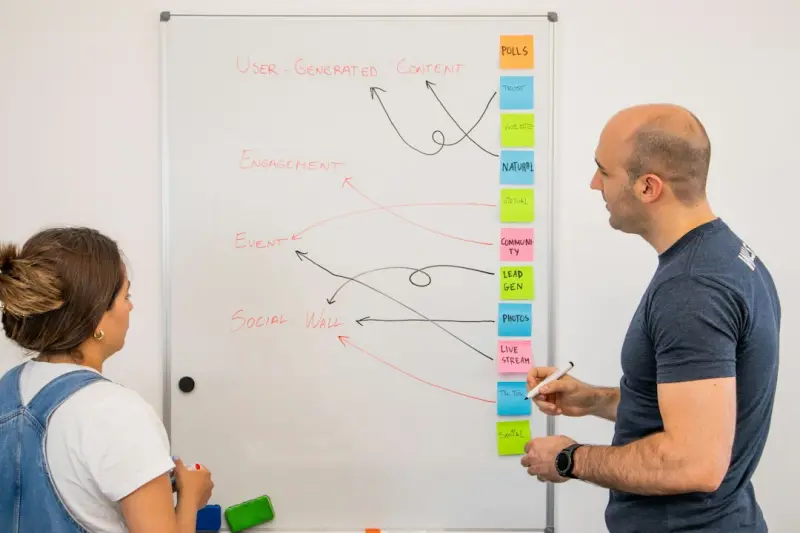
Imagine walking into a meeting, not just to discuss quarterly numbers, but to walk out with a new skill you can apply instantly. That’s the promise of learning that lives inside the flow of work—education that isn’t a separate module you schedule, but a seamless extension of what you’re already doing.
From Static Courses to Living Curriculum
Traditional corporate training has long resembled a university lecture hall: a fixed syllabus, a set of slides, a one‑time assessment, and then a return to the daily grind. The problem? Knowledge evaporates as quickly as the coffee cools, and the business landscape moves faster than the next scheduled class.
What if we flipped that model upside down? What if every task, every project, every collaboration became a trigger for a bite‑sized learning moment? This is the core of “learning in the flow” — a mindset that treats education as a dynamic, contextual, and measurable part of the workday.
The Rise of Micro‑Credentials
Micro‑credentials are compact, stackable recognitions that validate a specific ability—think of them as digital badges that say, “I can build a low‑code workflow” or “I can interpret an AI‑generated insight safely.” Unlike a multi‑month certification, they can be earned in a few hours or even minutes, and they align directly with the business outcomes you’re chasing.
Because they’re modular, employees can curate a personalized learning path that evolves with their role. A sales rep might collect a series of data‑visualization badges, while a product manager stacks credentials in rapid prototyping and user research. The organization, in turn, gains a transparent skill map that highlights gaps and opportunities in real time.
AI‑Powered Personal Learning Paths
Artificial intelligence is often portrayed as a disruptor that replaces human effort. In the education context, however, AI can act as a highly attuned mentor, constantly scanning an employee’s activity, performance metrics, and career aspirations to recommend the next most relevant micro‑learning module.
Consider an AI that notices a marketer repeatedly engaging with content about predictive analytics. The system could automatically surface a short, interactive tutorial on building a basic forecasting model, complete with a sandbox environment for hands‑on practice. When the learner completes the module, the AI updates their skill profile and suggests the next logical step—perhaps a credential on data storytelling.
This approach does three things at once:
- Personalization: No more one‑size‑fits‑all curricula; each learner gets a roadmap that reflects their actual work.
- Relevance: Learning is tied to immediate challenges, ensuring knowledge is applied while still fresh.
- Scalability: The AI engine can serve thousands of employees simultaneously without requiring a human trainer for each.
Creating a Human‑First Culture of Online Safety
When you embed learning directly into daily workflows, you also need to think about the security and privacy of the data being exchanged. Employees are constantly interacting with internal tools, external platforms, and third‑party content. A human‑first approach to online safety ensures that learning experiences don’t become a backdoor for threats.
By weaving best‑practice digital hygiene into micro‑learning moments—quick pop‑ups reminding users to verify a link, or short videos on phishing awareness—you reinforce safe habits without pulling people away from their core tasks. The result is a workforce that not only knows more but also navigates the digital world more securely.
Scaling Knowledge Hubs with Modern Platforms
One of the biggest challenges in a learning‑in‑the‑flow model is ensuring that the knowledge repository is both robust and easy to navigate. Traditional intranets often become information silos, making it hard for employees to locate the exact resource they need. Leveraging a scalable knowledge hub built on multisite architecture can solve that problem.
Each department can maintain its own “site” of learning assets, while a central search engine indexes everything across the ecosystem. Permissions are granular, so sensitive training material stays within the right circles, yet the overall platform feels unified. When combined with AI recommendation engines, the hub becomes a living library that surfaces the most relevant content at the exact moment a user needs it.
Metrics That Matter: From Completion Rates to Impact Scores
Traditional learning metrics—completion percentages, quiz scores, and attendance logs—only tell part of the story. In a flow‑centric environment, you need impact‑oriented metrics that connect learning outcomes to business results.
Here are three key indicators to monitor:
- Skill Adoption Velocity: How quickly are newly earned micro‑credentials applied to real projects? Track the time between credential issuance and its first practical use.
- Performance Lift: Compare performance metrics (sales numbers, error rates, time‑to‑market) before and after a learning intervention.
- Engagement Heatmaps: Use analytics to see which learning prompts generate the most interaction, and refine low‑engagement moments.
When these data points show a positive trend, you have concrete proof that learning isn’t a cost center—it’s a revenue driver.
Practical Steps to Embed Learning in the Flow
Ready to turn theory into action? Below is a roadmap you can start implementing next week:
- Audit Existing Touchpoints: List every daily tool and workflow (CRM, project management, email, chat). Identify moments where a short learning nudge would add value.
- Define Micro‑Learning Modules: Create 5‑10 minute content pieces—videos, interactive simulations, or quick quizzes—that align with each touchpoint.
- Integrate AI Recommendation Engine: Deploy a lightweight AI layer that watches user behavior and serves the right module at the right time.
- Build a Central Knowledge Hub: Use a multisite platform to host all modules, ensuring they’re searchable and version‑controlled.
- Embed Safety Reminders: Sprinkle brief digital‑hygiene prompts into the learning flow to reinforce secure habits.
- Measure Impact: Set up dashboards tracking skill adoption velocity, performance lift, and engagement heatmaps.
- Iterate Continuously: Use the data to refine content, adjust AI algorithms, and expand the catalog of micro‑credentials.
Stories from the Frontline
Companies that have taken the plunge report surprising results. A global consulting firm reduced onboarding time for new analysts from three weeks to four days by delivering contextual micro‑learning at the moment a junior consultant opened a client file. A mid‑size software vendor saw a 22% drop in support tickets after embedding short troubleshooting tutorials directly into their ticketing system.
What’s common across these successes is the abandonment of the “training‑as‑event” mindset. Learning is no longer a box to check; it’s a continuous, data‑driven conversation between the employee and the organization.
Future Outlook: Learning Becomes a Core Business Process
As the pace of technological change accelerates, the organizations that survive will be the ones that view education as a core operating system, not an add‑on. Imagine a future where every new feature release automatically triggers a micro‑learning prompt for relevant teams, where AI‑curated pathways replace static career ladders, and where skill maps are as vital to strategic planning as financial forecasts.
In that world, the line between work and learning blurs, creating a culture where curiosity is rewarded, knowledge is instantly actionable, and every employee feels empowered to grow while they contribute. The journey starts today—by rethinking how, when, and where learning happens.

Ryan Stuart is a seasoned freelance features writer, editor, and professional photographer with a passion for exploring the world and capturing its beauty through words and images.
Related Posts

When Classrooms Go Holographic: Rethinking Learning with AR and AI
A deep dive into how augmented reality, AI tutors, and microlearning modules combine to create immer... Read More

Learning Ecosystems: Turning Real‑World Challenges into Classroom Engines
A fresh look at education that replaces static curricula with project‑centric, modular, and commun... Read More
How AI‑Powered Micro‑Credentials Are Redefining Lifelong Learning
AI‑powered micro‑credentials are reshaping education by delivering adaptive, community‑validat... Read More
Top Posts

Resetting Parenting: Embrace Tactile Play, Curiosity, and Calm in a Hyper‑Connected World
Learn how simple daily rituals—like a digital dusk, backyard labs, and family emotion journals—can transform modern parenting into a calmer, more connected ...Read More

Harnessing Employee Advocacy for a Social Media Edge in B2B
Employee advocacy turns internal expertise into powerful social media content, extending reach, building trust, and generating high‑quality leads for B2B comp...Read More

Celebration Fatigue: Designing Meaningful Rituals That Energize Remote Teams
Constant celebrations can wear down even the most enthusiastic teams. This post reveals a strategic framework, micro‑integration tools, and practical steps to...Read More

The Hidden Power of Game Soundtracks: How Music Shapes Play
Explore how dynamic game soundtracks transform player experience, boost performance, and foster community, with insights from indie innovators to future AI‑dr...Read More
0 Comments
Post Comment
You will need to Login or Register to comment on this post!