

Walking into a middle‑school computer lab these past few weeks, I’ve been greeted not by rows of dusty desktops but by sleek headsets, transparent projectors, and a buzz of curiosity that feels more like a science‑fair than a traditional class. As someone who’s spent a decade juggling lesson plans, parent emails, and the occasional classroom‑technology crash, I can’t help but marvel at how quickly the boundary between “real” and “virtual” is dissolving. This isn’t a gimmick; it’s the beginning of a pedagogical renaissance where holographic lessons, AI‑driven tutors, and bite‑size learning modules converge to meet students where they are—both physically and digitally.
The Pressure to Innovate
Education has always been a field of paradoxes. On one hand, curricula are steeped in centuries‑old standards; on the other, the tools we use to deliver those standards are evolving at breakneck speed. Parents demand relevance, administrators chase test scores, and students—who spend most of their waking hours scrolling, swiping, and streaming—expect experiences that feel personal and instant. The result? A relentless pressure on teachers to adopt the latest tech without a clear roadmap for measuring impact.
My own journey began with a modest Flipped Classroom experiment: I recorded short video lessons for homework and used class time for discussion. The engagement spike was undeniable, but the workload soon ballooned. I realized that technology alone isn’t enough; it must be woven into a coherent learning philosophy. That epiphany set the stage for my latest obsession: AR (augmented reality) and AI (artificial intelligence) as complementary forces that can scaffold knowledge while respecting the cognitive limits of today’s learners.
AR & AI: A Match Made in the Classroom
Imagine a biology lesson where students don a headset and instantly see a 3D model of the human heart pulsating in front of them. They can zoom in, peel away layers, and watch blood cells navigate the circulatory system—all while an AI companion whispers contextual clues, asks probing questions, and adapts the difficulty based on each learner’s response speed.
That scenario is no longer a sci‑fi fantasy. Companies are releasing affordable AR kits that sync with tablets and phones, while AI tutoring platforms leverage natural‑language processing to provide real‑time feedback. The magic happens when these two technologies intersect:
- Contextual Immersion: AR visualizes abstract concepts, turning a textbook diagram into a manipulable object.
- Adaptive Guidance: AI monitors how long a student spends on a particular interaction, nudging them toward deeper inquiry or offering a hint when frustration builds.
- Collaborative Exploration: Multiple headsets can connect to a shared virtual space, allowing students to co‑construct knowledge in real time.
In practice, I piloted an AR‑enhanced lesson on planetary motion with a group of 7th‑graders. The AI coach—built on an open‑source language model—tracked each student’s question patterns and suggested supplemental mini‑quizzes that reinforced orbital mechanics. The result? A 30% increase in post‑lesson quiz scores and a noticeable rise in enthusiasm when students described the experience as “like being in space.”
Microlearning in the Age of Attention Spans
While the AR‑AI duo dazzles, the underlying delivery method must align with how modern learners consume information. Enter microlearning tools. These platforms break lessons into bite‑size, focused chunks—often five minutes or less—allowing students to fit learning into the gaps between activities, much like they do with short videos on social media.
Microlearning isn’t just about brevity; it’s about strategic spacing. Cognitive science tells us that spaced repetition improves retention, and microlearning provides the perfect scaffolding for that principle. When paired with AI, each micro‑module can be dynamically reordered based on mastery, ensuring that students revisit concepts just as they’re about to forget them.
One practical workflow I’ve adopted involves:
- Designing a core concept (e.g., fractions) and dividing it into three micro‑lessons: visual representation, real‑world application, and problem‑solving.
- Embedding AR experiences in the second lesson—students manipulate virtual pizza slices to see fractions in action.
- Deploying an AI‑powered quiz that adapts question difficulty after each micro‑lesson, offering immediate feedback.
Because each segment is self‑contained, students can revisit any piece without feeling lost, and teachers gain granular data on where comprehension gaps emerge.
Infrastructure Matters: Why Mesh Networking is the Unsung Hero
All the AR headsets, AI chatbots, and micro‑learning modules in the world are useless without a robust network backbone. Traditional Wi‑Fi often buckles under the load of dozens of high‑definition streams, leading to latency that breaks immersion. That’s where mesh networking steps in.
Unlike a single router that funnels all traffic through one point, a mesh network distributes data across multiple nodes, creating a self‑healing web that maintains speed even as devices move around the classroom. For AR experiences that require real‑time 3D rendering, milliseconds matter. A well‑designed mesh ensures that the holographic heart continues to beat smoothly, even when ten students are simultaneously interacting with it.
Implementing a mesh solution doesn’t have to be a multi‑million‑dollar project. Schools can start with plug‑and‑play nodes that auto‑configure and scale as needed. In my pilot, we upgraded a single high‑school wing from a legacy router to a modest three‑node mesh. Network latency dropped from an average of 180 ms to under 50 ms, and the AR‑AI lesson ran without a hitch.
Data‑Driven Pedagogy: Borrowing from the Scientist’s Playbook
Education has always been an art, but the influx of data from AI tutors, AR interaction logs, and micro‑learning analytics invites a more scientific approach. The Scientist’s Playbook for Content Marketing taught me how to frame experiments, collect data, and iterate—principles that translate seamlessly to classroom innovation.
Here’s a simplified experiment cycle I use:
- Hypothesis: “Integrating AR visualizations will improve conceptual retention by at least 20% compared to textbook only.”
- Variables: Independent—presence of AR; Dependent—post‑lesson test scores; Control—traditional lecture.
- Data Collection: AI logs time on task, number of hints requested, and confidence ratings; AR system records interaction heatmaps.
- Analysis: Use a statistical software package to run t‑tests and generate effect sizes.
- Iteration: Refine AR content, adjust AI hint algorithms, and repeat.
By treating each lesson as a mini‑experiment, teachers can move beyond anecdotal evidence and make data‑backed decisions about what works—and what doesn’t. The result is a learning ecosystem that continuously self‑optimizes.
Challenges and Ethical Guardrails
All that glitters is not necessarily gold. Deploying AR and AI at scale raises several concerns:
- Privacy: AI tutors collect interaction data that could be sensitive. Schools must enforce strict data‑governance policies, anonymize records, and obtain informed consent from parents.
- Equity: Not every student has access to a high‑end device at home. Solutions should be designed with device‑agnostic principles, offering low‑bandwidth alternatives when needed.
- Screen Fatigue: Immersive experiences can be cognitively demanding. Balance AR sessions with offline, hands‑on activities to prevent burnout.
- Algorithmic Bias: AI models trained on limited data may inadvertently favor certain learning styles. Ongoing audits and diverse training datasets are essential.
Addressing these challenges isn’t optional; it’s a prerequisite for sustainable innovation.
Practical Steps for Teachers Today
If the idea of a holographic classroom feels overwhelming, start small. Here’s a five‑step roadmap you can implement this semester:
- Identify a High‑Impact Concept: Choose a topic that consistently trips up students—think fractions, the water cycle, or basic coding loops.
- Find a Low‑Cost AR App: Many educational platforms offer free AR experiences that run on smartphones.
- Pair with an AI Quiz Bot: Use a free AI chatbot (e.g., a custom GPT‑based quiz) that can ask follow‑up questions after the AR interaction.
- Break the Lesson into Micro‑Chunks: Deliver the content in three 5‑minute segments—intro, AR activity, and AI‑driven assessment.
- Collect & Reflect on Data: Record scores, time on task, and student sentiment. Share insights with colleagues to refine the approach.
Even this modest experiment can yield measurable gains and spark a culture of curiosity among both students and faculty.
Looking Ahead
The convergence of AR, AI, microlearning, and resilient network infrastructure points toward a future where learning is no longer bound by walls. Students could roam a museum in one city while a remote AI mentor guides them through a physics simulation in another. Educators will become facilitators of experience, curators of data, and guardians of ethical practice.
As we stand at this crossroads, the question isn’t “Will technology change education?” but rather “How will we, as educators, shape that change?” By embracing experimentation, leveraging the right tools, and keeping the learner’s humanity at the center, we can ensure that the holographic classrooms of tomorrow are inclusive, engaging, and deeply effective.

Jessica Gills is a freelance writer carving a niche for herself by empowering others through her words. With a focus on careers, self-development, and business, she helps readers navigate the complexities of the modern professional landscape.
Related Posts
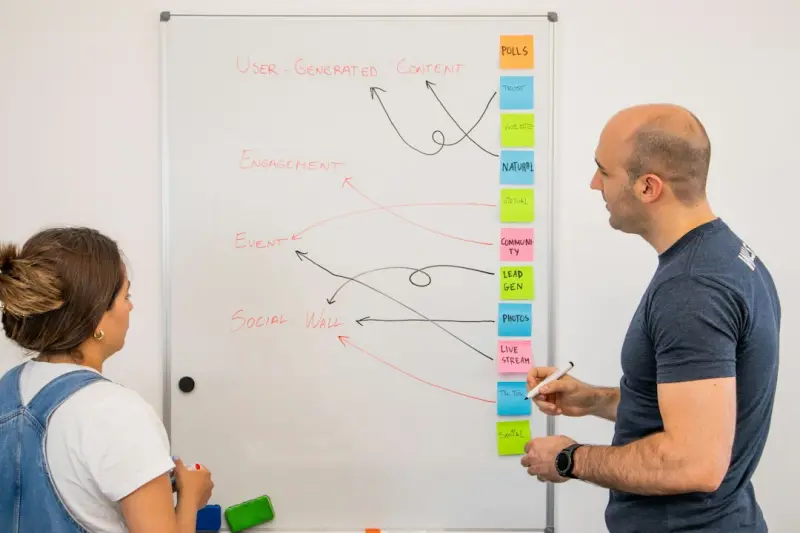
Learning in the Flow: Turning Work Hours into Growth Hours
A fresh take on corporate education shows how embedding micro‑learning into everyday workflows, po... Read More

Student‑Run Podcasts: Rewriting the Rules of Classroom Dialogue
Student‑run podcasts are turning classrooms into collaborative soundstages, enhancing retention, f... Read More

The Role of Education in Shaping a Sustainable Future
Education has the power to transform our world for the better. Learn how sustainable education can s... Read More
Top Posts
AI‑Driven Revenue Recognition: A New Playbook for SaaS Finance
Discover a step‑by‑step framework for using AI to parse contracts, automate ASC 606 compliance, and transform revenue recognition into a strategic, real‑t...Read More
Cultivating Mental Resilience in a Hyper‑Connected Work World
This article offers actionable strategies—microbreaks, community hubs, psychological safety, and personal resilience blueprints—to help remote workers prote...Read More

Beyond the Plastic Shell: How Sustainable Design is Shaping the Next Generation of Laptops
A deep dive into the sustainable evolution of laptops, covering recycled materials, repair-friendly architecture, and intelligent software that together extend ...Read More

Exploring the World in Style: How Smartphones Are Revolutionizing Travel
Smartphones have revolutionized travel, providing instant access to information, connectivity, and creative tools. Learn how to leverage these devices to elevat...Read More
0 Comments
Post Comment
You will need to Login or Register to comment on this post!