
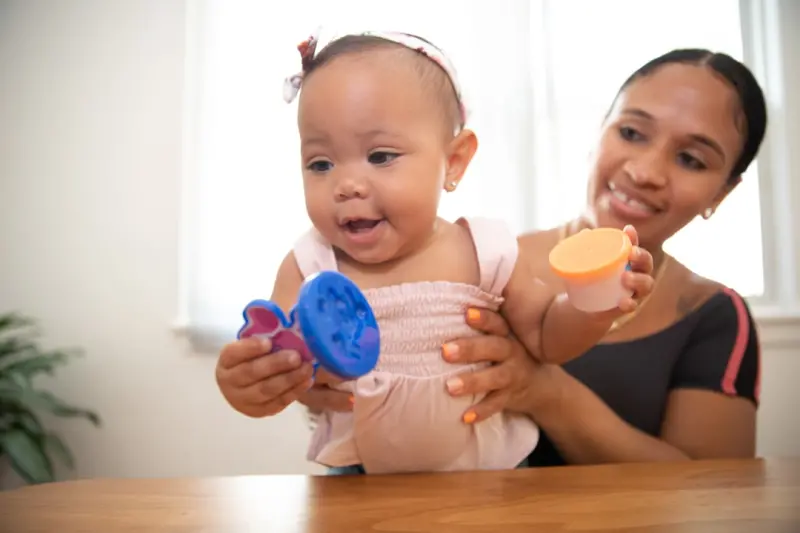
Why Everyday Moments Matter More Than Fancy Toys
When I was a new dad, I found myself surrounded by sleek, high‑priced baby gadgets that promised to make development a breeze. The reality? My little one was more fascinated by the squeak of a rubber duck in the bathtub than any Bluetooth‑enabled rattle. That realization sparked a shift in my parenting philosophy: the most profound learning experiences often come from the ordinary objects that already live in our homes.
From Kitchen Counter to Mini Lab
The kitchen is a treasure trove of sensory and cognitive opportunities. A simple set of measuring cups can become a volume‑matching game. Fill each cup with water, then ask your toddler to match the amount using a different cup. They’re practicing estimation, fine motor control, and cause‑and‑effect reasoning—all without a single screen.
Another classic: rice or pasta sensory bins. Fill a shallow tray with uncooked rice, sprinkle in a few plastic spoons, and watch as tiny hands explore texture, weight, and motion. As you stir, narrate the process: “We’re moving the rice from one side to the other—look how it flows!” This turns a mundane activity into a language‑rich experience.
Bath Time Science: The Splash Lab
Water is nature’s most versatile medium. While you’re washing up, add a splash of food‑grade coloring to the water. Show your baby how the colors mix, creating new hues. This visual demonstration introduces basic concepts of color theory and mixing ratios—the same principles that underpin chemistry.
For toddlers ready for a challenge, try the “floating versus sinking” experiment. Gather a handful of safe household items—spoons, rubber ducks, small plastic toys—and let your child predict which will stay afloat. The excitement when a toy sinks or floats is pure, and the conversation that follows plants the seed of scientific inquiry.
Living Room Engineering: Building with Boxes
Cardboard boxes are the unsung heroes of early engineering. Stack them to create tunnels, then reinforce with paper‑tape joints. As your child crawls through, narrate the structure: “We built a bridge that can hold your weight!” This simple activity subtly introduces concepts of balance, load‑bearing, and design iteration.
To add a layer of problem‑solving, place a soft toy on one side of the box “bridge” and ask your toddler how to get it across without dropping it. The solutions—tilting the bridge, creating a ramp, or using a “crane” made from a sturdy spoon—are the building blocks of engineering mindset.
The Power of Predictable Playful Routines
Consistency doesn’t have to be boring. By weaving playful learning into daily routines, you give your child a sense of safety while also fostering curiosity. For example, during morning diaper changes, you could sing a short “count‑the‑toes” song, turning a routine into a numeracy moment. At bedtime, a quick “story‑building” game—where you start a sentence and your child finishes it—sharpens language skills and imagination.
These micro‑learning moments add up. Over the course of a week, a toddler might encounter dozens of new words, simple math concepts, and basic physics principles—all seamlessly integrated into the flow of daily life.
When Tech Meets Tactile Play
While the focus of this post is on low‑tech, tactile experiences, I won’t pretend that technology has no place in a modern nursery. The key is to use it as a support, not a substitute. For instance, if you’re shopping for age‑appropriate books or educational kits, consider how When Algorithms Become Your Personal Shopper can streamline the process, ensuring you get the right resources without endless scrolling.
But remember: the digital tool should amplify the hands‑on activity, not replace it. A simple video demonstration of a bubble‑blowing experiment can be a great primer before you head to the kitchen to create your own bubble solution with dish soap and water.
Low‑Tech Navigation for Curious Minds
Exploration isn’t limited to indoor spaces. A short walk around the neighborhood can become a “nature data collection” mission. Hand your toddler a small notebook (or a sheet of paper) and a crayon, and ask them to draw anything interesting they see—a ladybug, a uniquely shaped leaf, or a cloud formation. This practice mirrors the spirit of Finding Freedom on the Trail: The Low‑Tech Navigation Revival, encouraging observation skills without reliance on gadgets.
Such outings also teach basic spatial reasoning: “Can we walk to the big oak tree and then back to the bench?” By framing the stroll as a simple map‑making activity, you’re subtly introducing concepts of direction, distance, and planning.
Empowering Parents with a No‑Code Mindset
Just as developers use Crafting a Future‑Ready Toolset: No‑Code Automation for Every Team to streamline workflows, parents can adopt a “no‑code” approach to designing learning experiences. Instead of searching for pre‑made kits, think of the everyday items around you as building blocks. Write down a simple “learning objective” for the day—say, “understand cause and effect”—and then map out which household objects can serve that goal.
This mindset reduces reliance on expensive, single‑purpose toys and fosters creativity in both parent and child. It also teaches your toddler that solutions can be found with what’s at hand, a lesson that will serve them well beyond the playroom.
Balancing Safety and Exploration
Safety is non‑negotiable, but it doesn’t have to stifle curiosity. Conduct a quick “safety scan” before each activity: check for choking hazards, ensure surfaces are stable, and keep supervision close. Once the area is cleared, give your child the freedom to experiment, intervene only when necessary.
Remember, a small scrape can be a powerful learning moment about caution. Use it to discuss why we wear helmets while riding a tricycle or why certain objects belong in a high shelf.
Measuring Progress Without Pressure
Unlike standardized milestones, the progress you observe in these everyday labs is qualitative. Notice if your child can now stack three cups instead of two, or if they can name more colors after a bath experiment. Celebrate these small victories with enthusiasm, not comparison.
Over time, you’ll see a pattern of confidence building—a child who approaches a new challenge with curiosity rather than fear.
Conclusion: The Gift of Everyday Discovery
In a world saturated with high‑tech toys promising accelerated development, the most enduring gift we can give our babies and toddlers is the ability to find wonder in the ordinary. By repurposing kitchen tools, bathroom supplies, and living‑room boxes into mini STEM labs, we nurture curiosity, problem‑solving, and a lifelong love of learning.
So the next time you’re reaching for the next shiny gadget, pause. Look around your kitchen, bathroom, and hallway. You’ll likely find everything you need to turn a simple day into an unforgettable learning adventure.

Jimmy Stewart is a content creator that gets inspired by many aspects of life, internet or whatever inspires him at that moment. When he's not online he's gaming and when he is not gaming he is online trolling discussion boards.
Related Posts
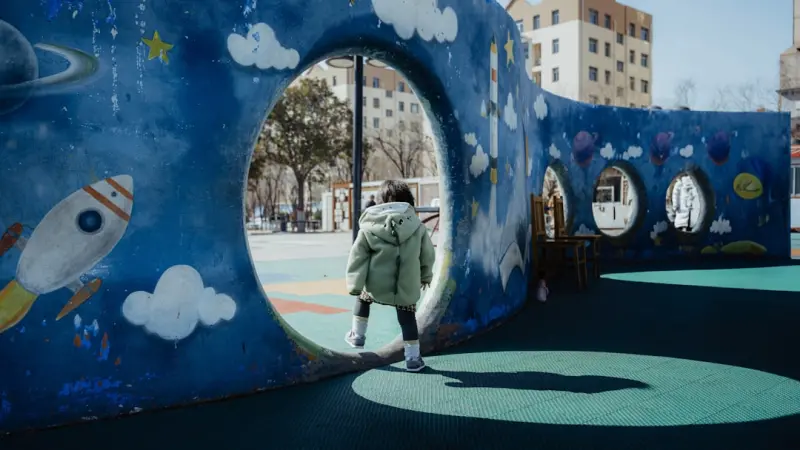
Designing a Baby‑Friendly Play Space That Grows With Them
A step‑by‑step guide to building a safe, sensory‑rich play environment that adapts from newbor... Read More

Smart Baby Gear: Data‑Driven Parenting Made Simple
Explore how modern smart baby devices can provide actionable insights—like temperature alerts and ... Read More
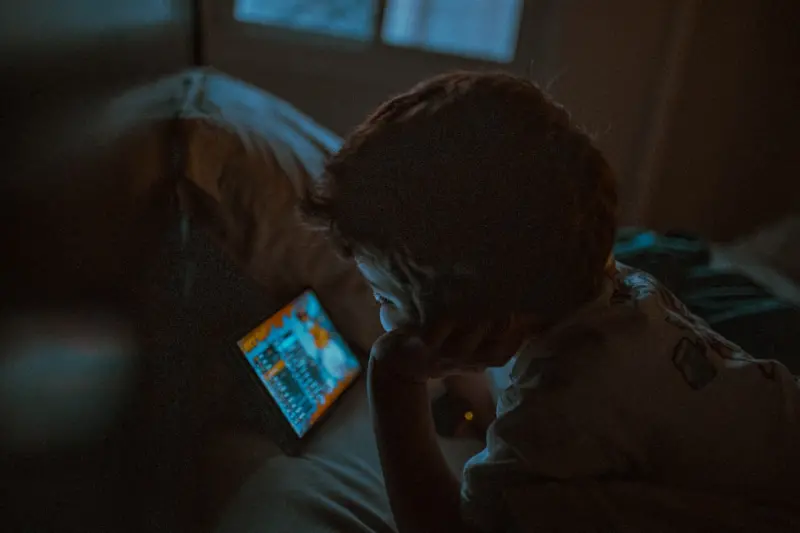
Data‑Driven Parenting: Turning Nighttime Chaos Into Predictable Peace
A tech‑savvy parent shares how data‑driven tools, AI‑enhanced apps, and playful gamification t... Read More
Top Posts
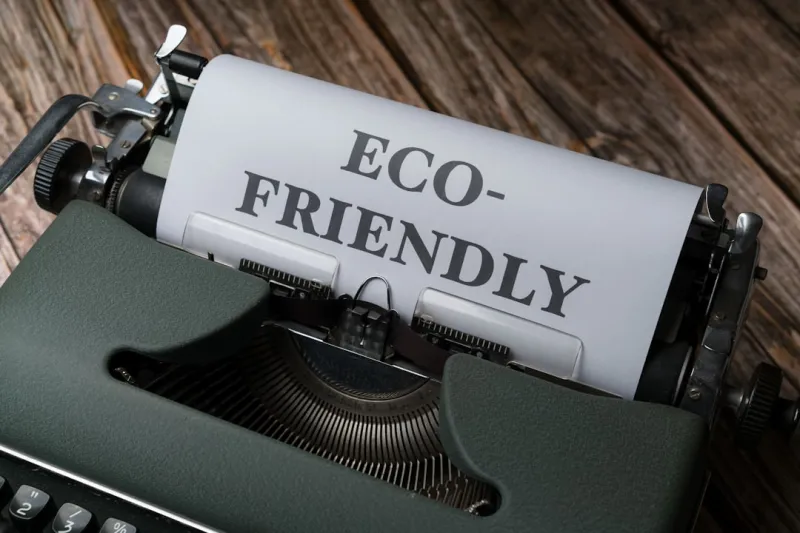
The Future of Blogging: How Sustainability Can Elevate Your Content Strategy
Learn how to create a sustainable blog that resonates with your audience and leaves a lasting impact. Discover the benefits of sustainable blogging and how to g...Read More
The Intersection of Sustainability and Search Engine Marketing
Sustainable search engine marketing practices are no longer just a trend, but a necessity for businesses looking to make a positive impact on the planet. Learn ...Read More
Content Marketing as a Narrative Engine: Turning Stories into Growth
Discover a fresh approach to content marketing that treats every piece as part of a cohesive story, aligning with the buyer’s journey and leveraging community...Read More

Unlocking the Hidden Power of Your Smartphone: A Fresh Take on AI, Modularity, and Cloud Productivity
Explore a new perspective on smartphones, blending AI-driven workflows, modular accessories, and cloud‑based productivity to boost creativity, efficiency, and...Read More
0 Comments
Post Comment
You will need to Login or Register to comment on this post!