
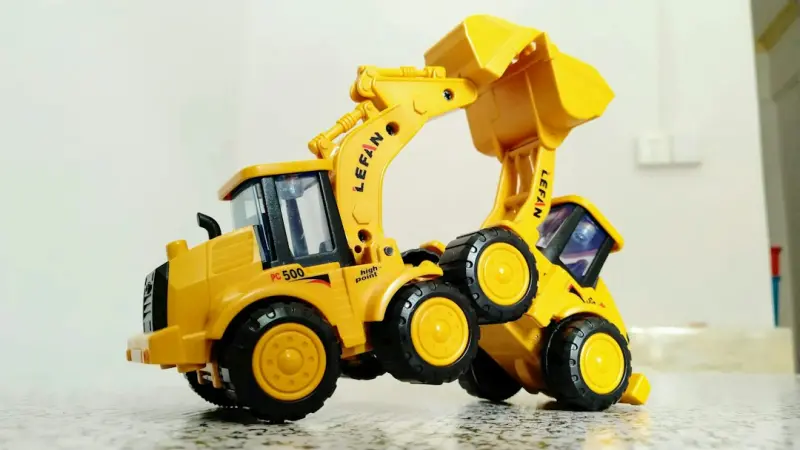
Playful Engineering: Turning Toy Design Into Business Innovation
When I was a kid, my imagination was powered by the clatter of building bricks, the whir of wind‑up robots, and the endless possibilities of a simple cardboard box. Today, those same tactile experiences have resurfaced in boardrooms, labs, and startup garages as the secret sauce for unlocking creative thinking, rapid prototyping, and cross‑functional collaboration. In this post, I’m diving deep into how the modern toy renaissance—spanning modular robotics, open‑source kit cultures, and narrative‑driven play—can be deliberately harnessed as an engine for real‑world mastery across any organization.
The Evolution From Playground to Prototype
For decades, toys were viewed as purely recreational artifacts—nice to have, but not essential to professional growth. That perception shifted dramatically when engineers at a leading automotive firm began using programmable construction blocks to model assembly line bottlenecks. The simplicity of snapping pieces together allowed them to visualize flow, test variations, and iterate faster than any digital simulation could manage.
What made this transition possible? Three converging trends:
- Modular hardware ecosystems. Platforms like LEGO® SPIKE, Arduino‑compatible kits, and the newly popular “Solder‑less” robotics modules provide a plug‑and‑play foundation that anyone can tinker with, regardless of prior technical background.
- Open‑source design philosophies. Communities share schematics, firmware, and play‑scenario templates, turning what used to be proprietary “toy” experiences into collaborative knowledge bases.
- Story‑driven play loops. Modern kits embed narrative challenges—think “save the city from a flood” or “launch a Mars rover”—that mirror real‑world problem statements and compel participants to think like product managers, engineers, and marketers simultaneously.
These trends collectively create a sandbox where failure is cheap, iteration is rapid, and the psychological safety net of “just a toy” encourages bold experimentation.
Why Playful Prototyping Beats Traditional Brainstorms
Traditional brainstorming sessions often suffer from “analysis paralysis,” groupthink, and a lack of tangible outcomes. By contrast, a playful prototyping session forces participants to materialize ideas instantly. Here’s how the dynamics differ:
- Physical embodiment. When you can snap a gear onto a motor in seconds, you immediately see friction points, alignment issues, and scaling challenges that a whiteboard sketch would hide.
- Instant feedback loops. A robot that fails to navigate a maze does so visibly; teams can observe, diagnose, and iterate on the spot, reducing the feedback latency that often plagues digital-only mockups.
- Cross‑disciplinary language. A child‑like toy language—“connect this block,” “rotate that wheel”—transcends jargon, allowing engineers, marketers, and finance folks to collaborate without needing to translate technical terms.
- Emotional engagement. The dopamine rush from seeing a toy spring to life triggers the brain’s reward pathways, reinforcing a growth mindset and making participants more willing to take risks.
In practice, I’ve seen product teams use a simple modular robot kit to prototype a new logistics workflow. Within an hour, they identified a critical hand‑off delay that would have taken weeks to discover in a software‑only simulation.
Embedding Toy‑Based Learning Into Corporate Culture
To move from occasional “play days” to a sustained culture of playful engineering, organizations need a structured framework. Below is a three‑phase model that has proven effective in both startups and Fortune‑500 companies.
Phase 1: Exploration Labs
Set up a dedicated space—think a small workshop with shelves of modular kits, 3‑D printers, and basic tools. The goal is to let employees explore without agenda. Encourage cross‑team pairing; a designer might partner with a data analyst to build a sensor‑driven “smart” toy that visualizes real‑time data streams.
Phase 2: Challenge Sprints
Borrowing from agile methodology, run short, time‑boxed challenges (24–48 hours) where teams must solve a defined problem using only the toys and components at hand. The constraints drive creativity. The outcomes aren’t final products but proof‑of‑concepts and learnings that feed back into the larger product roadmap.
Phase 3: Integration & Scaling
Successful prototypes graduate to the next level: they’re refined, documented, and potentially integrated into the company’s formal R&D pipeline. At this stage, the playful mindset transitions into a disciplined innovation process, preserving the speed and curiosity that the toys initially inspired.
When teams adopt this cadence, they often report higher morale, faster decision‑making, and a measurable uptick in patent filings or new feature rollouts. It’s a concrete illustration of turning everyday tasks into skill‑building moments—the very essence of sustainable innovation.
Case Studies: Toys That Transformed Business Outcomes
1. Modular Robotics in Healthcare Device Design
A mid‑size medical device firm introduced a line of modular, programmable “micro‑bots” to its R&D team. By building miniature prototypes of a catheter navigation system, engineers could physically test torque and flexibility constraints before committing to costly CAD iterations. The result? A 30% reduction in development time and a product that met regulatory standards on the first submission.
2. Narrative‑Driven Play for Marketing Teams
One B2B SaaS startup used a storytelling‑based tabletop game to align its go‑to‑market strategy. Players assumed roles (e.g., “Customer Success Hero,” “Data‑Driven Villain”) and navigated scenario cards that mimicked market challenges. The gamified session surfaced hidden friction points in the sales funnel and generated a new, customer‑centric messaging framework that boosted lead conversion by 18%.
3. Open‑Source Kit Culture Fuels Sustainable Product Lines
A consumer‑goods company adopted an open‑source electronics kit to prototype smart home accessories. By leveraging community‑contributed firmware, they launched a line of eco‑friendly, Wi‑Fi‑enabled lighting fixtures in under three months—far faster than their previous vendor‑managed development cycle. The community also contributed firmware updates, extending product lifespan and reinforcing a circular‑economy narrative.
Designing Your Own Playful Innovation Toolkit
If you’re convinced that toys can catalyze business growth, here’s a starter checklist to assemble a practical, low‑cost kit:
- Modular building blocks. LEGO® SPIKE, K’NEX, or magnetic construction sets that support both mechanical and electronic add‑ons.
- Microcontrollers. Arduino Nano, ESP32, or Raspberry Pi Zero—these give you programmable control without a steep learning curve.
- Sensors and actuators. Simple components like ultrasonic distance sensors, servos, and LED strips enable rapid feedback mechanisms.
- Rapid prototyping tools. A 3‑D printer (or access to one), basic hand tools, and a solder‑less breadboard system.
- Story templates. Pre‑written scenario cards that frame challenges (e.g., “Design a rescue drone for a flood‑prone city”).
- Documentation platform. A shared wiki or digital notebook where teams log designs, failures, and insights for future reference.
Investing in these items creates a low‑risk sandbox where experimentation thrives. The key is to treat the kit as a living asset—update it, iterate on the challenges, and celebrate the “fail fast” moments as valuable data points.
Measuring the Impact of Playful Innovation
To justify continued investment, leaders often ask, “What’s the ROI?” While the intangible benefits—culture shift, employee satisfaction—are significant, they can be complemented with quantifiable metrics:
| Metric | How to Capture |
|---|---|
| Idea Velocity | Count of prototypes generated per quarter. |
| Time‑to‑Concept | Average days from problem statement to functional toy prototype. |
| Cross‑Functional Collaboration Index | Survey scores on perceived collaboration before and after play sessions. |
| Innovation Yield | Percentage of toy‑derived concepts that transition to MVPs or patents. |
| Employee Engagement | Turnover rates and net promoter scores for internal “innovation happiness.” |
When these numbers trend upward, they provide a compelling narrative for executives: play isn’t a luxury—it’s a strategic lever.
Overcoming Common Barriers
Many organizations hesitate to introduce toys into the workplace for fear of perceived frivolity. Here are three proven tactics to shift that mindset:
- Executive Sponsorship. Identify a senior leader who champions experimentation and let them champion the first pilot. Their visible support signals legitimacy.
- Clear Success Criteria. Define what success looks like—be it a new feature concept, a process improvement, or simply a learning outcome. Document and share results.
- Integrate with Existing Processes. Tie toy sessions to existing rituals—e.g., sprint retrospectives, quarterly planning, or onboarding—to embed play into the workflow rather than treating it as an add‑on.
The Future: AI‑Enhanced Toy Platforms
Looking ahead, the next wave of playful engineering will blend physical toys with generative AI. Imagine a modular robot kit that suggests design tweaks in real time based on performance data, or a storytelling game that dynamically creates new challenge cards using natural language generation. These hybrid experiences will further blur the line between imagination and execution, making the “toy” an even more powerful catalyst for business transformation.
In the meantime, the low‑tech, high‑impact approach outlined above provides an immediate pathway for any organization eager to inject curiosity, agility, and tangible problem‑solving into its culture. The next time you see a child building a tower of blocks, remember: that same instinctual drive can be the spark that propels your company into its next breakthrough.

Shawn DesRochers is a certified Microsoft technician and Programmer with 30+ year's experience. He has written many reviews on computer related products, software, and SEO related topics. When he's not writing reviews he can be found at one of the Oldest Directories Online Web Domain Authority which he is the CEO of.
Related Posts
Playful Futures: How Hybrid Toys Are Redefining Childhood
Hybrid toys combine tactile play with smart tech, offering personalized learning, eco‑friendly des... Read More
Why Eco‑Friendly Collectibles Are Redefining the Adult Toy Market
The adult toy market is undergoing a green revolution, with eco‑friendly materials, community‑dr... Read More

Playful Futures: How Subscription Toy Boxes Are Rewriting the Way Families Experience Play
A deep dive into the surge of subscription toy boxes, uncovering how personalized curation, real‑t... Read More
Top Posts

Tactile Play: A Burnout Antidote for Knowledge Workers
Hands‑on toys aren’t just nostalgic desk décor; they’re powerful tools that reduce stress, boost creativity, and enhance focus for knowledge workers. Thi...Read More
Pixels Meet Psychology: Rethinking Web Design for Real Interaction
A fresh perspective on web design that blends brain science with modern UI tactics—micro‑interactions, adaptive layouts, and data‑driven storytelling—to...Read More
Semantic Search Optimization: Boost Rankings with Entity Power
Learn to dominate semantic search by mastering entities, schema markup, and topic clusters. This guide offers actionable steps to future‑proof your SEO and ca...Read More

The Quiet Revolution: AI as Your Company’s Ethical Compass
The Quiet Revolution: AI as Your Company’s Ethical Compass When I first started tinkering with AI models for internal analytics, I was dazzled by the sheer pr...Read More
0 Comments
Post Comment
You will need to Login or Register to comment on this post!