
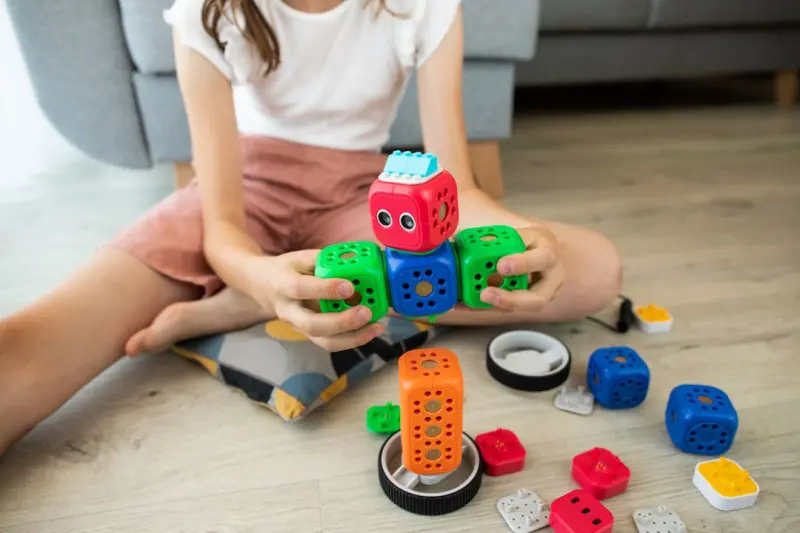
Why Smart Toys Are the Unexpected Engine of Workplace Innovation
When I first stepped into a conference room littered with prototype drones and AI‑powered whiteboards, I expected the conversation to stay strictly on software pipelines. Instead, a small, brightly‑colored robot rolled onto the table, paused, and started drawing a perfect circle on a nearby notebook. The room fell silent—not because anyone was confused, but because the simple act of play sparked a cascade of ideas that none of the slide decks could have delivered.
That moment cemented a belief I’ve carried ever since: play is not a luxury; it’s a catalyst for the kind of lateral thinking that drives product breakthroughs. In the world of B2B SaaS, where data dashboards and feature roadmaps dominate, the humble toy can be the most powerful tool you have to break out of entrenched thinking patterns.
From Kids’ Playrooms to Executive Suites
The traditional view of toys is narrow—plastic figures for children, occasional stress‑relief gadgets for adults. Yet a new breed of smart toys is blurring those lines. These are devices that combine sensors, connectivity, and adaptive AI to respond to human interaction in real time. Think of a modular building block set that records how teams assemble structures, or a tabletop robot that learns to anticipate a user’s gestures.
What makes these toys uniquely valuable in a professional setting is their ability to materialize abstract concepts. Complex data models become tangible constructions; strategic roadmaps become interactive play scenarios. When a product team can literally “build” a user journey using magnetic pieces, the cognitive load drops dramatically, and insights surface faster.
Three Ways Smart Toys Supercharge Business Outcomes
- Accelerated Ideation Sessions – By giving participants a physical medium that reacts instantly, you reduce the friction of translating thoughts into sketches. A product lab mindset becomes literal, as every prototype can be iterated on the spot.
- Enhanced Empathy Mapping – Sensors embedded in toys can capture emotional cues—tone of voice, pressure on a grip, even micro‑movements. This data enriches user persona workshops, turning vague feelings into measurable signals.
- Continuous Learning Loops – Smart toys generate usage logs that can feed back into analytics platforms, creating a feedback loop that mirrors the DevOps cycle but for human behavior.
Building a Play‑Centric Culture Without Losing Focus
It’s easy to imagine a “playroom” as a distraction, especially when quarterly targets loom. The key is to embed toys within structured frameworks, not to replace them. Here’s a practical cadence that keeps play purposeful:
- Kick‑off Sprint Warm‑Up – Allocate a ten‑minute slot at the start of every sprint planning meeting for a quick “toy challenge.” Teams compete to assemble a structure that represents the sprint goal, fostering visual alignment.
- Mid‑Sprint Insight Capture – During stand‑ups, use a small sensor‑enabled ball that records who speaks and for how long. The data highlights participation gaps, prompting real‑time adjustments.
- Retrospective Reflection – End the sprint by deconstructing the toy created at the start. Discuss which parts held up, which fell apart, and draw parallels to the product’s performance.
By weaving these moments into the existing rhythm, play becomes a metric‑driven activity rather than a whimsical afterthought.
Case Study: A Remote Design Team’s Leap in Creativity
One of our partner agencies adopted a modular magnetic board paired with AI‑enabled shape detectors for their distributed design team. Each team member received a kit at home, and during weekly brainstorming calls, they built prototypes that the AI instantly translated into wireframe sketches on the shared screen.
The results were striking:
- Idea Velocity: The number of concepts generated per session jumped by 38%.
- Cross‑Functional Alignment: Designers, engineers, and marketers reported a 27% increase in shared understanding of project scope.
- Reduced Revision Cycles: Early visualizations cut the average number of design revisions from 5 to 3 per feature.
The secret wasn’t the tech itself; it was the psychological safety that a tactile, low‑stakes activity created. When you’re building with blocks, you’re less afraid to make mistakes, and that fearlessness translates back into the codebase.
Choosing the Right Toy for Your Team
Not every smart toy will suit every organization. Consider these criteria before investing:
| Criterion | Why It Matters |
|---|---|
| Scalability | Can the toy be deployed to 50, 500, or 5,000 users without a logistical nightmare? |
| Data Privacy | Ensure any sensor data complies with your company’s security policies. |
| Integration Flexibility | Look for open APIs that let you funnel interaction logs into existing analytics stacks. |
| Learning Curve | A toy that requires extensive training defeats the purpose of quick, iterative play. |
For many teams, a simple behavioral trigger platform that pairs physical actions with digital notifications provides the sweet spot of functionality and ease of use.
Future Trends: Where Play Meets AI
The next wave of toys will blur the line between user and product even further. Imagine a tabletop game that predicts the next move a team might take based on historical collaboration patterns, or a plush companion that offers real‑time coaching during stressful demos. These advancements hinge on two pillars:
- Edge Computing – Processing sensor data locally reduces latency, making the toy’s responses feel instantaneous.
- Explainable AI – As toys become decision‑makers, they must be able to surface the “why” behind their suggestions, preserving trust.
When these technologies converge, the toy will no longer be a peripheral curiosity but a core component of the human‑in‑the‑loop workflow.
Practical Steps to Get Started Today
Ready to bring play into your organization? Follow this three‑step launch plan:
- Audit Your Current Collaboration Tools – Identify pain points where visual or tactile feedback is missing.
- Pilot a Low‑Cost Smart Toy – Choose a device with an open SDK, run a 4‑week trial with a single cross‑functional squad, and measure impact on idea generation and alignment.
- Scale and Iterate – Use the pilot data to refine your play cadence, then roll out to additional teams, continuously collecting feedback.
Remember, the goal isn’t to replace your existing digital stack but to augment it with a physical layer that makes abstract concepts concrete.
Conclusion: Play as a Strategic Differentiator
In an industry that prizes efficiency, the strategic introduction of smart toys may feel counterintuitive. Yet history shows that the most disruptive innovations often arise from moments of unstructured curiosity. By intentionally weaving play into the fabric of your product development lifecycle, you unlock a hidden reserve of creativity, empathy, and rapid learning.
So the next time you see a sleek, sensor‑laden cube on a colleague’s desk, don’t dismiss it as a gimmick. Ask yourself: What problem could this solve if we let it be part of our thinking process? The answer might just be the next breakthrough your team has been waiting for.

Robert Mathews is a professional content marketer and freelancer for many SEO agencies. In his spare time he likes to play video games, get outdoors and enjoy time with his family and friends . Read more about Robert Mathews here:
Related Posts
Playful Futures: How Hybrid Toys Are Redefining Childhood
Hybrid toys combine tactile play with smart tech, offering personalized learning, eco‑friendly des... Read More
The Future of Play: How Sustainable Toys are Revolutionizing the Industry
The toy industry is evolving towards more sustainable practices. Learn about the benefits of sustain... Read More

Play Green: How Handcrafted Toys Transform Childhood
Explore the rise of handcrafted, eco‑friendly toys that spark creativity, teach responsibility, an... Read More
Top Posts

Unlocking the Full Potential of Your Smartphone Without Buying a New One
Learn how to stretch your phone’s battery, optimize software, and use smart accessories so your device feels brand‑new without buying another....Read More

Digital Identity Hygiene: Guarding Your Online Footprint in an Age of Data Brokers
A comprehensive guide to digital identity hygiene, covering visibility management, credential fortification, safe browsing habits, and privacy‑first tools to ...Read More

Why Edge‑First Architecture Is the Secret Sauce for Modern Web Apps
Edge‑first architecture moves code closer to users, delivering millisecond‑level performance, dynamic security, and personalized experiences—all while red...Read More

Celebrating the Moment: Lauren Miller’s Guide to Joyful, Sustainable Gatherings
Lauren Miller shares personal insights on crafting celebrations that sparkle with purpose— from sustainable décor and food to mindful tech—ensuring every p...Read More
0 Comments
Post Comment
You will need to Login or Register to comment on this post!