

When I first signed up for my first broadband plan, the promise was simple: faster videos, smoother chats, and a world of information at the click of a button. Two decades later, the internet feels less like a utility and more like an extension of our very selves—our identities, our finances, our social circles, even our health data. Yet, while the surface experience has become sleek and invisible, the underlying architecture is still wrestling with the same power imbalances that defined its early days.
From Passive Consumer to Active Custodian
Most of us still treat the internet as a passive conduit: we log on, consume, and log off. The reality, however, is that every swipe, every search, every “like” creates a data point that lives on a server owned by an entity we rarely meet. The shift from being a mere consumer to becoming a custodian of our own data isn’t just a philosophical pivot—it’s a practical necessity.
Take the explosion of Zero‑Click Search as a micro‑example. What started as a convenience—answers appearing instantly—has turned the search results page into a real estate market where brands bid for visibility without ever showing you a link to click. The data harvested from those “instant answers” feeds back into ad algorithms that shape what you see next, creating a self‑reinforcing loop of attention capture.
If we stop thinking of these interactions as one‑way traffic and start viewing them as a ledger of personal assets, we can begin to ask the right questions: Who owns this ledger? Who has the keys? And most importantly, can we rewrite the contract?
Decentralization: The Blueprint for a User‑Owned Internet
Decentralized technologies—blockchain, peer‑to‑peer networking, and distributed hash tables—are the building blocks of a new internet architecture that places sovereignty back in the hands of users. Unlike the traditional client‑server model, where a central authority mediates every request, a decentralized network lets each participant act as both client and server.
- Data ownership. Instead of storing your photos on a monolithic cloud provider, they reside on an encrypted, distributed file system you control. Access is granted through cryptographic keys you manage.
- Resilience. When a single node goes down, the network reroutes traffic automatically. No more single points of failure that can be exploited by hackers or censored by governments.
- Economic incentives. Users can earn tokens for contributing storage, bandwidth, or compute power, turning idle resources into a tangible return.
Projects like IPFS, Filecoin, and the emerging web3 stack are still in their infancy, but they illustrate a compelling direction: a web where the “cloud” is no longer a distant, opaque entity, but a collective of trusted peers.
Edge Computing: Bringing Processing Closer to the User
While decentralization reimagines where data lives, edge computing redefines where data is processed. By moving computation from centralized data centers to the “edge” of the network—your device, a nearby router, or a regional server—we can dramatically reduce latency, enhance privacy, and lower bandwidth costs.
Think about real‑time video conferencing. In a traditional setup, every video stream travels to a central server, gets processed, and is then sent back out. With edge computing, the heavy lifting—noise suppression, background blurring, even AI‑driven transcription—happens locally on your device. This not only speeds up the experience but also keeps sensitive audio data out of the cloud.
The benefits extend beyond consumer apps. Enterprises can deploy AI models at the edge to monitor equipment health, detect anomalies in real time, and react instantly—without the delay of sending data to a remote server.
Identity in a Borderless Landscape
Our digital identity is the passport we use to navigate the internet. Yet, unlike a physical passport, it’s often fragmented across multiple platforms: a Google account for email, a Facebook profile for social, a corporate SSO for work, and a crypto wallet for blockchain services. This fragmentation creates friction and security risks.
Enter the concept of a self‑sovereign identity (SSI). An SSI framework lets you create a single, portable identity anchored in cryptographic proofs. You can present verified credentials—age, professional certifications, membership in a DAO—without revealing extraneous personal data. The verification happens through a decentralized network of attestations rather than a central authority.
Implementing SSI could resolve the endless “login fatigue” that plagues both consumers and employees, while also reducing the attack surface for credential stuffing and phishing attacks. Imagine a world where you can prove you’re a verified professional to a new client with a single click, without exposing your email address or phone number.
Rethinking the Economics of Attention
Advertising dollars still drive the majority of internet revenue, but the model is increasingly unsustainable. Users are growing wary of intrusive ads, ad‑blockers are on the rise, and platforms are grappling with the fallout of privacy regulations.
One promising alternative is the “attention token” economy. Instead of selling your data to the highest bidder, you earn tokens for the genuine attention you give to content you value. Creators can set a price in tokens for premium experiences—early access, exclusive webinars, or behind‑the‑scenes footage. This creates a direct, transparent exchange of value that sidesteps the opaque auction houses that dominate today’s ad tech.
While still experimental, this model aligns incentives more closely with user satisfaction, fostering ecosystems where quality wins over click‑bait.
Privacy‑Centric Browsers and Extensions
Browser technology has become the frontline of privacy defense. Modern browsers now ship with built-in tracking protection, DNS‑over‑HTTPS, and sandboxed execution environments. However, the most powerful tools often come from extensions that empower users to take granular control.
Extensions that block invisible trackers, enforce strict cookie policies, or automatically encrypt outbound requests are no longer niche utilities—they’re essential components of a privacy‑first workflow. By integrating these tools into daily browsing habits, users can reclaim agency over their data footprints without sacrificing functionality.
Building a Sustainable Digital Footprint
Every kilobyte of data transmitted across the internet consumes energy. Streaming high‑definition video, large file transfers, and constant background syncs collectively contribute to a growing carbon footprint. As we push for higher bandwidth and richer experiences, sustainability must become a design principle, not an afterthought.
Here are practical steps individuals and organizations can adopt:
- Optimize media. Use adaptive bitrate streaming to deliver the lowest acceptable quality based on network conditions.
- Leverage caching. Store frequently accessed assets at the edge to reduce repetitive data transfers.
- Schedule heavy tasks. Run backups and large uploads during off‑peak hours when renewable energy sources are more abundant.
When combined with edge computing and decentralized storage, these practices can dramatically reduce the environmental impact of our digital lives.
Future‑Ready Skills for an Evolving Internet
As the internet’s infrastructure shifts, the skill sets that matter are changing too. Here are three competencies that will be in high demand:
- Distributed systems design. Understanding how to architect applications that run across multiple nodes, handle eventual consistency, and recover from partial failures.
- Zero‑knowledge cryptography. Techniques that let parties prove knowledge of a secret without revealing the secret itself—crucial for privacy‑preserving authentication.
- Data stewardship. The ability to design policies and tools that ensure data is used ethically, complies with regulations, and respects user consent.
Investing in these areas will not only future‑proof careers but also contribute to a healthier, more equitable internet ecosystem.
Integrating the Personal and the Professional
Our lives are increasingly blurred between home and office, especially after the pandemic accelerated remote work. The Smartphone as the New Command Center for Distributed Workforces highlighted how mobile devices have become the hub for collaboration, but the next frontier is integrating personal data responsibly into professional workflows.
Imagine a scenario where your decentralized identity not only unlocks your personal social feeds but also seamlessly authenticates you into corporate resources—without the IT department needing to manage passwords or risk data breaches. This convergence will demand robust policies, clear consent frameworks, and platforms built with privacy by design.
Designing Experiences That Engage All Senses
While the internet has traditionally been a visual medium, the rise of immersive technologies—AR, VR, haptic feedback—calls for a richer sensory palette. Sensory Branding showed how subtle auditory and tactile cues can shape team dynamics. Extending this concept to consumer experiences can deepen engagement and create memorable digital moments.
Brands experimenting with soundscapes that adapt to user behavior, or tactile feedback that mirrors real‑world textures, are pioneering a multisensory internet. As bandwidth and processing power improve, these experiences will become mainstream, demanding new design frameworks that consider rhythm, temperature, and even smell.
Conclusion: Claiming the Internet as a Shared Commons
The internet was born from a vision of an open, collaborative commons. Over time, commercial interests and centralized architectures have eroded that ideal. Yet the tools we now possess—decentralization, edge computing, self‑sovereign identity, and sustainable design—give us the opportunity to rewrite the narrative.
By treating our data as a valuable asset, demanding transparency from platforms, and embracing technologies that distribute power back to the user, we can transform the internet from a passive utility into a vibrant, user‑owned ecosystem. It’s a collective effort: developers must champion open standards, businesses should experiment with token‑based economies, and each of us can make conscious choices about privacy and sustainability.
When we all act as custodians rather than consumers, the internet can finally live up to its promise—a truly shared commons where information flows freely, identities stay secure, and the digital world respects the planet that powers it.

In the world of freelance writing, where creativity and adaptability are paramount, Michelle Fisher stands out as a dedicated and versatile professional. With a passion for crafting compelling narratives and a keen eye for detail, Michelle has established herself as a trusted voice.
Related Posts

The Internet’s Green Revolution: How Online Trends Are Shaping a Sustainable Future
Explore the rise of eco‑focused online content, green algorithms, and how you can harness internet... Read More

Satellite-Backed Internet: Redefining SaaS Resilience and Global Reach
Shawn DesRochers examines the emerging role of satellite‑based internet in delivering consistent, ... Read More
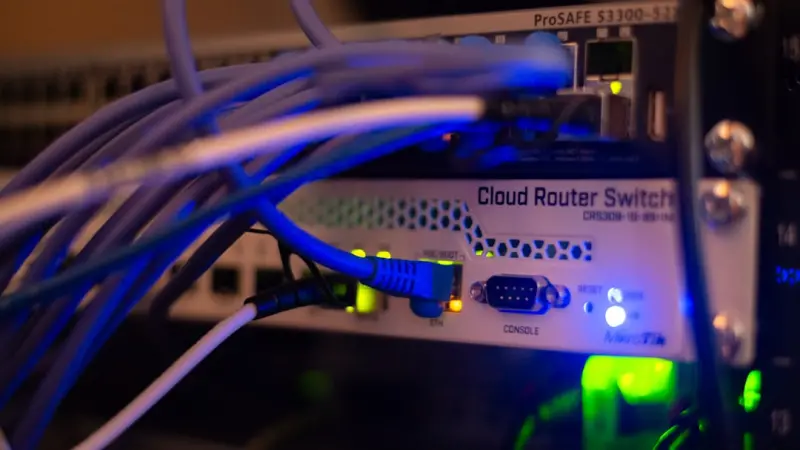
Neighborhood Mesh Networks: Rebuilding the Internet from the Ground Up
Mesh networks let neighborhoods create their own decentralized internet, cutting costs, boosting pri... Read More
Top Posts

The Evolution of Software Development: Trends and Innovations
The software development landscape is rapidly evolving, driven by technological advancements, changing user needs, and new business models. Stay informed about ...Read More

The Power of Sustainable Social Media Marketing
Sustainable social media marketing is a critical component of any business's sustainability strategy. Learn how to create an eco-friendly social media strategy ...Read More

Embracing Sustainable Home Decor: A Guide to a Greener Space
Learn how to create a sustainable home environment with eco-friendly decor ideas and simple swaps. Discover the benefits of sustainable home decor and get inspi...Read More

The Future of Sustainable Living: A Holistic Approach to a Greener Tomorrow
Sustainable living is not just a trend, but a necessity. Learn how to adopt a holistic approach to sustainable living and create a greener tomorrow. Read this c...Read More
0 Comments
Post Comment
You will need to Login or Register to comment on this post!