

Ever watched a friend juggle a side‑project, a full‑time gig, and a weekend hobby, then wonder how they manage to keep the momentum without burning out? I’ve been there, and I’ve also seen the exact opposite—talented people stuck in the same role for years because they never gave their “extra” ideas a chance to breathe. The secret isn’t about working longer hours; it’s about treating side hustles like strategic career experiments. When you frame every personal project as a hypothesis you can test, iterate, and eventually scale, you turn what used to be “just a hobby” into a powerful lever for professional growth.
Why Side Projects Deserve a Seat at the Career Table
Most professionals think of side projects as a way to pass time or explore a passion. In reality, they’re miniature R&D labs for your own brand. By dedicating a slice of your week to a self‑initiated venture, you create a sandbox where you can:
- Validate new skills in a low‑stakes environment.
- Showcase results that are tangible, not just a line on a résumé.
- Network organically with people who share the same niche interest.
- Identify market gaps that your day‑job might never expose you to.
When you treat a side hustle as a data‑driven experiment, every sprint, user feedback loop, or metric becomes a piece of evidence you can bring to performance reviews, interviews, or even pitch decks.
Designing the Experiment: The “Career Canvas”
Before you dive in, sketch out a simple canvas that mirrors a product‑development framework—only this time the product is you. Here’s a quick template:
- Objective: What career question are you trying to answer? (“Can I lead a cross‑functional team?”)
- Hypothesis: The statement you’ll test. (“If I build a newsletter on SaaS trends, I’ll prove my thought‑leadership.”)
- Key Results: Measurable outcomes (subscribers, engagement rate, inbound messages).
- Timeline: A realistic cadence—usually 4‑6 weeks for a minimal viable experiment.
- Resources: Time blocks, tools, and any external help you’ll need.
By formalizing the process, you remove the “just for fun” stigma and give yourself a clear success metric that you can reference later. This also makes it easier to defend the time you spend on the project when your manager asks, “What’s the ROI?”
Choosing the Right Side Project for Your Career Goals
Not all side hustles are created equal. Align the project with the competency you want to elevate. A few examples:
- Product Management Aspirant: Build a lightweight SaaS MVP and track user adoption.
- Data‑Driven Marketer: Launch a weekly content experiment series that A/B tests headlines and measures click‑through rates.
- Technical Writer: Create a public documentation hub for an open‑source tool and monitor community contributions.
- Leadership Track: Organize a virtual round‑table for industry peers and publish a post‑event recap that highlights your facilitation skills.
The trick is to pick a project that sits at the intersection of your current role, the skill you want to develop, and the audience you need to impress.
Building Visibility Without the Spam
One of the biggest fears is “Will anyone notice?” The answer lies in strategic distribution. Instead of blasting every update to every channel, use a “micro‑distribution” approach: share the most compelling snippet where it matters most. For instance, a short case study about how you grew a newsletter from 0 to 2,000 subscribers can be a LinkedIn post, a note in a Slack channel, or an entry in a personal blog. The key is to keep the audience narrow but highly relevant.
Speaking of blogs, many underestimate the unseen ROI of a public blog. It’s not just about SEO; it’s a living portfolio that hiring managers can click through. Each post becomes a proof point you can reference during performance conversations, showing you can create, execute, and analyze content that drives engagement.
Measuring Success—and Knowing When to Pivot
Metrics matter, but they must align with your original hypothesis. If your goal was to showcase leadership, a high subscriber count isn’t enough; you need evidence of influence—comments from senior peers, invitations to speak, or a measurable uptick in cross‑department collaborations.
Use a simple scorecard:
- Engagement: Comments, shares, or direct messages that indicate interest.
- Conversion: Leads that turn into meetings, referrals, or internal project invitations.
- Learning: New tools or processes you adopted that you can now apply at work.
If the numbers fall short, treat it as a learning sprint. Identify the friction point—maybe the content format didn’t resonate, or the distribution channel was off—and iterate. The willingness to pivot quickly is a signal of agility that senior leaders love.
Scaling the Experiment: From Side Hustle to Core Responsibility
When you consistently hit or exceed your key results, the transition from “side project” to “core responsibility” becomes natural. Here’s a three‑step playbook:
- Document the Impact: Compile a one‑pager that outlines objectives, metrics, and outcomes.
- Pitch the Value: Schedule a brief meeting with your manager or a relevant stakeholder. Frame it as an opportunity to formalize a proven initiative that aligns with company goals.
- Integrate Resources: Negotiate dedicated time, budget, or team support to scale the effort.
Companies love to adopt proven frameworks because it reduces risk. By the time you make this pitch, you’ve already done the heavy lifting—validation, data collection, and iteration.
Leveraging Tiny Tools for Big Wins
Don’t underestimate the power of tiny integration tools. A simple Zapier workflow that pulls newsletter sign‑ups into your CRM can turn a hobby into a lead‑generation engine. Similarly, a lightweight analytics dashboard built with Google Data Studio can give you real‑time insight without a full‑blown BI stack.
These micro‑integrations save you time, allowing you to focus on the strategic parts of the experiment—content creation, community engagement, and data interpretation—rather than manual data entry.
Guarding Against Burnout: The “Two‑Day Rule”
One of the pitfalls of side projects is the temptation to let them overtake your primary responsibilities. I enforce a “two‑day rule”: if a task from the side hustle starts to bleed into more than two consecutive workdays, I pause, reassess priorities, and re‑schedule. This mental boundary keeps the project fresh and prevents it from becoming a source of stress.
Remember, the goal is to augment your career, not replace it. A well‑structured side hustle should feel like a breath of fresh air—a place where you can experiment without the high‑stakes pressure of your main role.
Putting It All Together: Your Career Growth Blueprint
To recap, here’s the workflow you can start implementing today:
- Identify a career skill gap you want to fill.
- Draft a concise Career Canvas with clear objectives and metrics.
- Select a side project that aligns with the canvas.
- Build a minimal viable version and launch it within 4‑6 weeks.
- Track results using a simple scorecard.
- Iterate or pivot based on data.
- Document outcomes and pitch to leadership for scaling.
When you treat each side hustle as a mini‑startup inside your professional life, you not only acquire new capabilities but also build a narrative that tells a compelling story: you’re a proactive, data‑driven, results‑oriented professional who can turn ideas into impact.
So next time you hear a colleague say, “I don’t have time for a side project,” you can hand them this blueprint and watch them transform their career trajectory—one experiment at a time.

Ryan Stuart is a seasoned freelance features writer, editor, and professional photographer with a passion for exploring the world and capturing its beauty through words and images.
Related Posts

Why Career Agility Beats Credentials in an Ever‑Changing Workforce
In a world where roles shift faster than technology updates, the secret to lasting career success is... Read More
Finding Purpose in a Changing World: How Sustainability Can Guide Your Career
Explore the intersection of career development and sustainability, and discover how embracing sustai... Read More

From Corporate Comfort to Sustainable Success: Laura Wilson’s Blueprint for a Green Career Pivot
Laura Wilson shares her personal roadmap for turning a traditional corporate job into a sustainable,... Read More
Top Posts
Why Business Leaders Should Rethink Value Creation Through Stakeholder Capitalism
Stakeholder capitalism reshapes the traditional profit‑first model, integrating ESG metrics, employee wellbeing, and community impact to create sustainable, l...Read More

Navigating a Sustainable Career Path: Balancing Professional Growth and Environmental Responsibility
Learn how to navigate a sustainable career path by balancing professional growth with environmental responsibility, and discover the benefits and opportunities ...Read More

Parametric Insurance: The Fast‑Track to Climate‑Resilient Business
Parametric insurance provides instant, data‑triggered payouts that help businesses stay agile amid climate volatility, turning uncertainty into a strategic ad...Read More
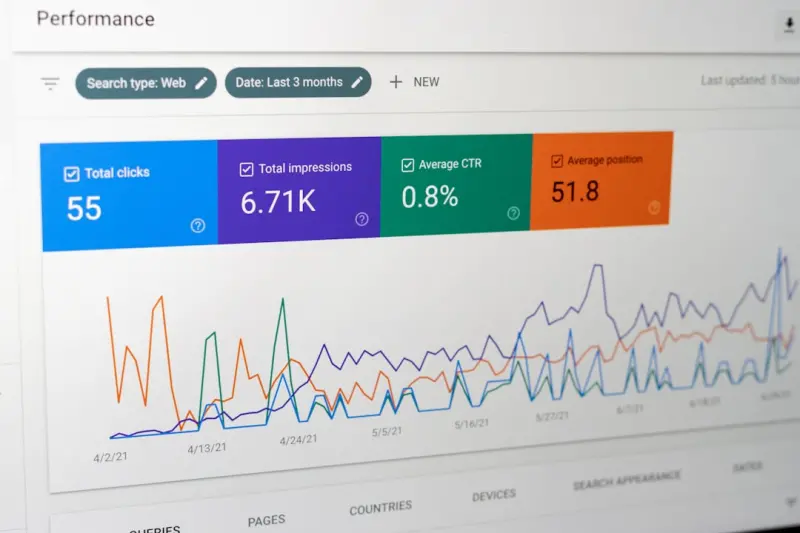
Semantic Search Optimization: Boost Rankings with Entity Power
Learn to dominate semantic search by mastering entities, schema markup, and topic clusters. This guide offers actionable steps to future‑proof your SEO and ca...Read More
0 Comments
Post Comment
You will need to Login or Register to comment on this post!