
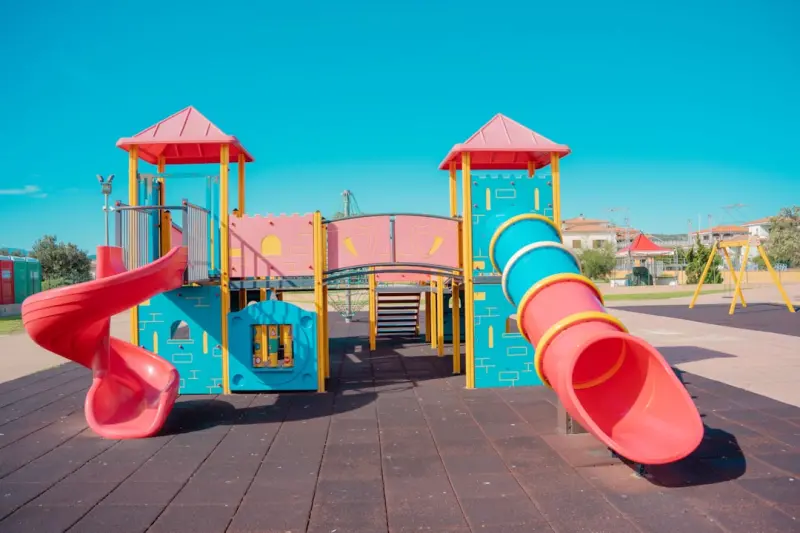
When the Playground Becomes a Safety Lab: Rethinking Everyday Risks for Kids
It’s funny how my mind flips between two worlds: the bustling conference rooms where I’m charting product roadmaps, and the chaotic living room where my eight‑year‑old is inventing a new game that involves a cardboard box, a pair of scissors, and a handful of glitter. In both arenas, the word “safety” whispers loudly, but the language it uses is wildly different. In tech, we speak of firewalls and encryption; at home, it’s about corner protectors and supervision.
When I first started writing about safety for businesses, I realized that the same principles—anticipation, redundancy, and continuous feedback—apply to the tiny, unpredictable ecosystems we create for our kids. This post is an invitation to treat every corner of your home like a mini‑lab where you can test, observe, and iterate on safety measures. Let’s dive into the invisible hazards that hide in plain sight, and how a mindset borrowed from product development can keep our children thriving.
1. The “Invisible” Hazards Checklist
Before you can design a solution, you need to know the problem. Here’s a quick audit you can run while your child is busy building the next empire of LEGO bricks.
- Choking Zones: Small parts, loose buttons, and even stray rubber bands can become tiny missiles. Conduct a nightly sweep of the floor and keep a “no‑small‑parts” rule for any toy that could be broken apart.
- Sharp Corners: Furniture edges often masquerade as sleek design statements. Adding corner guards is a low‑cost, high‑impact fix.
- Electrical Surprises: Uncovered outlets are a classic trap. Use outlet covers that require a dual‑press to open, making it harder for curious fingers.
- Water Slip‑Ups: Bathrooms and kitchen floors become slick when a spill goes unnoticed. A quick mop and a non‑slip mat can turn a potential tumble into a non‑event.
- Hidden Chemical Threats: Cleaning supplies, pesticides, and even certain crayons contain chemicals that can be harmful if ingested. Store them in a locked cabinet or, better yet, in a space that’s out of sight and out of reach.
These are the “bugs” of the household environment. Like any software issue, they’re best caught early, before they cause a crash.
2. Apply the “Beta Test” Mindset to Play Spaces
In the SaaS world, we release beta versions to a limited audience, collect data, and iterate. Your child’s play area can follow the same cycle.
- Observe: Spend a few minutes each day watching how your child interacts with the space. Are there spots they avoid? Are there objects they keep returning to?
- Collect Data: Note any close calls—like a near‑miss with a loose rug or a toy that broke unexpectedly.
- Iterate: Adjust the environment based on those observations. If a particular toy consistently ends up on the floor, perhaps it needs a storage solution that’s within reach.
- Feedback Loop: Involve your child in the process. Ask them what feels “safe” or “dangerous.” Their perspective is priceless because they experience the space differently than adults do.
This loop creates a dynamic environment that evolves as your child grows, just like a product that receives regular updates.
3. Tech‑Enabled Safety Without Over‑Surveillance
There’s a fine line between using technology to protect and letting it become a digital nanny. The goal is to empower, not to micromanage.
- Smart Sensors: Plug‑in water leak detectors can alert you on your phone before a puddle becomes a slip hazard.
- Bluetooth Trackers: Small tags attached to backpacks or jackets give you peace of mind when your child wanders to the backyard.
- Voice‑Activated Alerts: Devices like smart speakers can be programmed to announce “time to tie your shoes” or “watch out for the coffee table” when they detect certain phrases.
These tools act as silent assistants, much like rethinking safety in the hybrid SaaS era encourages teams to blend human oversight with automated safeguards. The principle is the same: combine the strengths of technology with the intuition of a caring adult.
4. Curating a “Safety Subscription Box” for the Home
Remember the excitement of opening a curated subscription box? That same delight can be harnessed for safety gear. Think of a monthly package that arrives with fresh corner guards, new outlet covers, or even a fun “safety superhero” cape for your kid to wear while they learn about hazards.
By turning safety upgrades into a surprise, you transform a mundane chore into an event. It’s an approach inspired by why curated subscription boxes are redefining how we shop—the element of anticipation makes compliance feel natural.
5. Mental Safety: The Overlooked Layer
Physical safety gets the headlines, but mental safety is just as critical. A child who feels constantly monitored may develop anxiety, while one who feels unsafe in their environment can become withdrawn.
Balance is key. Establish clear “check‑in” moments where your child can voice concerns about anything that makes them uneasy—whether it’s a new pet, a moving piece of furniture, or a change in routine. This open dialogue builds trust, mirroring how high‑performing teams practice psychological safety to boost mental fitness in SaaS teams. The same principle applies at home: a safe mind leads to a safe body.
6. The Power of Storytelling in Safety Education
Kids absorb lessons better when they’re wrapped in a story. Instead of a bland list of “don’t touch the stove,” craft a narrative: “Captain Blaze, the brave fire‑fighter, always checks that the stove is cool before he cooks his dragon‑egg pancakes.” By assigning characters and adventures, you embed safety rules in memory.
Even better, let your child co‑create the story. When they become the author, the lesson sticks. This collaborative approach turns a directive into a shared adventure.
7. Scaling Safety as Your Child Grows
Just as SaaS products scale to accommodate more users, your safety protocols must adapt as your child ages.
- Toddler Stage: Focus on bite‑size hazards—small toys, low tables, and soft flooring.
- Early School Age: Introduce basic first‑aid knowledge, safe internet habits, and the concept of “personal space.”
- Pre‑Teen: Emphasize independence while reinforcing boundaries—like why it’s risky to ride a bike without a helmet.
- Teen: Shift the conversation to risk assessment and self‑advocacy, encouraging them to evaluate situations before acting.
Think of each stage as a version release—Version 1.0 (toddler) is simple, Version 2.0 (school age) adds features, and so on. Keep a changelog of updates so you can track what’s been added, removed, or refined.
8. Community‑Driven Safety Hacks
Don’t underestimate the power of shared knowledge. Parenting forums, neighborhood groups, and school PTA meetings are treasure troves of creative safety hacks. One parent might suggest turning a spare pair of socks into a makeshift finger guard for a toddler who loves to explore kitchen drawers. Another might recommend a DIY “traffic light” system for kids to signal when they’re ready for a bathroom break at night.
By contributing your own discoveries, you become part of a collective safety ecosystem—much like open‑source communities improve software together.
9. Emergency Drills: From Boring to Game‑ified
Fire drills, lockdown procedures, and “what to do if you get lost” can feel repetitive. Transform them into a game with points, badges, and a leaderboard. Celebrate each successful drill with a small reward—a sticker, a favorite snack, or extra screen time.
The gamified approach not only improves retention but also reduces anxiety. Kids learn that emergencies are just another level to master, not a source of fear.
10. The Final Thought: Safety as a Culture, Not a Checklist
At the end of the day, safety isn’t a static checklist; it’s a culture woven into daily interactions. When you approach your home like a living product—always testing, iterating, and listening—you create an environment where safety feels natural, not forced.
So the next time you’re tempted to skip that corner guard because the room looks “nice enough,” ask yourself: would a user (your child) be happy with this version? If the answer is anything but a confident “yes,” it’s time for a quick patch.
Remember, the playground is your lab, the toys are your prototypes, and your child is the most important user. Treat them with the same care you’d give a flagship product, and you’ll build a foundation of safety that lasts a lifetime.

Miranda Murphy: Experienced freelance writer with a decade of storytelling expertise. Let's create something amazing together!
Related Posts
Smart Toy Safety Guide for Parents
Smart toys offer exciting learning experiences, but they also bring hidden privacy and security chal... Read More
Beyond the Playground: Teaching Kids Proactive Safety Skills for Real‑World Situations
Discover a fresh approach to child safety that goes beyond rules, focusing on confidence-building, c... Read More

Redefining Kids Safety: A Data‑Driven, Human‑First Playbook
Discover a fresh approach to kids safety that blends ambient sensors, secure wearables, AI co‑pilo... Read More
Top Posts

Driving the Future: Real‑Time Telematics and Intelligent Platforms Transform the Automotive Aftermarket
The article delves into the rise of predictive maintenance in the automotive aftermarket, highlighting real‑time telematics, AI analytics, and a plugin‑firs...Read More

Celebrating Success Remotely: A Playbook for Modern Teams
A comprehensive guide for remote and hybrid teams on building intentional, inclusive celebration rituals that boost engagement, retention, and performance....Read More

Growing a Greener Tomorrow: How Gardening Can Transform Your Life
Gardening is more than just a hobby – it's a way of life. Learn how gardening can transform your life and promote a sustainable future....Read More

Deepfake Voice Phishing: The New B2B Scam Threat
Deepfake voice phishing is the latest frontier in business scams, using AI‑generated speech to impersonate executives and trigger costly actions. This post re...Read More
0 Comments
Post Comment
You will need to Login or Register to comment on this post!