

Why Controlled Chaos Is the Secret Sauce for Modern Parenting
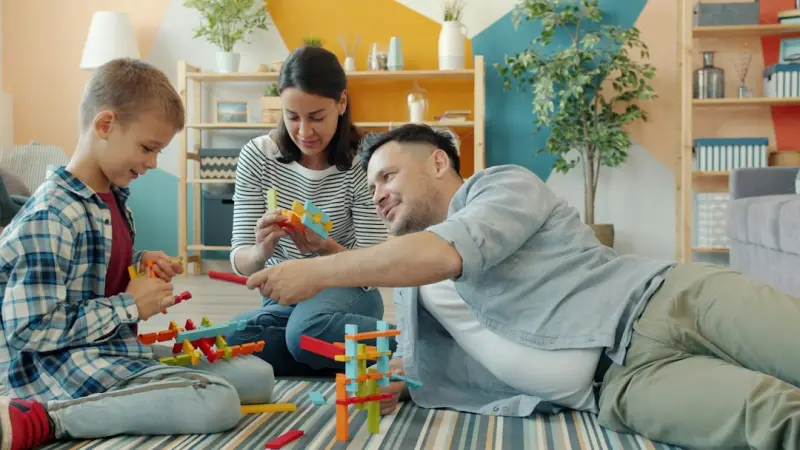
When I first held my newborn, I imagined a serene nursery, pastel walls, and a strict bedtime routine that would make any parenting guide proud. Fast forward a few years, and the reality looks more like a whirlwind of Lego pieces, half‑finished art projects, and the occasional squeal of triumph when my six‑year‑old finally solves a puzzle that has baffled him for weeks. That shift from order to delightful disorder isn’t a failure; it’s a feature. In today’s hyper‑connected world, children are bombarded with curated feeds, algorithm‑driven recommendations, and endless streams of “perfect” moments. What they need most is controlled chaos—a space where the rules are loose enough to spark imagination, yet consistent enough to keep them safe.
The Myth of the Perfect Schedule
Every parenting blog seems to champion the “golden hour” or the immaculate daily timetable that promises optimal development. While structure has its place, an over‑engineered schedule can suffocate curiosity. When kids are told exactly what to do, when to do it, and for how long, they miss out on the crucial practice of self‑directed decision making. The brain’s prefrontal cortex, responsible for planning and impulse control, matures through trial, error, and the occasional messy outcome.
Consider this: a child given a set of crayons and a blank page can choose to stay inside the lines or invent an entirely new world of colors. A child forced to color within prescribed shapes learns precision, but rarely learns to think outside the box. The difference isn’t academic; it’s developmental.
Unstructured Play: The Engine of Innovation
Unstructured play is not “free time” in the lazy sense; it is the laboratory where children test hypotheses, develop resilience (yes, that word is okay in a new context), and practice social negotiation. When my daughter built a fort using couch cushions, blankets, and an old cardboard box, she wasn’t just playing—she was learning architecture, physics, and teamwork.
- Problem‑solving: She figured out how to balance a heavy book on a flimsy pillow without it collapsing.
- Negotiation: She asked her brother to hand her the “roof” while she placed the “walls,” learning to give and take.
- Creativity: She turned a mundane living room into a castle, complete with secret passages.
These skills translate directly to adulthood. CEOs who champion “playful brainstorming” often cite their childhood experiences of building forts or inventing games as the seed of their creative confidence.
Creating a Home Environment That Encourages Controlled Chaos
Think of your home as a calm, functional canvas rather than a sterile gallery. The goal isn’t to eliminate clutter but to curate it. A few guiding principles help strike that balance:
- Designated “Mess Zones”: Allocate a corner of the living room or a spare bedroom for creative messes. A sturdy table, washable mats, and open shelves for supplies signal that exploration is welcome.
- Accessible Materials: Store art supplies, building blocks, and loose parts at child‑height. When tools are within reach, the impulse to create is immediate.
- Rotating Resources: Every few weeks, swap out a set of toys or craft items. This keeps novelty high without buying new things.
- Clear Expectations: Set simple rules—like “clean up after you’re done” or “no sharp objects”—that provide safety without stifling freedom.
By intentionally allowing mess, you give kids permission to experiment. The mess isn’t a sign of failure; it’s a sign of engagement.
Tech‑Savvy Parenting in a Mess‑Friendly World
Being a tech professional, I often wrestle with the paradox of using gadgets to manage the very chaos I want my kids to experience. The answer isn’t to ban technology, but to integrate it mindfully. For example, a simple design ops mindset can be repurposed for family life: define a clear workflow for chores, set up visual boards for shared responsibilities, and iterate based on what works.
Here’s a quick template I use with my kids:
- Plan: Sunday night, we decide which “mess projects” we’ll tackle—building a cardboard city, baking a new recipe, or planting herbs.
- Execute: Saturday morning is “creation time.” No screens, just hands‑on activity.
- Review: After lunch, we discuss what went well, what was tricky, and what we’d tweak next time.
This iterative loop mirrors agile development, yet it’s applied to family dynamics. The result? Kids learn to own their processes, celebrate successes, and view setbacks as data points rather than defeats.
Balancing Screen Time with Real‑World Play
There’s no denying that screens are part of modern life. The trick is to make them complementary, not dominant. Here are three strategies I’ve found effective:
- Screen‑as‑Tool, Not‑Toy: Use tablets for documenting projects—photos, videos, voice‑overs—rather than passive consumption.
- Scheduled “Digital Free” Windows: Designate evenings or weekends as “no‑screen zones” where the family engages in board games, cooking, or outdoor adventures.
- Co‑Play: Join your child in a digital activity that encourages creativity, such as coding simple games together or designing digital art.
When screens are purposeful, they can actually amplify the benefits of unstructured play by providing a platform to share, reflect, and iterate.
Lessons From the Playground: Social Skills in the Wild
While indoor forts are fantastic, the outdoor playground remains an unmatched arena for social learning. In the midst of a sandcastle competition, children negotiate roles (architect, builder, decorator), practice patience while waiting for a turn, and experience the emotional roller coaster of winning and losing.
One of my favorite observations: a group of kids once turned a simple game of “tag” into a complex narrative where they were “spies” on a secret mission. They created rules, assigned secret codes, and even drafted a “mission brief” on a napkin. This spontaneous role‑play is a masterclass in collaborative storytelling and leadership.
Parenting as a Co‑Creator, Not a Director
It’s tempting to think of parenting as a top‑down operation—set the stage, give the script, and watch the performance. In reality, the best moments happen when parents step back and become co‑creators. Here’s how to shift that mindset:
- Ask Open‑Ended Questions: Instead of “Do you want to read this book?” ask “What story would you like to explore today?”
- Model Curiosity: Share your own “messy” projects—maybe you’re learning a new instrument or tinkering with a DIY repair.
- Celebrate Process Over Product: Praise the effort, the experimentation, and the learning, not just the finished outcome.
When children see adults embracing uncertainty, they internalize that risk‑taking is a normal, even celebrated, part of life.
From Chaos to Confidence: The Long‑Term Payoff
Studies show that children who engage regularly in open‑ended play develop stronger executive function skills—planning, flexible thinking, and impulse control. They also exhibit higher self‑esteem because they’ve learned that they can shape their environment, not just react to it.
In my own family, the transformation is tangible. My son, once hesitant to join group activities, now leads his peers in building elaborate LEGO cities. My daughter, previously overwhelmed by “big‑picture” assignments, now breaks tasks into bite‑size steps with confidence.
Practical Tips to Kickstart Controlled Chaos at Home
- Start Small: Pick one room or corner and turn it into a “creation zone.” Let the kids choose what stays there.
- Set a Timer for “Free Exploration”: Give a 30‑minute window where the only rule is to have fun. Afterward, discuss what they discovered.
- Document the Journey: Use a simple journal or digital photo album to capture milestones. Review them together monthly.
- Rotate Adult Participation: Let different family members join the mess—grandparents, cousins, neighbors—to keep the dynamic fresh.
- Reflect and Adjust: After each session, ask “What worked? What could be better?” and tweak the environment accordingly.
These steps don’t require a major renovation; they only require a shift in perspective—from fearing disorder to welcoming it as a catalyst for growth.
Conclusion: Let the Mess Be Your Guide
In a world that celebrates polished feeds and perfectly timed routines, the most powerful gift you can give your children is the freedom to get messy, make mistakes, and rebuild. Controlled chaos isn’t the opposite of order; it’s a different kind of order—one that thrives on curiosity, creativity, and the joy of discovery. As parents, when we step back, loosen the reins, and trust the process, we empower the next generation to become innovators, problem‑solvers, and, most importantly, confident humans who aren’t afraid to play outside the lines.

Jimmy Stewart is a content creator that gets inspired by many aspects of life, internet or whatever inspires him at that moment. When he's not online he's gaming and when he is not gaming he is online trolling discussion boards.
Related Posts

When Parenting Meets Remote Work: Crafting Balance Without Losing Yourself
Explore actionable tips for remote-working parents, from fluid boundaries and play‑based productiv... Read More

Unstructured Play: The Hidden Superpower Behind Resilient Kids
Unstructured play ignites creativity, problem‑solving, and emotional resilience. This article expl... Read More
Parenting in the Gig Economy: Building Stability While Embracing Flexibility
A practical guide for gig‑working parents, offering tips on balancing flexible income, building sa... Read More
Top Posts

The Future of Business: How Sustainability is Revolutionizing the Way We Work
Sustainability is no longer just a buzzword, but a necessity for businesses looking to thrive in the modern landscape. Learn how companies can make a positive i...Read More

Feature Flags: The Quiet Engine Powering Seamless Releases
Feature flags act as a safety valve and experimentation platform, enabling teams to release new functionality, gather real‑world data, and roll back instantly...Read More

When AI Becomes Your Creative Sidekick
Discover how AI can become a collaborative muse, boosting music, visual art, and storytelling for independent creators while preserving authenticity....Read More

Turning WordPress into a Learning Hub for Modern Teams
Explore a step‑by‑step guide to repurpose WordPress from a static blog into a dynamic, personalized learning hub, boosting onboarding, upskilling, and cross...Read More
0 Comments
Post Comment
You will need to Login or Register to comment on this post!