
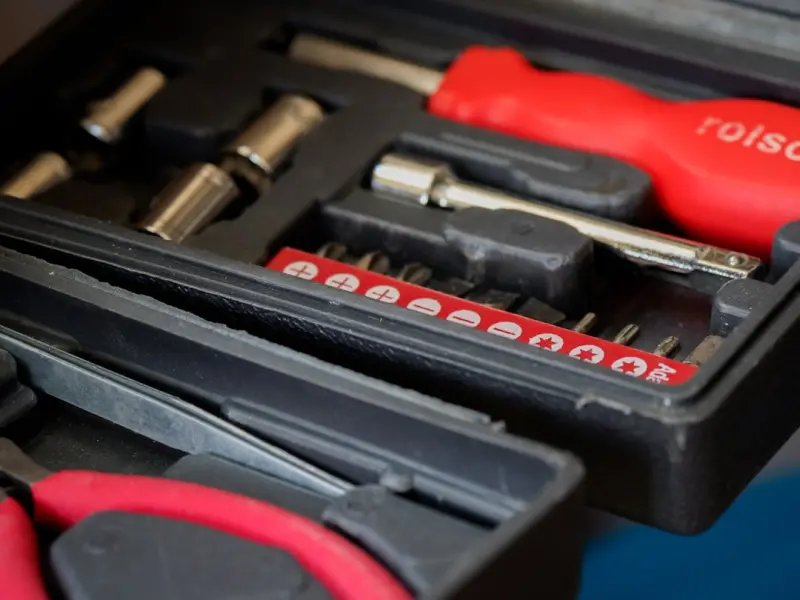
Why the Tool Landscape Is Ready for a Modular Revolution
For years I’ve watched the DIY world cling to single‑purpose gadgets that quickly become obsolete, and I’ve felt the frustration of lugging around a cluttered toolbox. Modular handheld tech promises a smarter path: interchangeable cores that adapt to any task, from a simple screwdriver to a high‑precision sensor. This shift isn’t just about convenience—it’s a mindset change that empowers creators to evolve their gear without buying a brand‑new device each time a new need arises.
The Anatomy of a Modular Handheld System
At its heart, a modular system consists of a base unit—a durable chassis with power, connectivity, and a secure attachment mechanism—plus a library of snap‑on modules that provide specific functions. Think of it as a Lego set for professionals: you click on a thermal camera, a laser cutter, or a wireless charger, and the base instantly recognizes and powers the new component. The design philosophy mirrors the simplicity of a Swiss‑army knife while offering the depth of a full‑size workstation.
Future‑Proofing Your Toolbox and Cutting E‑Waste
One of the most compelling arguments for modularity is its ability to extend the lifespan of your hardware. Instead of discarding an entire device when a feature becomes outdated, you simply replace the module that’s no longer relevant. This not only reduces electronic waste but also saves money in the long run, turning a single purchase into a sustainable ecosystem that grows with your projects.
Crafting a Portable Studio Kit for Creators on the Move
Imagine assembling a compact, travel‑ready studio that fits in a backpack: a base unit, a high‑resolution camera module, a compact lighting rig, and a battery pack that powers everything for hours. By swapping out the camera for a macro lens or adding a portable sound‑capture module, you instantly reconfigure the kit for photography, podcasting, or field research. The flexibility means you’re always equipped for the next creative challenge without the bulk of multiple standalone devices.
Software Integration: APIs That Speak the Language of Hardware
Modern modular tools aren’t just interchangeable physically; they’re also API‑driven, allowing developers to write software that detects and controls each module in real time. This opens doors to automation scripts that, for example, switch a sensor’s sampling rate based on ambient conditions or trigger a vibration alert when a tool reaches a preset torque. The synergy between hardware modularity and software flexibility creates a dynamic workflow that feels almost magical.
Learning from the Community: UX Insights from Micro‑Interactions
Designing a seamless modular experience requires attention to the tiny moments users encounter when attaching or configuring a module. The principles outlined in microinteractions mastery teach us how subtle feedback—like a gentle click or a brief LED pulse—can confirm a successful connection and boost confidence. By borrowing these UX patterns, modular tool makers can turn a mechanical action into a satisfying, intuitive experience.
Choosing Durable Components: Lessons from Everyday Appliances
When I first disassembled my kitchen blender, I discovered that a well‑designed appliance can outlive its flashy counterparts by decades. The same durability mindset should guide your modular selections. The insights from the hidden life of everyday appliances remind us to prioritize robust materials, sealed connectors, and serviceable parts, ensuring that each module remains reliable even after years of swapping and traveling.
Getting Started: Your First Modular Build in Three Simple Steps
Begin by identifying the core tasks you perform most often—whether that’s measuring, cutting, or capturing data. Purchase a reputable base unit with a strong community backing, then select one or two modules that address those primary needs. Finally, spend time calibrating the system and exploring the accompanying API documentation, allowing you to customize behavior and truly make the kit your own. In just a weekend, you’ll have a versatile, future‑proof toolbox that grows alongside your ambitions.

Jody Henderson is a passionate freelance writer, driven by a love for storytelling and a keen eye for detail. With a versatile skillset, she crafts compelling content across a variety of niches, from engaging blog posts to informative articles and persuasive marketing copy.
Related Posts

From Static Checklists to Living Process Orchestrators
A deep dive into why traditional static checklists are holding teams back and how adaptive, living p... Read More

The Next‑Gen Toolbox: Sustainable Tools That Empower Makers
Explore the rise of sustainable gadgets and eco‑smart digital tools, and get actionable steps to c... Read More
Why Smart Professionals Choose a Minimalist Tool Stack
A deep dive into building a lean, interoperable tool stack that eliminates friction and maximizes pr... Read More
Top Posts

The Digital Sunset: A Night‑Time Ritual to Reclaim Family Sleep
A step‑by‑step guide to creating a family “digital sunset,” the nightly ritual that eases children off screens, enhances sleep quality, and brings the w...Read More

Seeing Beyond Text: How Visual and Voice Search Are Redefining SEO for SaaS
Learn how SaaS marketers can leverage visual and voice search to unlock new traffic sources, optimize images and FAQs with schema, and stay ahead as search evol...Read More

Navigating the Legal Frontier of Remote Work: Contracts, Compliance, and Culture
Remote work is redefining employment law. This article breaks down essential contract clauses, cross‑jurisdictional compliance, risk mitigation, and cultural ...Read More

The Impact of Google's Algorithm Updates on Search Engine Marketing
Google's algorithm updates have significantly impacted search engine marketing. Learn how to adapt and evolve your SEM strategies to stay ahead of the curve....Read More
0 Comments
Post Comment
You will need to Login or Register to comment on this post!