

Why a Thoughtful Tool Kit Beats a Bigger One Every Time
When I first set up a modest workshop in my garage, the temptation to pile every shiny gadget onto the workbench was overwhelming; the shelves soon resembled a miniature hardware store, and the chaos whispered louder than any drill. Over the years I’ve learned that a curated collection—selected for versatility, durability, and the specific projects you tackle—outperforms an indiscriminate arsenal, because each tool earns its place by solving a real problem, not by looking impressive on a shelf. The paradox is simple: more isn’t always better, and the smartest tool kit is the one that feels like an extension of your own hands, ready to respond without hesitation. In this guide I’ll walk you through the mindset shift from “I need everything” to “I need the right things,” drawing on my own trial‑and‑error moments and the subtle economics of tool ownership that most hobbyists overlook.
From Tool Overload to Tactical Selection
Tool overload is a silent productivity killer; the more items you own, the higher the cognitive load when you try to locate the right one, and the greater the maintenance burden you shoulder. I remember one weekend when a simple bookshelf project stalled because I was hunting for a 3/8‑inch drill bit that was buried beneath a mountain of seldom‑used accessories—time that could have been spent cutting wood vanished into a black hole of clutter. The antidote lies in a systematic audit: list every tool you own, rate its frequency of use, and then ask yourself whether a multi‑function alternative could replace two or three single‑purpose items. This process not only reveals hidden redundancies but also highlights gaps where a single, well‑chosen addition would dramatically expand your capability. Think of it as pruning a garden; you remove the weeds to let the essential plants thrive, and the same principle applies to any functional collection.
Core Categories That Define a Balanced Kit
To build a truly balanced toolkit, start by dividing your needs into four core categories: power, precision, digital, and organization. Power tools handle the heavy lifting—drilling, cutting, fastening—while precision hand tools fine‑tune the details, from tightening a set screw to shaping a delicate joint. Digital aids, such as laser distance meters and Bluetooth torque wrenches, bridge the gap between analog skill and data‑driven accuracy, offering real‑time feedback that reduces guesswork. Finally, organization isn’t just about neatness; it’s the invisible framework that keeps the other three categories accessible and protected, ensuring that the moment inspiration strikes you can reach for the right tool without a scavenger hunt. Below is a quick snapshot of the essential items in each bucket, designed to give you the most mileage per dollar spent:
- Power: Cordless drill/driver, impact driver, compact circular saw.
- Precision: Ratcheting screwdriver set, adjustable wrench, quality needle‑nose pliers.
- Digital: Laser measure, Bluetooth torque wrench, inventory app.
- Organization: Modular tool chest, magnetic wall strip, labeled bins.
Power Tools: Choosing Versatility Over Volume
The modern cordless drill has become the Swiss Army knife of the workshop, and for good reason: a single 20‑volt unit, paired with a well‑chosen set of bits, can drill, drive, sand, and even mix paint when you add the right accessories. My own favorite is a brushless motor drill because the efficiency gains translate directly into longer run time and less heat, meaning you can work uninterrupted on larger projects. When you complement that with a compact impact driver—engineered for high‑torque applications like assembling furniture or driving long screws—you cover the majority of fastening scenarios without needing a separate hammer drill or socket set. The key is to select tools with interchangeable batteries, so you never find yourself stuck mid‑job because the charge has died, and to prioritize ergonomics; a well‑balanced grip reduces fatigue and improves precision, turning a 2‑hour job into a comfortable, almost effortless session.
Precision Hand Tools: The Unsung Heroes of Quality Work
While power tools get the glory, it’s the precision hand tools that truly define the finish of a project, and they’re the ones I reach for when the job demands a delicate touch. A high‑quality ratcheting screwdriver set with interchangeable bits eliminates the need for a full toolbox of individual screwdrivers, allowing quick swaps while maintaining torque control. Adjustable wrenches with smooth, fine‑tooth jaws prevent rounding off bolts, especially on older hardware where the metal may be softened. I also swear by a pair of needle‑nose pliers with insulated handles for electrical work; their fine tips let you bend, cut, and hold tiny wires without slipping. Investing in a set of hand‑forged steel chisels and a sharp utility knife rounds out the arsenal, giving you the confidence to carve, trim, or clean up material with surgical precision. These tools, though modest in price, have a disproportionate impact on the overall craftsmanship of any build.
Digital Aids: Bringing Data Into the Hands‑On Process
In the age of smart devices, the workshop is no longer a purely analog arena; integrating digital tools can shave minutes—or even hours—from a project while raising accuracy to new levels. A laser distance meter, for instance, replaces the old tape measure and provides instant readouts to within a millimeter, eliminating cumulative errors when laying out a room or positioning wall mounts. Pair that with a Bluetooth‑enabled torque wrench that logs each tightening event to a companion app, and you gain a verifiable record of compliance for tasks that require strict torque specifications, such as assembling a bike or calibrating machinery. For inventory management, I use a simple mobile app that tags each tool with a QR code; scanning it updates a cloud‑based spreadsheet, letting me see at a glance what’s on the bench and what’s missing. These digital layers don’t just make you faster—they create a feedback loop that continuously improves your technique, echoing the principles found in Unlocking Hidden ROI for any process.
Organization Strategies That Save Time and Money
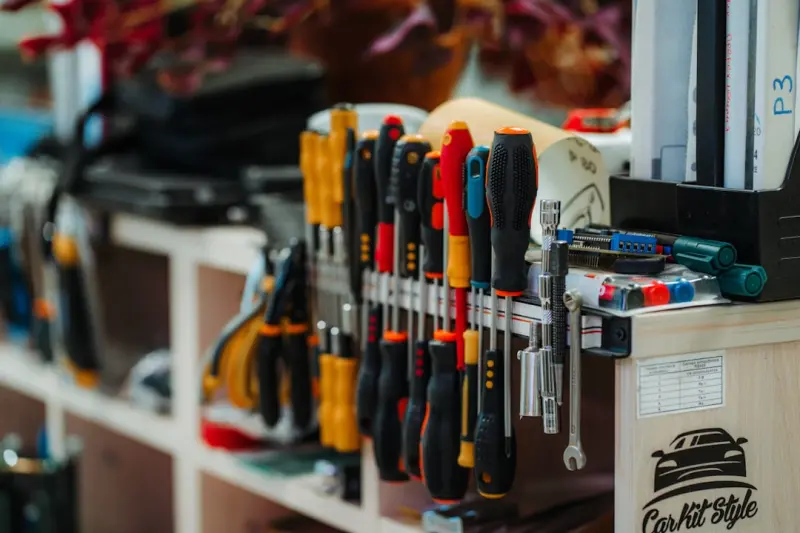
Even the best tools lose their edge when they’re buried under a mountain of unrelated junk, which is why a disciplined approach to organization pays dividends far beyond aesthetic appeal. A modular tool chest with drawer inserts lets you customize compartments for everything from drill bits to small electronics, while a magnetic wall strip offers quick, visible access to frequently used metal tools, turning the wall into a dynamic tool rack. Label each bin or drawer with clear, durable tags—laser‑etched stickers survive the inevitable spills and scratches—so you can locate an item in seconds rather than rummaging through a drawer. I also recommend a rolling cart for portable projects; it keeps the most essential tools within arm’s reach and can be wheeled directly to the job site, reducing setup time. When you treat organization as an integral part of the workflow, you’ll notice a measurable increase in productivity and a reduction in the frustration that often leads to abandoned projects.
Budgeting and Future‑Proofing: Building a Kit That Grows With You
One of the biggest mistakes beginners make is splurging on a full set of tools before they’ve identified a clear need, resulting in wasted capital and underused equipment. My approach is incremental: start with a core set that covers the most common tasks, then expand based on project demands, always evaluating the cost‑to‑benefit ratio of each addition. Opt for systems with interchangeable batteries and modular accessories; a single battery platform that powers both your drill and impact driver, for example, eliminates the need for multiple chargers and reduces long‑term expenses. Keep an eye on emerging standards—USB‑C power delivery is making its way into cordless tools, promising faster charging and universal compatibility. By treating your toolkit as a living system, you can upgrade components without discarding the entire set, echoing the adaptability championed in Turning WordPress Into a Living, Breathing Experience and ensuring that each purchase remains relevant for years to come.
Putting It All Together: Your Personal Blueprint for a Smarter Toolbox
At the end of the day, the goal isn’t to own the most tools, but to own the right tools that empower you to move from idea to finished product with confidence and efficiency. By conducting a rigorous audit, categorizing your needs into power, precision, digital, and organization, and investing strategically in versatile, future‑ready equipment, you transform a cluttered bench into a streamlined production hub. Remember the mantra that has guided my own journey: quality over quantity, adaptability over abundance. When you apply this philosophy, each addition to your collection feels like a purposeful upgrade rather than a fleeting impulse. So take a moment to assess what you truly need, map out a phased acquisition plan, and watch as your projects not only get completed faster, but also look and feel better—proof that a thoughtful toolkit truly is the cornerstone of any successful maker’s workflow.

Jim Pearse, a seasoned freelance writer, brings a wealth of knowledge and passion to the world of home and garden. From the intricacies of landscaping to the nuances of interior design, Jim delves into every aspect of creating comfortable, beautiful, and functional living spaces.
Related Posts

Why AI‑Augmented Toolkits Are the New Backbone of SaaS Ops
AI‑augmented toolkits turn knowledge bottlenecks into real‑time insights, automate repetitive ta... Read More
Crafting a Modern Knowledge Toolbox for Professionals
Learn how to design a modular knowledge toolbox that integrates capture, automation, analysis, creat... Read More
The Toolbox Revolution: Sustainable Gadgets Redefining Everyday Work
Explore the rise of sustainable tools—from modular designs to energy‑efficient power devices—a... Read More
Top Posts

Smart Appliances: The Sustainable Upgrade Your Home Needs
Explore the rise of eco‑friendly appliances, learn maintenance hacks, and see how smart technology can make your kitchen greener and more efficient....Read More

When Deepfakes Crash Boardrooms: Guarding Trust in Video Communication
Deepfake technology is infiltrating business video calls, jeopardizing trust and decision‑making. This article outlines a multi‑layered defense—verificati...Read More

Mastering Plugin Governance: A Playbook for Scalable WordPress Teams
Learn how to map, assess, and automate plugin management with a governance playbook that turns chaotic add‑ons into a reliable, scalable ecosystem....Read More

Intent‑Based Networking: How AI‑Driven Policies Are Redefining Enterprise Connectivity
Intent‑Based Networking transforms the network from a static, manually‑configured system into an AI‑driven, policy‑first platform. By declaring business...Read More
0 Comments
Post Comment
You will need to Login or Register to comment on this post!