
Re‑thinking Web Design as a Living Narrative
When I first stepped into the world of web design, I treated each project like a static billboard, focused on layout and color palettes, but over time I realized that a truly engaging site must breathe like a story, unfolding layer by layer as the visitor interacts. Micro‑interactions—those subtle animations, haptic feedback, and contextual tooltips—have become the punctuation marks that guide users through the plot, turning a simple click into a moment of delight that reinforces brand personality. By weaving these moments into a coherent narrative arc, designers can transform mundane navigation into an experience that feels personalized, memorable, and, most importantly, human‑centric.
In practice, this means abandoning the old “one‑size‑fits‑all” UI kit in favor of a modular choreography where each component knows its role in the story’s progression. Imagine a landing page where the hero image subtly shifts as the scroll depth reaches a new chapter, or a checkout button that emits a soft pulse only when the cart meets the user’s budget threshold—these are the kind of tactile cues that whisper confidence and reduce friction. As designers, we must become storytellers, scripting not just the visual language but the emotional cadence that keeps users turning the page.
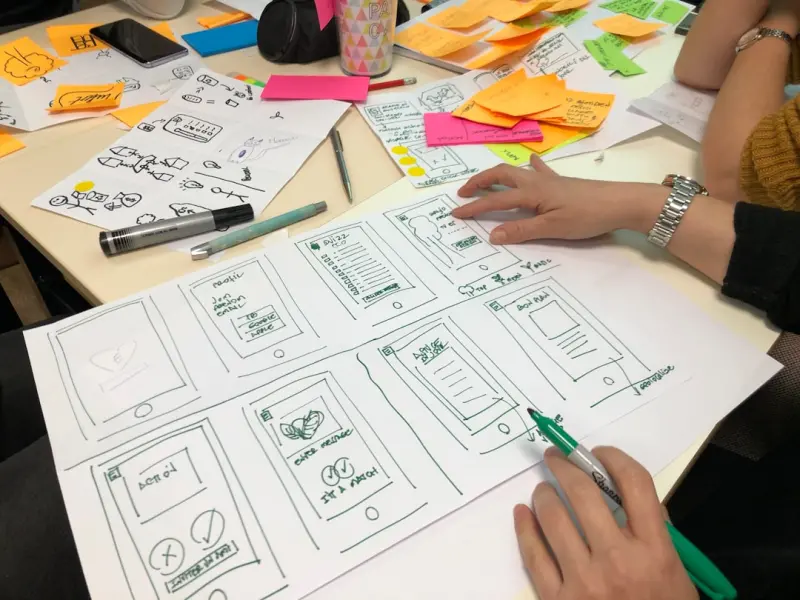
To truly master this narrative approach, I recommend mapping out user journeys as storyboards, assigning emotional beats to each interaction, and testing the flow with real users to see if the intended sentiment lands. The result is a site that feels less like a tool and more like a companion, guiding visitors through a purposeful adventure rather than a series of disjointed tasks.
AI‑Enhanced Visuals: When Algorithms Meet Aesthetic Intuition
The rise of generative AI has opened a new frontier where designers can collaborate with algorithms to produce bespoke visual assets at lightning speed, yet the challenge lies in preserving authenticity and brand voice amidst the automation. By feeding an AI model with a curated library of brand‑specific imagery, typography, and color theory, designers can generate variations that maintain coherence while exploring creative avenues that would have taken days to prototype manually. This partnership allows us to iterate rapidly, test multiple concepts simultaneously, and focus our expertise on refining the narrative rather than grinding out each pixel.
However, AI is not a magical shortcut; it is a tool that demands careful curation and ethical oversight. Designers must vet every output for bias, relevance, and cultural sensitivity, ensuring that the algorithm’s suggestions amplify rather than dilute the brand’s values. In my workflow, I treat AI‑generated drafts as raw sketches—rich with possibility but requiring the human hand to polish, contextualize, and embed the deeper layers of meaning that only a seasoned designer can provide.
When combined with a robust design system, AI can become a catalyst for consistency, automatically applying token‑based colors, spacing, and component rules across thousands of variations, which dramatically reduces the risk of visual drift as projects scale. The key is to strike a balance where technology accelerates production without compromising the soul of the design.
Design Systems for Distributed Teams and Sustainable Futures
Remote collaboration has turned design systems into the lingua franca for distributed teams, allowing designers, developers, and product managers across continents to speak the same visual language without the friction of endless hand‑offs. A well‑architected system codifies everything from atomic elements to interaction guidelines, embedding accessibility, performance, and brand ethos into reusable modules that anyone can deploy with confidence. In my experience, the most resilient systems are those that treat documentation as a living artifact, continuously updated through version control and peer review, rather than a static PDF that gathers dust.
Beyond team efficiency, design systems also pave the way for sustainable web practices by enforcing performance budgets and encouraging lightweight assets. By standardizing image formats, lazy‑loading patterns, and CSS‑in‑JS strategies, we reduce the carbon footprint of each page load—a small but measurable contribution to a greener internet. For teams looking to push sustainability further, integrating edge‑computing strategies can offload processing to geographically closer nodes, cutting latency and energy use; see the discussion in Beyond the Cloud: Why Edge Computing Is the Next Tech Frontier for deeper insight.
Accessibility remains a cornerstone of any forward‑thinking system, and linking to resources that champion inclusive design can reinforce this commitment. The article Designing for Neurodiversity: A Human‑First Web Experience provides actionable guidelines on how to embed neurodiverse-friendly patterns directly into component libraries, ensuring that every user, regardless of cognitive style, enjoys a seamless experience.
Finally, the rise of low‑code design platforms empowers non‑technical stakeholders to experiment within the guardrails of the design system, fostering a culture of innovation while maintaining brand integrity. By exposing a visual editor that pulls from the same token library, product owners can prototype and iterate without waiting for a development sprint, dramatically shortening time‑to‑market and democratizing the creative process.
Voice‑First Interfaces: Expanding the Canvas Beyond the Screen
As smart speakers and voice assistants become household staples, designers must extend their canvas to the auditory realm, crafting experiences that are as intuitive to hear as they are to see. Voice‑first interfaces require a rethinking of hierarchy; instead of visual cues, we rely on conversational flows, tone, and timing to guide users through tasks. This shift challenges us to write micro‑copy that feels natural, anticipates user intent, and provides clear, concise feedback, all while maintaining the brand’s personality.
Integrating voice with visual interfaces also opens opportunities for multimodal interactions, where a spoken command triggers an on‑screen animation, reinforcing comprehension and delight. By designing synchronized audio‑visual responses, we can create moments of surprise that deepen engagement—think of a calendar app that reads out upcoming events and simultaneously highlights them on a sleek timeline.
When planning voice experiences, it’s essential to map out edge cases, such as misrecognition or background noise, and provide graceful fallback options that keep the user in control. Incorporating analytics that track command success rates and user sentiment can inform iterative improvements, ensuring the voice layer evolves alongside user expectations.
Measuring Impact: From Clicks to Behavioral Resonance
Traditional web metrics—page views, bounce rates, and conversion funnels—offer a snapshot of user actions, but they often miss the deeper emotional resonance that truly defines a successful design. To capture this nuance, I blend quantitative data with qualitative insights, leveraging tools that monitor dwell time on micro‑interactions, sentiment analysis of user feedback, and heatmaps that reveal how users physically navigate a page. This holistic view uncovers patterns like whether a subtle hover animation nudges users toward a call‑to‑action or if a voice prompt reduces friction in form completion.
Embedding behavioral metrics into the design process creates a feedback loop where data informs design decisions, and design experiments generate fresh data. For example, A/B testing two variations of a micro‑interaction—one with a gentle bounce, another with a subtle color shift—can reveal which motion elicits a stronger emotional response, measured through increased time spent on the element or higher conversion rates. Over time, these insights accumulate, guiding the evolution of a design system that is both data‑driven and emotionally resonant.
Moreover, aligning these metrics with business goals ensures that design decisions translate into tangible outcomes, whether that’s higher customer lifetime value, reduced support tickets, or increased brand advocacy. By treating design as an ongoing experiment rather than a one‑off project, teams can continuously refine the user experience to stay ahead of shifting expectations.
Conclusion: Crafting Tomorrow’s Web with Purpose and Play
In the ever‑shifting landscape of web design, the most successful creators are those who blend narrative storytelling, AI‑augmented creativity, robust systems, and emerging modalities like voice into a cohesive, purpose‑driven practice. By treating each pixel as a word in a larger story, each interaction as a plot twist, and each data point as a clue to the audience’s emotional state, we can build digital experiences that feel alive, inclusive, and sustainable. I encourage you to experiment with the techniques discussed, share your findings with your team, and keep iterating—because the web, like any great story, is never truly finished.

David Moore is a freelance writer specializing in two dynamic and ever-evolving fields: gambling and the tech industry. With a keen eye for detail and a knack for unraveling complex topics, David delivers insightful and engaging content that keeps readers informed and entertained.
Related Posts

Designing for Neurodiversity: A New Frontier in Web Experience
Discover the emerging discipline of neuro‑inclusive web design, where thoughtful visuals, adaptive... Read More
When Web Design Becomes a Conversational Playground
Learn how conversational web design blends intent recognition, adaptive interfaces, and human‑cent... Read More

Designing for Neurodiversity: A Human‑First Web Experience
A fresh look at web design that prioritizes neurodiverse users, offering actionable strategies for c... Read More
Top Posts

The Strategic Power of Curated Gifting for Distributed Teams
A deep dive into why and how curated gifting can become a strategic advantage for remote and hybrid workforces, linking personalization, data-driven selection, ...Read More

The Art of Family Storytelling: Crafting Legacy One Night at a Time
Learn why sharing stories around the dinner table can become a powerful tool for bonding, teaching values, and preserving family heritage—plus practical tips ...Read More

The Power of Family Storytelling: Raising Confident, Connected Kids
Storytelling isn’t just bedtime fun; it’s a brain‑training, empathy‑building tool that shapes confident, resilient kids. Learn practical ways to weave n...Read More

Playful Futures: How Subscription Toy Boxes Are Rewriting the Way Families Experience Play
A deep dive into the surge of subscription toy boxes, uncovering how personalized curation, real‑time data, and community building are transforming playtime f...Read More
0 Comments
Post Comment
You will need to Login or Register to comment on this post!