
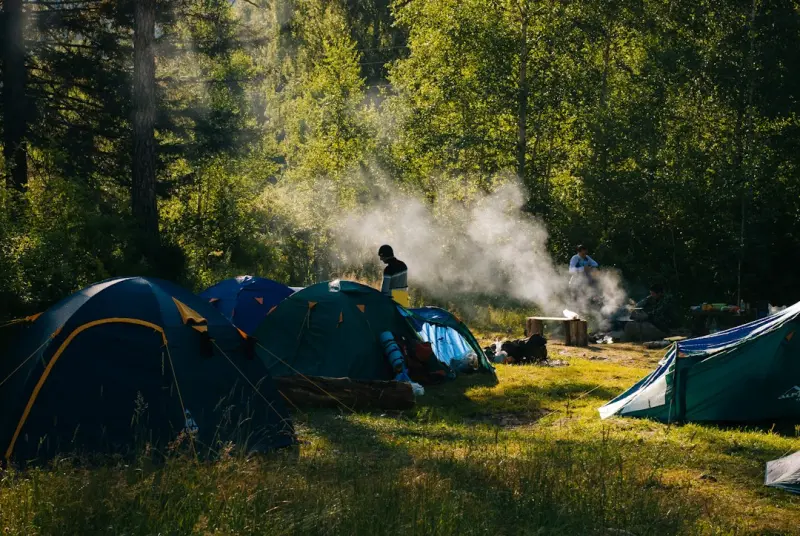
There’s a quiet revolution happening under the canopy of pine trees and beside the shimmer of mountain lakes. It isn’t about the newest high‑tech gear or the most extreme adrenaline rush; it’s about reclaiming the simple, analog joy of being outdoors while subtly leveraging the digital tools we already love. I call it the “Digital Detox Camping” movement, and it’s reshaping how busy professionals, creative teams, and even startups approach rest, inspiration, and productivity.
Why the Modern Professional Needs a Real‑World Reset
We spend our days glued to screens, hopping between video calls, and juggling endless notifications. The constant mental churn can drain creativity, impair decision‑making, and erode overall well‑being. While mindfulness apps promise relief, they often add another layer of digital dependency. The answer, paradoxically, is to step away from the digital—yet not abandon it entirely. A weekend spent in a tent, with a campfire and a sky full of stars, offers a natural reset button that no app can replicate.
Designing the Perfect Digital‑Detox Experience
Contrary to popular belief, a successful unplugged getaway doesn’t require abandoning every gadget. It’s about intentional use. Pack a lightweight portable AI hub for quick note‑taking or brainstorming, but keep it in airplane mode. Let the device be a silent observer, ready to capture fleeting ideas without pulling you into the endless scroll.
Start by selecting a location that naturally limits connectivity—think national parks, remote cabins, or even a backyard with a canopy. Choose a campsite that encourages low‑tech activities: hiking, kayaking, stargazing, or simply sitting in silence. The key is to curate an environment where the absence of Wi‑Fi feels like a gift rather than a loss.
The Science Behind Unplugging
Research shows that exposure to nature reduces cortisol levels, improves attention span, and boosts mood. A study from the University of Michigan found that participants who walked in a natural setting performed better on creative tasks compared to those who stayed indoors. This is because the brain’s default mode network—responsible for divergent thinking—activates more fully when we’re away from screens.
When you combine this natural cognitive boost with a brief, intentional tech touchpoint (like jotting down an idea on your portable AI hub), you create a powerful feedback loop. Your mind refreshes in nature, then captures inspiration in a structured format, ready for later development.
Practical Steps to Start Your Digital‑Detox Camping Journey
- Set Clear Boundaries: Define which devices are allowed and under what conditions. For many, this means a smartphone on “Do Not Disturb” and a laptop used only for note‑taking.
- Plan Low‑Tech Activities: Map out hikes, wildlife spotting, or simple cooking over a fire. The goal is to replace screen time with sensory experiences.
- Prepare a Capture System: Bring a notebook, a pen, or a minimal digital tool (like the AI hub) to document insights without opening a browser.
- Inform Your Team: Let colleagues know you’ll be offline. Use an auto‑reply that encourages urgent matters to be handled by a designated point of contact.
- Reflect Post‑Trip: After returning, review your notes and identify patterns or ideas that emerged during the detox. This is where the real value materializes.
From Campfire Stories to Business Innovations
Imagine you’re sitting by the fire, the crackle of wood syncing with the rhythm of your thoughts. You notice how the flames dance unpredictably, yet each spark follows a natural pattern. That observation could spark an analogy for agile product development—embracing flexibility while maintaining a core structure. When you later log these insights into your design ops workflow, you’ve transformed a simple nature moment into a strategic asset.
Case Study: A Startup’s Retreat That Fueled Their Next Release
A small SaaS team of eight decided to swap their coworking space for a weekend in the Adirondacks. They limited connectivity to a single laptop for brainstorming sessions, keeping phones in a locked box. Over the course of two days, they mapped out user journeys on a whiteboard propped against a tree, sketched UI concepts on paper, and even used sticks to illustrate flow diagrams on the sand.
The result? Their next product release saw a 27% increase in user engagement, attributed to the fresh perspectives and simplicity that emerged from the unplugged setting. The team credited the experience to the “mental clarity” that only a true break from digital noise can provide.
Addressing Common Concerns
“I’ll miss important emails.” By setting up an out‑of‑office auto‑reply and delegating a point person, you ensure critical communications are still managed. The occasional “urgent” email can be routed to a secondary device that remains on silent mode, only to be checked at designated intervals.
“I won’t be able to collaborate.” Collaboration doesn’t always require real‑time digital interaction. Physical whiteboards, shared sketch pads, and verbal brainstorming can be surprisingly effective. When you return, digitize the outcomes for seamless integration into existing workflows.
“It’s too expensive.” Camping can be as budget‑friendly as you make it. Public campgrounds, community forests, and even backyard setups cost a fraction of a hotel stay. The ROI comes from heightened creativity, reduced burnout, and stronger team cohesion.
Integrating Digital‑Detox Principles Into Everyday Work Life
Even if a full weekend retreat isn’t feasible, you can sprinkle detox moments throughout the week. Schedule “micro‑nature breaks”—a 15‑minute walk in a nearby park, a lunch on a balcony, or a brief sit‑stand session under a tree. Use these pauses to reset your mental state and jot down any spontaneous ideas.
Incorporate a “no‑screen hour” before meetings. Encourage team members to share insights gathered from a recent hike or outdoor activity. Over time, these practices embed a culture that values balance, reflection, and the creative spark that nature provides.
Future Trends: The Rise of Hybrid Outdoor Workspaces
As remote work continues to evolve, companies are experimenting with hybrid models that blend office, home, and outdoor environments. Think pop‑up workstations in national parks, portable Wi‑Fi pods in forest clearings, or corporate‑sponsored camping gear for team retreats. These innovations aim to harness the restorative power of nature while still delivering the collaborative capabilities of modern tech.
When companies adopt these hybrid outdoor workspaces thoughtfully—prioritizing genuine disconnect over token “green” initiatives—they’ll likely see measurable gains in employee satisfaction, retention, and innovative output. The key is to keep the focus on authentic experience rather than gimmickry.
Getting Started: Your First Digital‑Detox Camping Checklist
- Choose a low‑connectivity campsite (national park, state forest, or private land).
- Pack essential gear: tent, sleeping bag, portable stove, and a single lightweight laptop or tablet.
- Set device rules: airplane mode, limited usage windows, and auto‑reply messages.
- Prepare analog tools: notebook, pen, reusable water bottle, and a compact whiteboard.
- Plan a schedule of low‑tech activities: hiking, kayaking, stargazing, and reflective journaling.
- Assign a team member to handle urgent communications on the phone, if necessary.
- After the trip, allocate time to digitize notes and integrate insights into your workflow.
Digital Detox Camping isn’t just a weekend getaway; it’s a strategic lever for any organization that values creativity, resilience, and human connection. By deliberately stepping away from the digital noise, you allow the natural world to refill your mental reservoir, and you return with fresh ideas that can drive real business impact. So pack your tent, leave the charger behind, and let the wilderness become your next boardroom.

Dale Peterson is a freelance writer with a passion for technology, travel, law and personal finance. With 10 years of experience crafting compelling and informative content, he's dedicated to delivering high-quality writing for Blogging Fusion that engages audiences and achieves specific goals.
Related Posts

The Trail‑Boardroom: Using Unplugged Hikes to Supercharge Workplace Creativity
Brad Hays shares a practical framework—The Trail‑Boardroom—to turn outdoor hikes into powerful... Read More

Trail‑Side Tech: Enhancing Outdoor Play with Thoughtful Gear
A fresh take on outdoor recreation shows how low‑impact, smart gear and intentional digital detoxe... Read More

The Rise of Eco-Friendly Outdoor Adventures
The great outdoors is calling, but are you answering in a way that's sustainable? Learn how to make ... Read More
Top Posts

AI‑Driven SEO: From Keywords to Knowledge Graphs
SEO has evolved beyond keyword stuffing. In this deep dive, Karen Edwards explains how AI, structured data, and an observability mindset can transform your SaaS...Read More

Robert Mathews' Top Home Tips for a Greener, Smarter Living Space
Robert Mathews shares his favorite eco‑friendly home hacks, from energy‑saving tech to upcycled décor, helping you turn everyday spaces into sustainable sa...Read More

Beyond the Assembly Line: How Digital Twins Transform Predictive Maintenance
Digital twins are reshaping industrial maintenance by providing real-time, data‑driven insights that predict failures before they happen, cutting costs and bo...Read More

Why Car Subscriptions Are Outpacing Traditional Ownership
The automotive industry is shifting from purchase to subscription, driven by flexibility, connected platforms, and data‑powered maintenance. Learn why this mo...Read More
0 Comments
Post Comment
You will need to Login or Register to comment on this post!