
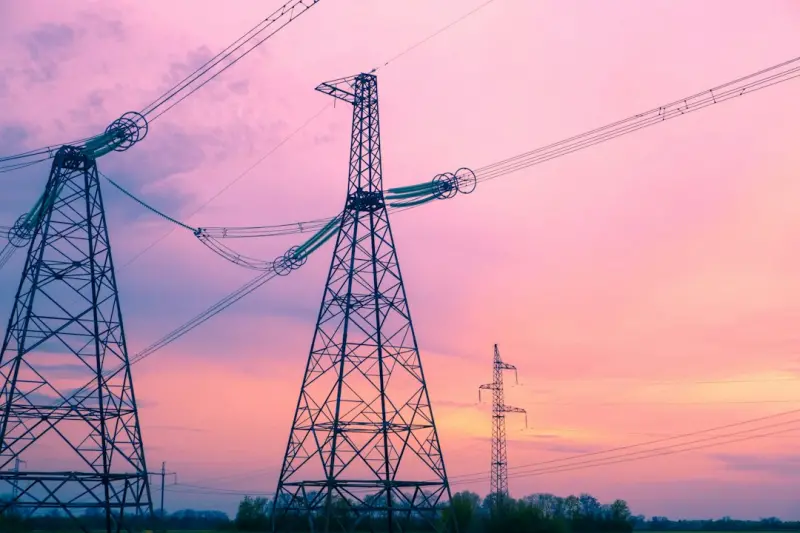
Why Energy-as-a-Service Is the Game‑Changer You’ve Been Waiting For
When I first stepped onto a factory floor as a junior engineer, the roar of diesel generators felt like the soundtrack of progress. Fast forward a decade, and I’m watching a handful of data points on a dashboard dictate when a turbine spins up, when a battery discharges, and how a rooftop solar array balances a production line’s demand. The transformation isn’t just about cleaner fuel—it’s about turning energy from a static commodity into a dynamic service you can order, monitor, and pay for just like any other SaaS product.
In this post I’ll walk you through the three pillars that are propelling Energy-as-a-Service (EaaS) from niche pilot projects to the backbone of modern industry: subscription‑based pricing models, edge‑enabled micro‑grids, and iron‑clad data integrity. Along the way, I’ll pull in lessons from Adaptive Mesh Networks and the growing concern over AI‑Driven Data Threats—because the energy world is no longer isolated from the rest of the tech stack.
The Demand Shock: Why Traditional Power Contracts Are Crumbling
Industrial energy consumption has always been a blunt instrument: a megawatt‑hour contract, a fixed price, and a three‑year renewal clause. That model made sense when production lines ran 24/7 and market volatility was a distant concern. Today, three forces are reshaping the calculus:
- Remote work & flexible manufacturing: Production schedules now ebb and flow with global demand, meaning the “always‑on” model is wasteful.
- Regulatory pressure: Governments worldwide are tightening carbon caps, and penalties for excess emissions are rising faster than the cost of renewable tech.
- Technology democratization: Sensors, AI, and cloud platforms have dropped in price, enabling real‑time visibility into energy consumption down to the individual machine.
What you end up with is a mismatch: a static supply contract trying to service a dynamic demand curve. The result? Over‑paying for unused capacity, under‑utilizing green resources, and constantly renegotiating contracts—a costly administrative nightmare.
Subscription Models: The SaaS Playbook Meets the Power Grid
Enter the subscription model. Instead of buying kilowatts‑hour in bulk, companies now subscribe to a bundle of energy services that scale with usage. Think of it as an “Energy Cloud” where you can spin up extra capacity during peak production and dial it back when demand drops. The benefits are surprisingly similar to what we see in B2B SaaS:
- Predictable OPEX: Monthly invoices replace massive CAPEX outlays for generators or on‑site solar farms.
- Instant Scalability: Need an extra 500 kW for a short‑term contract? Your provider can allocate it in hours, not months.
- Performance‑Based SLA’s: Guarantees around uptime, carbon intensity, and response time become contractually enforceable.
One of the biggest misconceptions is that subscription equals “pay‑as‑you‑go.” In reality, providers offer tiered plans that blend a baseline capacity with over‑usage credits, much like a telecom data plan. This hybrid approach gives businesses the safety net of a reserved block while still rewarding efficiency.
Edge‑Enabled Micro‑Grids: The Hardware Behind the Service
But a subscription model is only as good as the infrastructure that fulfills it. That’s where edge‑enabled micro‑grids step onto the stage. A micro‑grid is a localized network of generation (solar, wind, fuel cells) and storage (batteries, thermal storage) that can operate autonomously or in concert with the main grid.
When you push computation to the edge—right at the point where energy is generated or consumed—you gain two critical advantages:
- Latency reduction: Real‑time load balancing decisions happen in milliseconds, not seconds, preventing costly spikes.
- Data sovereignty: Sensitive production metrics stay on‑premise, reducing exposure to external breaches.
Imagine a sprawling automotive assembly plant that has its own solar canopy, a battery bank, and a diesel backup. Edge controllers monitor each line’s power draw, predict upcoming surges using machine learning, and orchestrate the optimal mix of solar, battery, and grid import—all without a human operator flipping a switch. The plant pays a monthly subscription for the “energy service” that guarantees a carbon‑neutral footprint and a 99.95 % uptime SLA.
Security & Trust: Guarding the New Energy Data Highway
With great data comes great responsibility. As we hand over more control to software, the surface area for attacks expands dramatically. The same AI tools that predict load can be weaponized to mask malicious consumption, driving up costs for unsuspecting customers. This is the crux of the AI‑Driven Data Threats conversation that’s been echoing across SaaS forums.
Two safeguards are emerging as non‑negotiables for any credible EaaS provider:
- Zero‑trust architecture: Every device—whether it’s a smart inverter or a legacy PLC—must authenticate and encrypt every transaction, regardless of its location.
- Immutable audit trails: Blockchain‑style ledgers are being piloted to record every kilowatt‑hour transferred, ensuring that billing disputes can be resolved with cryptographic proof.
When you combine zero‑trust with immutable logs, you essentially make the energy marketplace as trustworthy as the best financial services platforms. And that trust is what turns a subscription from a cost center into a strategic advantage.
Mesh Networking: The Silent Backbone of Distributed Energy
All of the above—subscriptions, edge controllers, secure data streams—depend on a communications fabric that can handle millions of concurrent sensor readings without bottlenecks. Traditional star topologies (think one central hub with spokes) simply can’t keep up, especially in sprawling industrial parks or rural micro‑grids.
Enter Adaptive Mesh Networks. By allowing each node (a sensor, inverter, or battery management system) to both send and receive data, mesh networks create multiple pathways for information. If one node fails, traffic reroutes automatically, ensuring uninterrupted visibility.
Beyond resilience, mesh topologies bring two hidden benefits for EaaS:
- Scalable bandwidth: Adding a new solar array simply means plugging in another mesh node; the network self‑optimizes.
- Reduced latency for edge decisions: Because data doesn’t have to travel back to a centralized server, edge algorithms can act faster, shaving seconds off response times—a critical factor when balancing a battery’s state of charge.
In practice, a mesh‑enabled micro‑grid can support hundreds of devices—temperature sensors, vibration monitors, power quality meters—while maintaining sub‑second synchronization across the entire system. That level of granularity is what fuels advanced demand‑response programs and allows providers to offer premium “instant‑scale” subscription tiers.
Putting It All Together: A Blueprint for the Modern Industrial Energy Strategy
Let’s walk through a hypothetical, but entirely plausible, rollout for a midsize manufacturing firm:
- Assessment Phase: The firm audits its current load profile, identifying a 30 % peak‑to‑off‑peak variance.
- Subscription Selection: They choose a baseline subscription that covers 70 % of average demand, with an “over‑usage credit” pool for spikes.
- Micro‑Grid Installation: A 1 MW solar array and 2 MWh battery system are installed, both equipped with edge controllers.
- Mesh Deployment: All critical equipment receives a mesh node, creating a resilient communications layer.
- Security Hardening: Zero‑trust protocols and immutable logs are enabled from day one.
- Live Operation: During a sudden order surge, the edge controller pulls power from the battery, the subscription automatically covers the extra 200 kW, and the mesh network ensures every device stays in sync.
- Continuous Optimization: AI models refine forecasts, reducing over‑usage credits by 15 % after three months, directly improving the firm’s bottom line.
The result? A predictable OPEX budget, a carbon‑neutral footprint, and a resilient power supply that can adapt on the fly. It’s the industrial equivalent of moving from a clunky desktop PC to a sleek cloud‑first workflow.
Challenges to Watch – And How to Mitigate Them
Nothing worth doing is without friction. Here are three hurdles you’ll likely encounter, plus practical mitigation strategies:
- Legacy Equipment Integration: Older PLCs may not speak the same language as modern IoT sensors. Solution: Deploy protocol translators at the edge; they act as bridges without replacing the entire control system.
- Regulatory Compliance: Energy markets are heavily regulated, and subscription contracts must align with regional standards. Solution: Work with providers that have a compliance team versed in ISO 50001 and local utility rules.
- Change Management: Shifting from CAPEX to OPEX can be a cultural shock for finance teams. Solution: Run pilot programs with clear ROI dashboards; demonstrate cost avoidance rather than just cost.
Addressing these challenges early prevents the “pilot‑paralysis” trap that has sunk many otherwise promising tech initiatives.
Looking Ahead: The Next Wave of Energy Innovation
We’re only scratching the surface. The next evolution will likely blend EaaS with digital twins of entire facilities, allowing operators to simulate power scenarios before they happen. Combine that with blockchain‑backed carbon credits, and you have a fully transparent, market‑driven ecosystem where every kilowatt‑hour is both a commodity and a service.
In short, Energy-as-a-Service isn’t just a buzzword—it’s the logical next step in the ongoing digitization of industry. By marrying subscription economics, edge‑powered micro‑grids, secure data pipelines, and adaptive mesh networking, you can turn energy from a cost center into a strategic lever that fuels growth, sustainability, and resilience.
If you’re a decision‑maker staring at a spreadsheet of energy bills and wondering how to break free, the answer lies in the same principles that have transformed software delivery: modularity, on‑demand scaling, and relentless focus on the user (or in this case, the plant) experience. The tools are ready; the market is primed. All that’s left is to take the first step.

Tyler Johnson is a seasoned freelance writer with a keen eye for detail and a passion for crafting compelling narratives. His years of experience have honed his ability to adapt his style to suit diverse client needs and project requirements.
Related Posts
Powering SaaS Growth with Energy-as-a-Service: A Pragmatic Playbook
A deep dive into Energy-as-a-Service for SaaS companies, outlining why traditional utility models fa... Read More

The Future of Energy: How Sustainable Practices are Revolutionizing the Industry
The energy industry is undergoing a significant transformation, driven by the need for sustainable p... Read More
Powering the Future: How Energy‑as‑a‑Service is Transforming Business Operations
Energy‑as‑a‑Service turns power from a static expense into a strategic asset, offering scalabl... Read More
Top Posts

Micro‑Movements: The Underrated Secret to Sustained Workplace Vitality
Micro‑movements—short, regular stretches and shifts—offer a low‑cost, high‑impact solution to workplace fatigue. Learn how to integrate them into dail...Read More

Psychological Safety: The Hidden Engine Behind Sustainable SaaS Innovation
A deep dive into why psychological safety is the strategic differentiator for SaaS firms, with actionable steps, metrics, and real‑world case studies to turn ...Read More

Beyond Passwords: The Cognitive Side of Online Safety
A deep dive into the mental shortcuts attackers exploit, offering actionable bias‑checks, privacy‑centric email habits, and embedded safety tools to turn hu...Read More

Edge Intelligence: Reimagining Industrial Products for Real‑Time Value
Edge intelligence turns industrial products from passive assets into active decision‑makers, enabling real‑time optimization, predictive maintenance, and sa...Read More
0 Comments
Post Comment
You will need to Login or Register to comment on this post!