
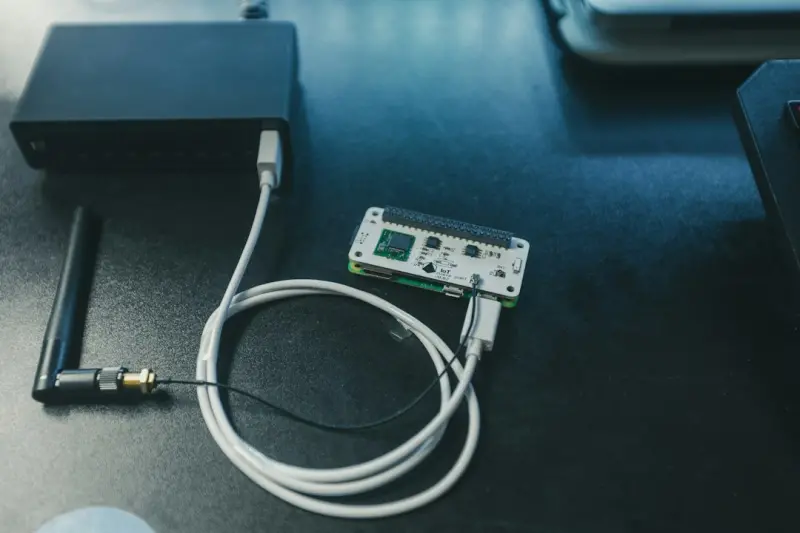
Why Modular Sensor Networks Are the Next Game‑Changer for Factories
When I first stepped onto the shop floor of a legacy manufacturing plant, the hum of conveyors and the occasional clang of metal were the only indicators that something was happening. Fast forward to today, and those same floors are alive with a quiet chorus of data packets, each one telling a story about temperature, vibration, pressure, and more. This transformation isn’t driven by a single breakthrough device; it’s the result of a strategic shift toward modular sensor networks that can be deployed, reconfigured, and scaled with the agility of a software stack.
The Evolution From Stand‑Alone Instruments to Networked Modules
Traditional industrial monitoring relied on isolated instruments: a pressure gauge here, a temperature probe there. Each device required its own wiring, calibration schedule, and often a dedicated operator to read the output. The cost and complexity of expanding such systems were prohibitive, especially for facilities looking to adapt to new product lines or rapid demand spikes.
Modular sensor networks replace that monolith with a plug‑and‑play ecosystem. Think of it like building with LEGO bricks—each sensor module is a self‑contained unit that snaps into a common bus or wireless mesh. The modules share power, data, and even edge‑processing capabilities, allowing them to act both as individual sensors and as cooperative agents within a larger intelligence layer.
Key Benefits That Matter to Plant Leaders
- Scalability without Re‑wiring: Adding a new sensor is as simple as attaching a module and updating the configuration through a cloud dashboard. No need for costly conduit installations.
- Real‑Time Insight: Edge processors on each module can perform preliminary analytics—such as anomaly detection—right at the source, reducing latency and bandwidth usage.
- Reduced Downtime: Because modules are hot‑swappable, maintenance can be performed without shutting down entire production lines.
- Future‑Proof Architecture: As new sensor types emerge (e.g., hyperspectral imaging), they can be integrated into the existing mesh without overhauling the underlying network.
Design Principles for a Successful Deployment
Deploying a modular sensor network isn’t just about buying the right hardware. It requires a holistic approach that aligns technology, processes, and people.
1. Adopt an Open Communication Standard
Proprietary protocols can lock you into a single vendor and make integration a nightmare. Standards like MQTT, OPC UA, or the emerging Industrial Internet of Things (IIoT) mesh specifications enable interoperability and make it easier to bring third‑party analytics tools into the mix.
2. Prioritize Edge Intelligence
While central cloud platforms are essential for long‑term storage and cross‑facility analytics, the true power of modular sensors lies in their ability to process data at the edge. By embedding AI models that can flag vibration anomalies or temperature drift locally, you prevent minor issues from snowballing into costly line stoppages.
3. Build a Unified Data Model
Every module must speak the same data language. Define a schema that captures not only the raw measurement but also context—such as equipment ID, location, and operational state. This uniformity simplifies downstream reporting and enables advanced use cases like predictive maintenance across the entire plant.
4. Foster a Culture of Continuous Improvement
Technology alone won’t drive results. Teams need to be empowered to interpret sensor insights and act on them. In this regard, creating resilient, psychologically safe teams that feel comfortable raising concerns and experimenting with process tweaks is vital. When operators trust that their observations will lead to constructive change, the data collected by sensors translates into real operational gains.
Real‑World Impact: Case Studies
Case Study A: Reducing Energy Waste in a Metal‑Fabrication Plant
A mid‑size metal‑fabrication facility struggled with high energy bills due to inefficient furnace cycles. By installing a modular network of temperature and airflow sensors around each furnace, the plant’s engineering team could visualize real‑time heat loss. Edge analytics identified a pattern of premature venting during low‑load periods. Adjustments to the control logic cut furnace energy consumption by 12%, delivering immediate cost savings.
Beyond the direct savings, the project demonstrated the value of an energy‑first approach to industrial operations—treating energy efficiency as a strategic lever rather than an afterthought.
Case Study B: Enhancing Predictive Maintenance on a High‑Speed Assembly Line
In an automotive parts plant, a sudden spike in motor vibration led to an unexpected line halt, costing the company over $200,000 in lost production. After retrofitting the line with modular vibration sensors equipped with on‑board AI, the system learned the baseline vibration signature of each motor. Within weeks, it began alerting maintenance staff about subtle deviations that were precursors to bearing wear. The result? A 30% reduction in unplanned downtime and a measurable increase in overall equipment effectiveness (OEE).
Challenges and How to Overcome Them
While the promise of modular sensor networks is compelling, implementation can encounter hurdles.
Connectivity in Harsh Environments
Industrial settings often feature high EMI, extreme temperatures, and physical obstructions. Selecting ruggedized modules that support both wired (e.g., Ethernet/IP) and wireless (e.g., LoRa, 5G) connectivity ensures reliable data flow. Redundant mesh pathways can also mitigate single‑point failures.
Data Overload
Hundreds of sensors can generate terabytes of data daily. Without proper data governance, teams may drown in noise. Implementing tiered data retention—where raw high‑frequency data is kept at the edge for short periods and aggregated trends are sent to the cloud—helps balance insight with storage costs.
Skill Gaps
Many plant managers and operators are accustomed to analog controls. Bridging the skill gap requires targeted training programs that focus on data literacy, basic analytics, and troubleshooting of sensor hardware. Pairing seasoned technicians with data engineers can create a mentorship pipeline that accelerates adoption.
The Road Ahead: Integrating Digital Twins
One of the most exciting extensions of modular sensor networks is their role in powering digital twins—virtual replicas of physical assets that update in real time. By feeding granular sensor data into a twin model, manufacturers can simulate “what‑if” scenarios, optimize process parameters, and even run virtual stress tests before applying changes on the shop floor.
Imagine a scenario where a new product variant requires a slight adjustment to conveyor speed. The digital twin, informed by live sensor inputs, can predict the impact on downstream bottlenecks, allowing engineers to pre‑emptively tweak settings and avoid costly trial‑and‑error runs.
Conclusion: A New Era of Agile Manufacturing
The shift toward modular sensor networks marks a decisive move from static, siloed monitoring to a dynamic, data‑rich ecosystem. For industrial leaders, the equation is clear: flexibility + real‑time insight = competitive advantage. By embracing open standards, edge intelligence, and a culture that values both data and the people who interpret it, factories can unlock efficiencies that were once only imagined in theory.
As we continue to weave these networks into the fabric of manufacturing, the line between the physical and digital will blur, ushering in an era where every bolt, belt, and bearing becomes a source of actionable intelligence. The future of industrial operations is modular, connected, and relentlessly data‑driven—are you ready to plug in?

Karen Edwards is a seasoned freelance writer with a passion for all things furry, feathered, and scaled. With a dedicated focus on pets, she brings a wealth of knowledge and a keen eye for detail to her writing.
Related Posts

Predictive Maintenance: How IoT Is Revolutionizing Industrial Products
Explore the game‑changing impact of IoT sensors and predictive analytics on industrial equipment, ... Read More
Industrial Products Go Green: Mei Chen’s Insider Take on the Sustainable Revolution
Mei Chen reveals the latest sustainable trends reshaping industrial products—from recycled steel t... Read More

Industrial Products as Living Platforms: Turning Machines into Software‑First Assets
Industrial equipment is evolving from static hardware to software‑first platforms. Learn how edge ... Read More
Top Posts

Branding Beyond the Logo: Crafting a Sensory Ecosystem for SaaS
In this article, Dale Peterson reveals why modern SaaS branding must go beyond visual identity, exploring auditory cues, headless content consistency, employee ...Read More

Monetizing the Unseen: Turning Internal Knowledge into a Competitive Edge
Discover a step‑by‑step framework for turning your organization’s hidden expertise into marketable products, from knowledge audits to packaging and go‑t...Read More

Composable Frontends: Unlocking Lightning‑Fast SaaS Releases
Composable frontends break the monolith, letting teams ship UI modules independently for faster releases, better performance, and seamless marketing experimenta...Read More

Google’s Quiet Revolution: How Generative AI is Reshaping Enterprise Knowledge Work
Google’s new AI layer merges generative models with its Knowledge Graph, delivering instant, trustworthy insights across Workspace apps—driving faster decis...Read More
0 Comments
Post Comment
You will need to Login or Register to comment on this post!