
Why Industrial Products Are Becoming Software‑First Assets
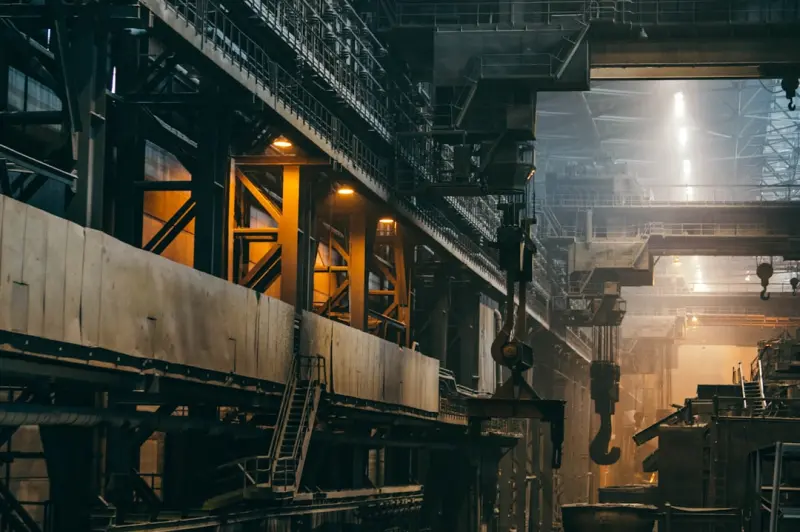
When I first walked the floor of a sprawling metal‑fabrication plant, the roar of presses and the smell of hot steel were the only things that felt “real.” Fast forward a few years, and the same floor hums with a different kind of energy: data packets, AI‑driven dashboards, and remote‑control consoles that look more like a trader’s terminal than a factory control room. The shift isn’t just cosmetic—it’s a fundamental re‑definition of what an industrial product is.
The Old Model: One‑Time Purchase, Lifetime Maintenance
For decades, the industrial marketplace operated on a simple premise: you bought a piece of equipment, you owned it, and you paid for periodic maintenance. The revenue model was linear, the value proposition static. Engineers focused on durability, manufacturers on economies of scale, and the whole ecosystem was built around “hard” assets that rarely changed after the initial sale.
That model served us well when the primary concern was mechanical reliability. But it left a massive blind spot—how do we extract ongoing value from something that, by design, stays the same for decades? The answer, as I’ve learned on the job, lies in treating physical assets as software‑enabled platforms that evolve long after the first bolt is tightened.
Enter the “Product-as‑a‑Service” Paradigm
Think of the modern industrial product as a subscription. Instead of buying a hydraulic press outright, a factory might subscribe to a “press‑as‑a‑service” package. The hardware sits on the shop floor, but the intelligence lives in the cloud, continuously updated, optimized, and monetized.
- Predictive Maintenance: Sensors feed vibration, temperature, and pressure data to a machine‑learning model that predicts wear before it becomes a failure.
- Performance Tuning: Real‑time analytics suggest optimal feed rates or pressure settings, shaving minutes off each production cycle.
- Feature Roll‑outs: New control algorithms are pushed over‑the‑air, instantly upgrading the press without a physical retrofit.
It’s the same logic that turned music from a physical CD purchase into a streaming subscription. The difference is that industrial equipment carries a higher upfront cost and a longer operational horizon, making the potential upside for both vendor and customer enormous.
Data as the New Raw Material
If steel was the raw material of the 20th century, data is the raw material of the 21st. Every sensor reading is a grain of sand in a desert of insight. By aggregating data across hundreds of similar machines, manufacturers can discover patterns that no single unit could reveal.
Imagine a global network of CNC mills all feeding the same analytics platform. When a subtle drift in spindle speed shows up on 5% of the fleet, the system flags it, and engineers deploy a firmware patch before a single machine breaks down. That’s not just efficiency—it’s a competitive moat.
Why Edge‑First Development Matters
The flood of sensor data creates a paradox: the more data you collect, the more bandwidth you need, and the higher the latency for decision‑making. This is where edge‑first development becomes a game‑changer for industrial products. By processing data at the edge—right on the device or within the local gateway—you reduce latency, preserve bandwidth, and keep critical operations running even when connectivity falters.
Edge computing also unlocks new business models. Manufacturers can sell “edge analytics” as a premium add‑on, offering on‑premise insights without sending any raw data to the cloud. It satisfies the strictest data‑sovereignty regulations while still delivering the benefits of advanced analytics.
Modular Extensions: From Rigid Machines to Adaptive Platforms
Historically, industrial equipment has been a monolith: you buy a machine, and its capabilities are set in stone. The rise of modular extensions flips that script. Today’s presses, robots, and conveyors are built with plug‑in modules—hardware and software—that can be swapped, upgraded, or removed as needs evolve.
Take a robotic arm that comes with a base set of motion primitives. As your product line diversifies, you simply add a new “module” that teaches the arm to handle a different geometry. No need to replace the entire robot; you just install a new software package and, if required, a small sensor kit.
This modularity mirrors the SaaS world, where users add features via plugins. The benefits are clear:
- Lower CapEx: Companies pay for only what they need, when they need it.
- Future‑Proofing: As technology evolves, you can upgrade without massive downtime.
- Speed to Market: New capabilities roll out in weeks, not months.
Intent‑Driven Networks: Orchestrating the Factory Floor
All the data, edge compute, and modular hardware would be useless without a reliable, responsive network. Traditional networks were static, designed for predictable traffic. Modern factories need a network that understands business intent—whether it’s “maximize throughput on Line A” or “prioritize safety sensor alerts.”
Enter intent‑driven network orchestration. By translating high‑level goals into low‑level network policies, factories can automatically allocate bandwidth, enforce security zones, and reroute traffic in milliseconds. The result is a self‑optimizing fabric that keeps the data flowing where it matters most.
The Human Element: Skills, Culture, and Trust
Technology is only half the equation. The other half is people. Shifting from a “sell‑once, maintain‑forever” mentality to a subscription model requires a cultural overhaul. Engineers must become data scientists, maintenance crews need to trust AI recommendations, and executives must adopt new financial metrics like “annual recurring revenue” for hardware.
Training programs that blend mechanical engineering with data analytics are emerging, and I’ve seen first‑hand how cross‑functional teams can turn a stubborn, legacy line into a nimble, data‑driven powerhouse. Trust is earned when the system consistently prevents downtime, and that trust fuels further adoption.
Challenges on the Road to Software‑First Industrial Products
It’s not all smooth sailing. Here are the three biggest hurdles you’ll encounter:
- Legacy Integration: Older machines weren’t built with connectivity in mind. Retrofitting sensors and gateways can be expensive and technically complex.
- Security Concerns: Connecting critical infrastructure to the internet opens attack surfaces. Robust zero‑trust architectures are a must.
- Regulatory Compliance: In sectors like aerospace or pharmaceuticals, any software change must pass stringent validation. This slows the “push‑button” upgrade dream.
Addressing these challenges requires a strategic roadmap—one that balances short‑term ROI with long‑term transformation.
Building a Roadmap: From Pilot to Full‑Scale Adoption
My go‑to approach is a phased rollout:
- Phase 1 – Data Collection: Install sensors on a single line, establish a data lake, and validate data quality.
- Phase 2 – Edge Analytics: Deploy edge compute to run anomaly detection locally, proving low‑latency value.
- Phase 3 – Modular Upgrades: Introduce a plug‑in software module that adds a new optimization algorithm.
- Phase 4 – Intent‑Driven Orchestration: Layer a network orchestration platform that automatically prioritizes traffic based on real‑time production goals.
- Phase 5 – Subscription Model: Transition the equipment contract to a recurring revenue model, bundling hardware, software, and services.
Each phase builds on the previous one, delivering tangible benefits that fund the next investment. The key is to start small, measure rigorously, and iterate quickly.
The Bottom Line: Competitive Advantage Through Continuous Evolution
Industrial products are no longer static assets. They are living, learning platforms that generate value long after the initial sale. Companies that embrace edge computing, modular extensions, and intent‑driven networking will unlock a virtuous cycle of data, insight, and revenue.
In my experience, the firms that win are the ones that view every machine as a software product first, hardware second. They invest in the data pipeline, secure the network, and cultivate a workforce ready to interpret and act on insights. The payoff? Faster time‑to‑market, lower total cost of ownership, and a strategic edge that’s hard for competitors to replicate.
So, the next time you walk past a row of humming machines, don’t just hear the clang of metal—listen for the quiet hum of data, the pulse of the edge, and the promise of a future where every industrial product gets smarter, safer, and more profitable every single day.

Brad Hays is a freelance writer known for his versatile skill set and ability to craft compelling content across a wide range of industries.
Related Posts
Embracing the Future of Industrial Productivity: Trends and Innovations
The industrial sector is undergoing a significant transformation, driven by technological advancemen... Read More

Modular Robotics: Reinventing Industrial Production
Discover how modular robotics and smart sensor networks are redefining manufacturing, offering flexi... Read More

Adaptive Modular Platforms and Edge AI: Building the Future of Industrial Products
Discover how adaptive modular platforms, edge AI-driven predictive maintenance, and circular economy... Read More
Top Posts

The Sustainable Playbook: How Sports Are Winning the Climate Game in 2026
In 2026, sports are transforming into climate champions—electric races, renewable stadiums, and green gear redefine competition and fan culture....Read More
When the Fine Print Becomes a Fine Trap: Unmasking Modern B2B Scams
Scams have gone corporate, hiding behind polished demos and AI promises. This article uncovers the subtle tactics of modern B2B fraud, offers red‑flag checkli...Read More

SEO for the Conscious Creator: Balancing Rankings and Responsibility
Explore the synergy of ethical SEO and sustainability, learning actionable tactics to elevate rankings while staying true to your brand’s purpose....Read More

Engineering Your Career Resilience in a Distributed Workplace
Learn how to design a future‑proof career by redefining success, building micro‑skills, leveraging internal advocacy, and embracing an edge‑first mindset ...Read More
0 Comments
Post Comment
You will need to Login or Register to comment on this post!