

Why Predictive Maintenance Is the New Frontier for Industrial Products
When I first walked the factory floor three years ago, the hum of legacy machines felt like a stubborn lullaby that never quite kept pace with market demand, and that experience still shapes how I view every piece of equipment that promises to keep the line humming.
Today, the integration of IoT sensors into pumps, conveyors, and CNC machines isn’t just a nice‑to‑have upgrade; it’s a strategic lifeline that turns raw data into actionable insight, allowing plant managers to anticipate wear before a bearing fails and to schedule service during low‑impact windows, dramatically slashing unplanned downtime.
In practice, this shift means that a sensor reading a subtle vibration change can trigger an automated work order, a notification that travels instantly to the maintenance team’s mobile app, and the entire process—from detection to dispatch—can happen in minutes rather than hours, reshaping the entire production rhythm.
The Economics Behind Real‑Time Monitoring
From a financial perspective, the ROI of IoT‑enabled predictive maintenance is quantifiable: every avoided emergency stop translates into saved labor, reduced scrap, and preserved equipment lifespan, which cumulatively can outweigh the upfront sensor and software costs within a single fiscal year.
Moreover, the data harvested over time builds a historical performance library, enabling sophisticated analytics that predict future failure modes with increasing accuracy, a capability that turns a traditionally reactive maintenance culture into a proactive, data‑driven engine of efficiency.
Companies that have embraced this model report up to a 30% reduction in maintenance expenses and a 25% boost in overall equipment effectiveness, numbers that are impossible to ignore when you’re competing on thin margins and tight delivery windows.
Choosing the Right Sensors for Harsh Industrial Environments
Not all sensors are created equal; in a steel‑cutting plant, you need ruggedized vibration and temperature probes that can survive dust, coolant splashes, and extreme temperature swings, whereas a food‑processing line demands sensors that meet sanitary standards and can be easily cleaned.
Manufacturers now offer modular sensor kits that snap onto existing machinery without extensive rewiring, and these kits often come with built‑in edge‑computing capabilities that preprocess data on‑site, reducing the bandwidth required for cloud transmission and ensuring faster response times.
When selecting a sensor suite, I always advise evaluating the device’s MTBF (Mean Time Between Failures), its calibration stability, and its compatibility with your existing SCADA or ERP systems, because seamless integration is the secret sauce that prevents data silos and maximizes actionable insight.
Integrating Predictive Analytics Platforms
The true power of IoT sensors is unlocked only when paired with robust analytics platforms that can ingest, cleanse, and model the torrent of data in real time, and today’s market offers a spectrum ranging from turnkey cloud solutions to customizable on‑premise suites.
One effective strategy is to start with a cloud‑based platform that offers pre‑built machine‑learning models for common failure patterns, then gradually layer in custom algorithms that reflect the unique operational quirks of your facility, creating a hybrid approach that balances speed with specificity.
Don’t overlook the importance of visualization tools; dashboards that display health scores, trend lines, and predictive alerts in a single glance empower floor supervisors to make swift, informed decisions without diving into raw data tables.
Case Study: Reducing Downtime in a Mid‑Size Manufacturing Plant
Consider a mid‑size metal‑fabrication shop that installed vibration sensors on its primary stamping press; within the first quarter, the system detected an abnormal harmonic that correlated with bearing wear, prompting a scheduled replacement that avoided a catastrophic failure.
The plant’s maintenance manager reported a 40% drop in emergency repairs and a 15% increase in overall output, outcomes that were directly tied to the predictive alerts and the streamlined work‑order workflow that the new IoT platform facilitated.
Such tangible results underscore why forward‑thinking engineers are championing these technologies, and they also illustrate how even modest investments in sensor hardware can generate outsized gains when paired with disciplined data practices.
Building a Culture of Data‑Driven Maintenance
Technology alone won’t deliver results unless the workforce embraces a mindset shift from “fix when broken” to “fix before broken,” and that cultural transition begins with clear communication, training, and incentives that reward proactive behavior.
Leadership should showcase early wins, share dashboards in daily briefings, and involve technicians in the analytics loop, allowing them to see the direct impact of their actions on equipment health and production efficiency.
When teams feel ownership over the data and understand that their insights prevent costly shutdowns, the organization as a whole moves toward a continuous improvement loop that fuels long‑term competitiveness.
Linking Predictive Maintenance to Sustainable Operations
Beyond the bottom line, predictive maintenance aligns with sustainability goals by extending equipment lifespans, reducing waste from premature replacements, and lowering energy consumption through optimized operating conditions.
For example, a well‑maintained motor runs more efficiently, drawing less electricity and emitting fewer greenhouse gases, while fewer spare parts mean less material extraction and less landfill burden—a win‑win for both profit and planet.
Companies that publicly commit to these environmental benefits often see enhanced brand reputation and can leverage their green credentials in customer negotiations, turning operational excellence into a market differentiator.
Future Trends: Digital Twins and Autonomous Maintenance
The next evolution in this space is the digital twin—a virtual replica of a physical asset that simulates performance under varying conditions, allowing engineers to test maintenance scenarios in a risk‑free environment before applying changes on the shop floor.
Coupled with AI‑driven autonomous maintenance bots, the vision is a self‑optimizing factory where machines not only predict their own failures but also initiate corrective actions, such as ordering replacement parts or adjusting operating parameters in real time.
While still emerging, these technologies promise to elevate predictive maintenance from a supportive function to a core, self‑regulating component of modern manufacturing ecosystems.
Practical Steps to Get Started Today
If you’re ready to embark on the predictive maintenance journey, begin by conducting an equipment audit to identify high‑impact assets, then pilot a small sensor deployment on a single line to validate data quality and ROI.
Leverage existing resources like the Smart Appliance Strategies for a Flexible, Future‑Ready Home guide for insights on integrating IoT devices with legacy systems, and consider the Crafting the Perfect Tool Kit article for advice on building a maintenance toolkit that supports sensor installation and calibration.
Finally, set measurable goals—such as a target percentage reduction in unplanned downtime or a specific improvement in equipment efficiency—and track progress rigorously, adjusting your sensor strategy and analytics models as you learn what works best for your unique operational landscape.

Laura Wilson is a freelance writer specializing in the dynamic and ever-evolving field of health. With a passion for translating complex medical information into accessible and engaging content, Laura brings a wealth of knowledge and a fresh perspective to topics ranging from preventative care and nutrition to cutting-edge research and innovative treatments.
Related Posts

Modular Robotics: Reinventing Industrial Production
Discover how modular robotics and smart sensor networks are redefining manufacturing, offering flexi... Read More

Human‑Centric Intelligence: How XR, Edge AI, and Zero‑Trust Are Redefining Industrial Products
A deep dive into the human‑centric shift in industrial products, covering immersive XR training, e... Read More
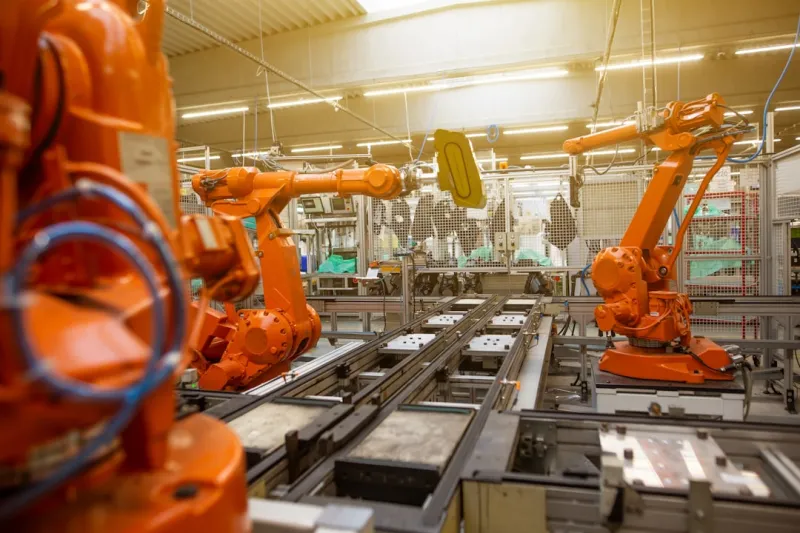
Embracing the Future of Industrial Productivity: Trends and Innovations
The industrial sector is undergoing a significant transformation, driven by technological advancemen... Read More
Top Posts

Gaming’s Hidden Economy: How Players, Places, and Sustainability Converge
Gaming is evolving beyond high scores into a dynamic ecosystem where player economies, hyper‑local AR adventures, and sustainability lessons intersect, creati...Read More

How AI is Redefining the Wedding Planning Journey
Artificial intelligence is changing how couples plan weddings, offering smart invitations, vendor matching, budget optimization, and real‑time communication, ...Read More

Redefining Safety: Building Resilient Remote Workspaces
A comprehensive guide on how to embed physical, digital, and emotional safety into remote work environments, turning risk management into a catalyst for product...Read More

Turning Everyday Chaos into Connection: Parenting in the Age of Constant Distraction
Discover a fresh approach to parenting that embraces micro‑celebrations, mindful tech use, and intentional connection zones, helping families thrive amid cons...Read More
0 Comments
Post Comment
You will need to Login or Register to comment on this post!