

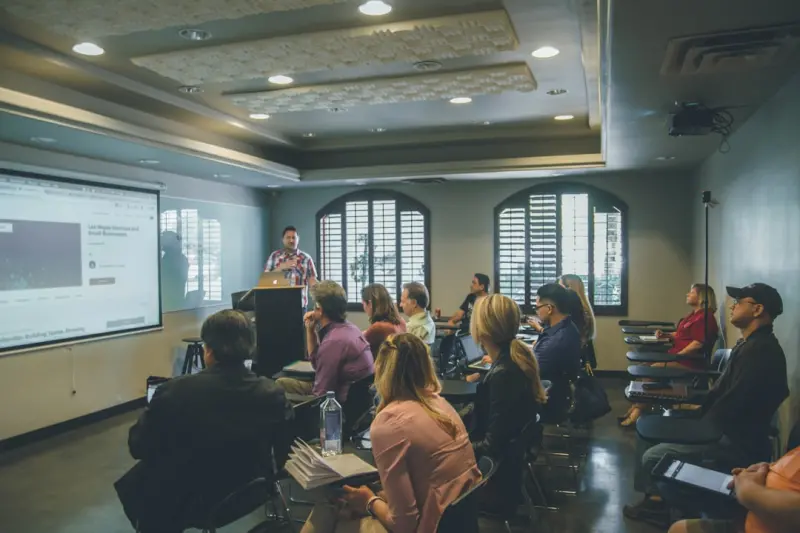
When I first stepped into a SaaS startup’s training room, I expected a PowerPoint deck sprinkled with buzzwords and a half‑hour lecture on “soft skills.” What I found instead was a silent battlefield of disengaged eyes, half‑finished worksheets, and a lingering question: Why does learning feel like a chore? That moment sparked a personal mission—turn the educational experience for SaaS professionals from a mandatory checkpoint into a kinetic, self‑driving engine that fuels both personal growth and business velocity.
The hidden learning gap in high‑velocity SaaS teams
Fast‑moving SaaS companies pride themselves on rapid product releases, iterative development cycles, and data‑driven decision making. Yet, paradoxically, the very speed that powers innovation often throttles the learning pipeline. Engineers are asked to adopt a new framework overnight; sales reps must master a fresh pricing model before the next quarter; customer success managers juggle evolving onboarding flows while keeping churn at bay. The result is a patchwork of ad‑hoc tutorials, stale documentation, and “just‑in‑time” Googling that leaves knowledge fragmented and retention fleeting.
Why traditional corporate training falls flat
Most enterprise learning programs still cling to the “one‑size‑fits‑all” lecture model. These sessions are typically:
- Scheduled far in advance, making relevance a guessing game.
- Delivered in a single, monolithic format—usually a slide deck.
- Measured by completion rates rather than behavior change.
Such approaches ignore the core reality of SaaS work: it’s contextual, collaborative, and continuously evolving. When a developer learns a new API, the true test of mastery isn’t a quiz score; it’s whether they can integrate that API into a live feature without breaking the build. When a marketer experiments with a new attribution model, the proof is in the uplift of campaign ROI, not in a post‑training survey.
The rise of adaptive, data‑driven learning platforms
Enter adaptive learning platforms—systems that blend AI, analytics, and micro‑learning to deliver content precisely when the learner needs it. These platforms operate on three simple principles:
- Contextual relevance. Content surfaces based on the user’s current workflow, pulling in just‑in‑time videos, code snippets, or playbooks.
- Personalized pacing. Machine‑learning algorithms gauge mastery in real time, adjusting difficulty and recommending supplementary resources.
- Outcome‑focused metrics. Success is measured by downstream business indicators—feature adoption, churn reduction, revenue growth—rather than by isolated test scores.
When these platforms are woven into the fabric of a SaaS product itself, learning becomes invisible yet powerful, turning every login into a potential lesson.
Building a culture of continuous upskilling
Technology alone cannot create a thriving learning ecosystem; the cultural scaffolding matters just as much. Leaders must champion the idea that “learning is work” and embed it into performance frameworks. Here’s how:
- Celebrate learning moments. Publicly recognize teammates who complete a new certification or share a novel integration tip.
- Allocate dedicated “learning sprints.” Just as product teams run two‑week sprints, set aside similar periods for skill acquisition, with clear deliverables.
- Make peer teaching a norm. Pair senior engineers with junior teammates in “code‑review learning labs,” or let sales veterans run role‑play sessions for new product releases.
When learning is framed as a strategic lever, not a compliance checkbox, the entire organization begins to move faster and smarter.
Leveraging no‑code integration toolbox for hands‑on learning
One of the most under‑utilized assets in SaaS education is the no‑code ecosystem itself. By giving non‑technical staff access to visual workflow builders, you enable them to prototype integrations, test data pipelines, and even automate routine tasks—all without writing a single line of code. This approach does two things:
- It demystifies complex backend processes, turning abstract concepts into tangible experiments.
- It creates a low‑stakes sandbox where failures are cheap, encouraging curiosity and rapid iteration.
For example, a product manager can use a drag‑and‑drop API connector to simulate a new feature’s data flow, then immediately see where bottlenecks arise. That insight not only accelerates feature validation but also teaches the manager the fundamentals of data orchestration—knowledge that traditionally required weeks of engineering mentorship.
Decision‑making frameworks as learning scaffolds
Learning in SaaS isn’t just about acquiring facts; it’s about sharpening judgment. The article structured decision‑making beats gut instinct outlines a repeatable process for turning ambiguous situations into data‑backed choices. Embedding that framework into learning pathways does three things:
- It gives learners a concrete method to apply new concepts, reinforcing retention.
- It aligns personal development with the company’s decision‑making cadence.
- It produces measurable outcomes—each decision can be traced back to a learning module, creating a feedback loop for continuous improvement.
Imagine a sales rep who just completed a micro‑learning module on predictive analytics. When faced with a high‑value prospect, they can invoke the structured decision workflow, weigh historical conversion data, and justify a tailored pricing proposal. The learning experience becomes a living tool, not a forgotten slide.
Unlocking the hidden potential of SaaS plugin ecosystems
Most SaaS platforms boast a thriving marketplace of plugins, extensions, and add‑ons. Yet, many teams treat these ecosystems as afterthoughts. In reality, they are gold mines for experiential learning. By encouraging employees to explore, configure, and even develop plugins, you turn the marketplace into a living laboratory.
For instance, a customer success manager could install a churn‑prediction plugin, analyze its model outputs, and then design a proactive outreach campaign based on those insights. The process not only sharpens analytical skills but also demonstrates the direct impact of learning on key business metrics. Moreover, cross‑functional collaboration—engineers tweaking plugin settings, marketers crafting messaging—creates a shared vocabulary that bridges departmental silos.
Measuring impact with data, not anecdotes
Any serious learning initiative must answer the question: Is it moving the needle? To do this, shift from vanity metrics (e.g., course completions) to outcome‑centric KPIs:
- Feature adoption velocity. Track how quickly a new API integration moves from prototype to production after a targeted learning module.
- Time‑to‑competency. Measure the reduction in days it takes a new hire to handle a core workflow independently.
- Revenue influence. Correlate sales reps’ completion of a pricing‑strategy micro‑course with the average deal size uplift.
Modern learning platforms integrate with your existing analytics stack, feeding these signals directly into product dashboards. That transparency turns learning into a measurable lever of growth, rather than an invisible expense.
The future: AI‑coached learning paths tailored to individual goals
While adaptive platforms are already delivering contextual content, the next frontier is truly personalized AI coaching. Imagine an intelligent mentor that watches a developer’s commit history, notices a recurring struggle with async patterns, and proactively suggests a short, interactive tutorial—complete with a sandbox that mirrors the team’s codebase.
Such AI coaches can also align personal career aspirations with business priorities. A junior marketer aiming for a product‑management role could receive a curated pathway that blends data‑analysis modules, cross‑functional project assignments, and mentorship checkpoints—all mapped to the company’s product roadmap.
This symbiosis of personal ambition and corporate strategy transforms learning from a peripheral activity into a strategic growth engine.
Practical steps to launch an adaptive learning culture today
Ready to move from theory to action? Follow this six‑step rollout plan:
- Audit existing learning assets. Catalog videos, docs, and workshops; identify gaps relative to current product releases.
- Select an adaptive platform. Prioritize solutions that integrate with your LMS, analytics stack, and product UI.
- Pilot with a cross‑functional squad. Choose a team that spans engineering, product, and sales; co‑design micro‑learning snippets that solve a real‑time challenge.
- Embed no‑code sandboxes. Provide a drag‑and‑drop environment where learners can experiment without fear of breaking production.
- Implement decision‑making checkpoints. After each module, have learners apply a structured decision framework to a live problem.
- Measure, iterate, scale. Use outcome‑centric KPIs to evaluate impact, refine content, and gradually expand to the broader organization.
By treating learning as an integral feature of your SaaS product—complete with feedback loops, contextual relevance, and measurable outcomes—you’ll unlock a competitive advantage that no rival can copy overnight.
Conclusion: Learning as the new product differentiator
In the hyper‑competitive SaaS arena, technology alone is no longer enough to win customers. The real differentiator is the collective expertise of the team delivering that technology. When learning is woven into the day‑to‑day workflow—through adaptive platforms, no‑code experimentation, AI coaching, and data‑driven impact measurement—it becomes a catalyst for innovation, agility, and sustained growth.
So the next time you hear a colleague sigh at the thought of “another training session,” invite them to experience learning as a live, interactive, and instantly applicable part of their job. The transformation from reluctant participant to empowered problem‑solver is the most compelling story you can tell—and the one that will keep your SaaS organization ahead of the curve.

Sanji Patel has dedicated 25 years to the SEO industry. As an expert SEO consultant for news publishers, he emphasizes providing both technical and editorial SEO services to news publishers worldwide. He frequently speaks at conferences and events globally and offers annual guest lectures at local universities.
Related Posts

Learning in the Flow: How Real-Time Data Is Redefining Classroom Dynamics
A deep dive into how real‑time analytics, modular learning, and secure SaaS platforms are turning ... Read More

Learning in the Flow: Turning Everyday Tasks into Skill‑Building Moments
Micro‑learning transforms education from a scheduled event into a seamless part of daily work. Lea... Read More
Reimagining Corporate Learning as a Community‑Driven Knowledge Hub
A fresh look at corporate education: move from static courses to living knowledge hubs where employe... Read More
Top Posts

From Impulse to Intent: Decoding the New Era of Digital Window‑Shopping
The post reveals how live‑stream commerce, audio‑first shopping, and curation‑as‑a‑service are turning browsing into a social, ritualistic experience,...Read More

When Pixels Become Property: Decoding Copyright for AI‑Generated Art
A deep dive into the legal complexities surrounding AI‑generated art, covering authorship, jurisdiction, fair use, practical safeguards for creators, and the ...Read More

Sustainable Diapering: How to Cut Waste While Keeping Baby Comfortable
A deep dive into sustainable diapering options, from cloth and hybrid systems to biodegradable disposables, with actionable tips, real‑world savings, and futu...Read More

Community‑First Marketing: Turning Niche Groups into Growth Engines
A deep dive into community‑first marketing, showing how building niche groups around shared purpose can turn users into co‑creators, generate zero‑party d...Read More
0 Comments
Post Comment
You will need to Login or Register to comment on this post!