

Imagine stepping into a lecture hall where the walls are not static bricks but expansive vistas of ancient Rome, a bustling biotech lab, or the surface of Mars. Your classmates sit not in rows of chairs but as avatars, each equipped with a digital toolbox that lets them manipulate 3‑D models, run simulations, and collaborate in real time, no matter where they physically reside. This isn’t a sci‑fi fantasy; it’s the emerging reality of education in the metaverse, and it’s poised to rewrite the rules of how we acquire knowledge.
Why the Metaverse Matters for Learning
Traditional online courses have done an admirable job of delivering content at scale, but they often fall short when it comes to fostering deep engagement and contextual understanding. A slide deck can explain the anatomy of a cell, but it can’t give a student the feeling of walking through a living tissue matrix. The metaverse bridges that gap by offering spatial immersion—the sense that you are truly “inside” the learning environment.
When learners can manipulate objects, experiment with variables, and see immediate feedback in a shared virtual space, the cognitive load shifts from memorization to experiential synthesis. This shift aligns with constructivist theory, which argues that knowledge is built most effectively when learners actively construct meaning rather than passively receive information.
From Passive Slides to Active Worlds
In a conventional LMS, a professor might upload a PDF, record a video, and host a discussion forum. While functional, this workflow treats learning as a linear pipeline. The metaverse, however, invites educators to design interactive narratives that evolve based on student choices. Consider a history class where learners reenact the signing of a treaty. As each student assumes a diplomatic role, the simulation adapts to reflect the political ramifications of their decisions, producing a unique storyline for every cohort.
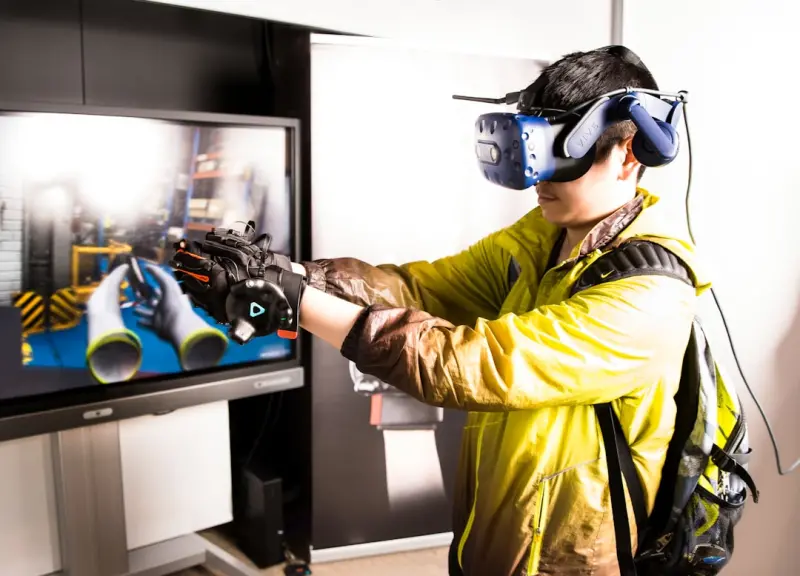
- Embodied Learning: Students use hand gestures and voice commands to manipulate virtual objects, reinforcing muscle memory alongside conceptual understanding.
- Instant Feedback Loops: Sensors embedded in the environment can detect missteps and trigger contextual hints, reducing the frustration of trial‑and‑error in a safe sandbox.
- Collaborative Problem Solving: Multi‑user sessions foster peer‑to‑peer teaching, where learners explain concepts in real time, sharpening both communication and comprehension.
Designing for Cognitive Load in Immersive Spaces
Immersion is powerful, but it can also be overwhelming. Overloading a student’s senses with too many stimuli can hinder retention. Effective metaverse lesson design follows three guiding principles:
- Chunk the Experience: Break down complex topics into bite‑sized “rooms” or modules. A student might first explore a molecular structure in a single‑object view before moving to a full‑scale cellular environment.
- Guide Attention with Ambient Cues: Subtle lighting changes, directional sounds, or visual highlights can steer focus without disrupting flow. For inspiration on subtle cueing, see Silent Signals: Harnessing Ambient Marketing in the Remote‑First Era, which discusses how ambient data can shape user behavior.
- Leverage Edge Processing for Real‑Time Interaction: Low‑latency computation keeps interactions smooth, preventing motion sickness and ensuring that feedback feels instantaneous. The Edge Intelligence article explains how edge computing delivers real‑time value, a principle that translates directly to immersive education.
Assessment Reimagined: From Exams to Performance Portfolios
In the metaverse, assessment can evolve from static quizzes to dynamic performance portfolios. Imagine a design engineering course where students must construct a sustainable bridge within a virtual river environment. Their final grade is derived from metrics like material efficiency, structural integrity under simulated stress tests, and collaborative problem‑solving scores—data captured automatically by the platform.
Such assessments provide richer insight into student capabilities, moving beyond rote recall toward authentic demonstration of skills. Moreover, because the data is digitally recorded, educators can perform longitudinal analyses to identify growth patterns and tailor interventions.
Equity and Access: Democratizing High‑Impact Experiences
One of the most compelling arguments for the educational metaverse is its potential to level the playing field. High‑cost laboratory equipment, field trips to remote ecosystems, or access to rare artifacts are no longer exclusive to well‑funded institutions. With a modest VR headset and broadband connection, a student in a rural community can dissect a virtual frog, explore a coral reef, or conduct a chemistry experiment without safety hazards.
However, true equity demands attention to the digital divide. Institutions must invest in inclusive hardware strategies, such as providing low‑cost headsets or leveraging mobile‑first VR solutions that work on smartphones. Partnerships with NGOs and government programs can also subsidize connectivity costs, ensuring that the promise of immersive learning does not become a privilege reserved for the few.
Pedagogical Shifts: The Teacher as Experience Curator
In this new paradigm, the role of the instructor transforms from content deliverer to experience curator. Teachers design scenarios, set learning objectives, and act as facilitators who intervene only when learners stray from intended pathways or when deeper exploration is warranted.
To succeed, educators need professional development that covers:
- Storyboarding Immersive Lessons: Mapping out narrative arcs, decision points, and feedback loops.
- Technical Fluency: Understanding the capabilities and limitations of the VR platform, including how to troubleshoot latency or hardware incompatibilities.
- Data Literacy: Interpreting analytics generated by the immersive environment to inform instructional adjustments.
For those already exploring data‑driven learning, the Learning at the Speed of Thought post offers a glimpse into how analytics can personalize learning—an approach that extends naturally into the metaverse.
Challenges to Anticipate
While the opportunities are exhilarating, several hurdles must be addressed before widespread adoption:
- Technical Barriers: Not all institutions have the infrastructure to support high‑bandwidth, low‑latency experiences. Cloud‑based rendering and edge computing can mitigate this, but investment is required.
- Pedagogical Rigor: Immersive experiences must be grounded in solid learning theory, not just novelty. Rigorous research is needed to validate efficacy across disciplines.
- Privacy & Security: Avatar interactions generate rich data streams. Institutions must adopt privacy‑first policies to protect student information, echoing concerns highlighted in recent discussions about privacy‑first machine learning.
- Content Creation Costs: High‑quality 3‑D assets and simulations can be expensive to produce. Collaborative ecosystems, where institutions share open‑source assets, can reduce duplication of effort.
Roadmap for Institutions Ready to Dive In
For universities, K‑12 districts, and corporate learning departments that want to pilot metaverse learning, a phased approach works best:
- Discovery Phase: Identify courses where spatial immersion adds clear value (e.g., anatomy, architecture, environmental science). Conduct stakeholder interviews to gauge readiness.
- Prototype Phase: Partner with a VR developer to create a minimal viable experience—perhaps a single module or a virtual field trip.
- Evaluation Phase: Deploy the prototype to a small cohort, collect qualitative feedback and quantitative metrics (engagement time, knowledge retention, satisfaction).
- Scale Phase: Refine based on data, develop a content library, and roll out to broader audiences, integrating analytics dashboards for continuous improvement.
Future Glimpses: AI‑Guided Avatars and Adaptive Worlds
Looking ahead, the convergence of generative AI and the metaverse promises even richer experiences. Imagine an AI‑driven mentor avatar that adapts its teaching style to each student’s preferred learning modality, or a dynamic environment that reshapes itself based on collective class performance. These possibilities echo the broader trend of AI‑enhanced personalization across SaaS platforms, hinting at a future where learning is as fluid as the thoughts it seeks to nurture.
In sum, the metaverse is more than a flashy backdrop; it’s a catalyst for rethinking the very architecture of education. By grounding immersive design in sound pedagogy, leveraging edge intelligence for seamless interaction, and committing to equitable access, educators can unlock a new frontier where knowledge isn’t just consumed—it’s lived.

When it comes to the world of blogging and writing, Rose DesRochers is a name that stands out. Her passion for creating quality content and connecting with her audience has made her a trusted voice in the industry. Aside from her skills as a writer and blogger, Rose is also known for her compassionate nature.
Related Posts
Beyond the Screen: How Immersive Spatial Learning Is Redefining Corporate Education
Discover why immersive spatial learning—using VR and AR—offers a new dimension for corporate edu... Read More

Learning in the Flow: Turning Everyday Tasks into Skill‑Building Moments
Micro‑learning transforms education from a scheduled event into a seamless part of daily work. Lea... Read More
Reimagining Corporate Learning: How Adaptive Microlearning Is Shaping the Modern Workforce
Adaptive microlearning blends AI-driven personalization with bite‑sized content, embedding learnin... Read More
Top Posts

Wandering Off the Map: How Unplanned Adventures Transform Your Mind
Discover how ditching rigid itineraries in favor of unplanned journeys can refresh your perspective, deepen connections, and turn travel into a catalyst for las...Read More

Reprogramming the Night: A Tech‑Savvy Blueprint for Better Sleep
Mei Chen shares a step‑by‑step, technology‑enhanced approach to mastering sleep, blending smart bedroom devices, mindful routines, and data‑driven weara...Read More

Building Circular SaaS: Turning Software Into a Green Asset
This post outlines the principles of circular SaaS, offering practical steps to design modular, resource‑aware software that cuts emissions, extends product l...Read More

The Rise of Community-Driven Pickleball Leagues: How Grassroots Competition Is Changing the Game
Discover why pickleball’s grassroots leagues are more than a game— they’re building stronger communities, embracing tech, and paving the way for future ch...Read More
0 Comments
Post Comment
You will need to Login or Register to comment on this post!