
Imagine a world where every software contract reads less like a speculative gamble and more like a guaranteed partnership. In that world, the buyer pays only for the results they actually achieve, and the seller’s revenue grows in lockstep with the value they deliver. This isn’t a futuristic fantasy; it’s the emerging reality of outcome‑based pricing (OBP) in the enterprise SaaS arena. While many vendors cling to traditional seat‑based or usage‑based models, forward‑thinking companies are redefining the economics of the relationship, aligning incentives, reducing churn, and unlocking new growth pathways.
Why Traditional Pricing Models Are Cracking Under Their Own Weight
Legacy pricing structures—whether per‑user, per‑module, or raw consumption—often create a misalignment of goals. The vendor is incentivized to sell more seats or push higher usage, while the customer wrestles with under‑utilization, hidden costs, and the perpetual fear of over‑paying for unused capacity. Over time, this friction fuels budget fatigue and fuels a churn‑driven sales culture that prioritizes short‑term wins over long‑term value.
Moreover, the rapid rise of modular SaaS solutions has fragmented the buying journey. Customers now cherry‑pick best‑of‑breed components, leading to a patchwork of contracts that are difficult to manage and reconcile. The modular toolkits that promise flexibility can inadvertently increase complexity, especially when each module carries its own pricing schema.
Outcome‑Based Pricing: The Core Principles
At its heart, OBP is simple: payment is tied directly to measurable business outcomes. Instead of billing for the software itself, vendors bill for the impact the software generates—be it revenue uplift, cost reduction, time saved, or any KPI that matters to the client. The model typically follows these steps:
- Define Clear, Quantifiable Outcomes: Both parties agree on specific metrics (e.g., % increase in qualified leads, reduction in order processing time).
- Establish Baselines and Targets: Baseline performance is measured before deployment; targets are set collaboratively.
- Implement Transparent Tracking: Real‑time dashboards and data pipelines ensure both sides see the same numbers.
- Align Payment Tiers: Pricing tiers correspond to the achievement of pre‑agreed thresholds.
This framework forces a relentless focus on value creation. If the software fails to deliver, the vendor’s revenue stalls, prompting swift corrective action. If the software exceeds expectations, the vendor shares in the upside, fostering a virtuous cycle of continuous improvement.
How OBP Reinforces Trust and Reduces Sales Cycle Friction
Trust is the invisible currency that underpins every B2B relationship. By putting money on the line for outcomes, vendors demonstrate confidence in their own product. This bold stance does three things:
- Shortens Negotiations: With a shared goal sheet, lengthy price‑bargaining sessions shrink dramatically. Both sides know exactly what they’re paying for.
- Mitigates Risk for Buyers: Clients perceive a lower financial risk because they pay for results, not promises.
- Creates a Joint‑Success Narrative: Success stories become co‑authored case studies, amplifying brand credibility on both sides.
In practice, companies that adopt OBP report up to a 30% reduction in sales cycle length, according to recent industry surveys. The psychological shift—from “I’m buying a tool” to “I’m buying a measurable business transformation”—reframes the entire conversation.
Data Infrastructure: The Backbone of Outcome‑Based Deals
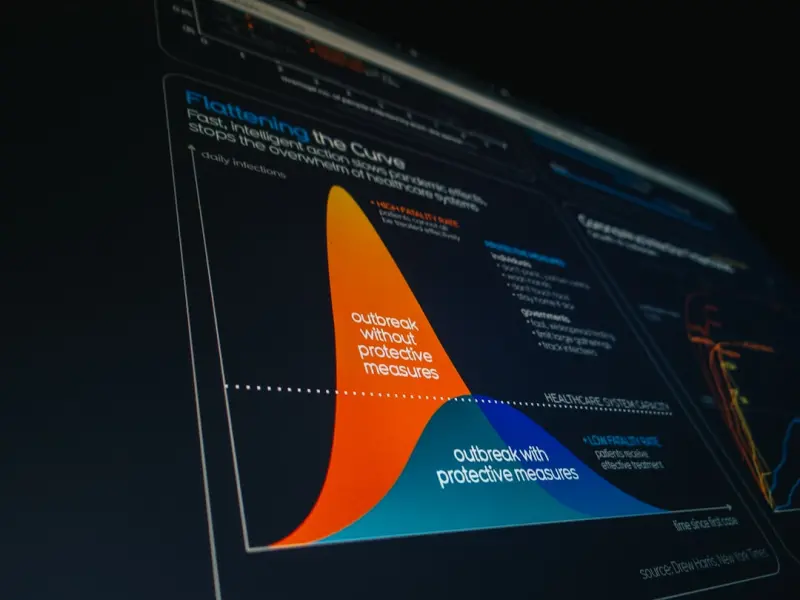
Outcome‑based contracts crumble without robust data pipelines. The need for accurate, real‑time insight pushes SaaS vendors to invest heavily in analytics, telemetry, and integration layers. This is where modern AI dashboards become indispensable.
These dashboards aggregate usage metrics, business KPIs, and external data sources into a single, auditable view. They enable:
- Transparent Verification: Both parties can verify outcome measurements without manual reconciliation.
- Predictive Adjustments: AI models forecast whether targets are on track, allowing proactive course corrections.
- Scalable Reporting: As contracts scale across departments or geographies, the same data model applies uniformly.
Investing in a data‑first architecture not only supports OBP but also unlocks secondary benefits—enhanced product development, smarter upsell opportunities, and a deeper understanding of customer behavior.
Designing an OBP Offer: A Step‑by‑Step Playbook
Transitioning from a seat‑based model to OBP is a strategic shift. Below is a pragmatic playbook that balances ambition with operational realism:
- Identify High‑Impact Use Cases: Start with a pilot where the software’s impact is most observable—e.g., a sales automation tool that directly correlates to pipeline growth.
- Quantify the Value Chain: Map how the software influences revenue or cost. Use historical data to estimate baseline performance.
- Co‑Create Success Metrics: Align on a handful of KPI(s) that are both meaningful and measurable. Avoid over‑complicating with too many variables.
- Build a Measurement Engine: Deploy telemetry, integrate with CRM/ERP systems, and configure the AI dashboards that will surface the metrics.
- Structure Pricing Tiers: Define a base fee (to cover costs) plus performance‑linked increments. For example, a 10% uplift in qualified leads could trigger a $X,000 bonus.
- Pilot and Iterate: Run a short‑term pilot (3‑6 months), evaluate outcomes, and refine the model before scaling.
- Scale Across Portfolio: Once validated, apply the framework to other products, customizing metrics to fit each use case.
Crucially, maintain open communication channels throughout. Transparency builds trust, and trust fuels the willingness to experiment with novel pricing structures.
Overcoming Common Objections
Even the most compelling value proposition meets resistance. Here’s how to address typical concerns:
- “We don’t have the data to measure outcomes.” – Offer to co‑invest in analytics tooling as part of the contract. The upfront cost is offset by the reduced risk of paying for unverified results.
- “Our finance team hates variable costs.” – Structure the contract with a modest fixed component to satisfy budgeting constraints, then layer the outcome‑based variable on top.
- “What if market conditions change?” – Include adaptive clauses that adjust targets based on external benchmarks, ensuring fairness even in volatile environments.
- “We’ve never tried this before.” – Highlight case studies (even internal pilots) that demonstrate measurable ROI and risk mitigation.
The Competitive Edge: Differentiation in a Saturated Market
Enterprise SaaS markets are increasingly crowded, with feature parity becoming the norm. OBP provides a clear differentiator that resonates with C‑suite executives who are under pressure to prove ROI on every spend. By offering a model that directly ties payment to results, vendors position themselves as strategic partners rather than mere vendors.
Furthermore, OBP can unlock new market segments that were previously price‑sensitive. Companies that previously hesitated to adopt a solution due to upfront cost can now test it with minimal financial exposure, expanding the addressable market.
Future Outlook: From Pilot to Industry Standard
While OBP is still emerging, early adopters are already reporting double‑digit revenue growth and dramatically lower churn rates. As more enterprises demand accountability and as data infrastructure matures, we can expect OBP to evolve from a niche experiment to a mainstream pricing paradigm.
Key trends to watch:
- Standardized Outcome Metrics: Industry bodies may develop benchmark libraries, making it easier to define and compare outcomes across vendors.
- AI‑Driven Outcome Forecasting: Predictive models will estimate the probability of hitting targets, informing contract negotiations in real time.
- Hybrid Models: The future will likely see blends of fixed, usage, and outcome components, offering the flexibility to tailor contracts to specific risk appetites.
For SaaS founders, product leaders, and go‑to‑market strategists, the message is clear: the time to experiment with outcome‑based pricing is now. The combination of robust data pipelines, transparent dashboards, and a willingness to align incentives can transform your revenue engine from a transaction‑focused machine into a partnership‑driven growth catalyst.
In the end, the true power of outcome‑based pricing isn’t just in the dollars and cents—it’s in the cultural shift it forces. It compels every stakeholder to ask a simple, profound question: Are we delivering measurable value? If the answer is yes, the financial rewards will follow naturally.

Jimmy Stewart is a content creator that gets inspired by many aspects of life, internet or whatever inspires him at that moment. When he's not online he's gaming and when he is not gaming he is online trolling discussion boards.
Related Posts

Adaptive Learning Platforms: The Secret Weapon for Faster B2B Sales Wins
Adaptive learning platforms personalize sales training in real time, slashing onboarding costs and b... Read More
The Role of Sustainable Practices in Business: A Guide to a Greener Future
Sustainable business practices are no longer a nicety, but a necessity for companies that want to st... Read More

Why Internal Developer Platforms Are the Next Business Game‑Changer
Internal Developer Platforms (IDPs) unify tooling, automate compliance, and empower developers to sh... Read More
Top Posts

Reinventing Your Social Media Game: From Threads to Micro‑Communities
Learn how to turn social media into a strategic tool with thread storytelling, carousel narratives, and community‑first features that drive authentic engageme...Read More

When Your Refrigerator Becomes Your Personal Wellness Coach
Smart appliances are evolving from simple conveniences to health‑focused, data‑driven partners. This post explores how AI, voice interaction, and subscripti...Read More

Sustainable Collectibles: How Eco‑Friendly Toys Are Redefining Adult Play
Explore the rise of eco‑friendly adult collectibles, from innovative materials to community swaps, and learn how to start your sustainable toy collection....Read More

Designing for the Senses: How Multisensory Interiors Are Redefining Modern Spaces
A deep dive into multisensory interior design, covering acoustic architecture, olfactory storytelling, tactile textures, adaptive lighting, and climate comfort,...Read More
0 Comments
Post Comment
You will need to Login or Register to comment on this post!