
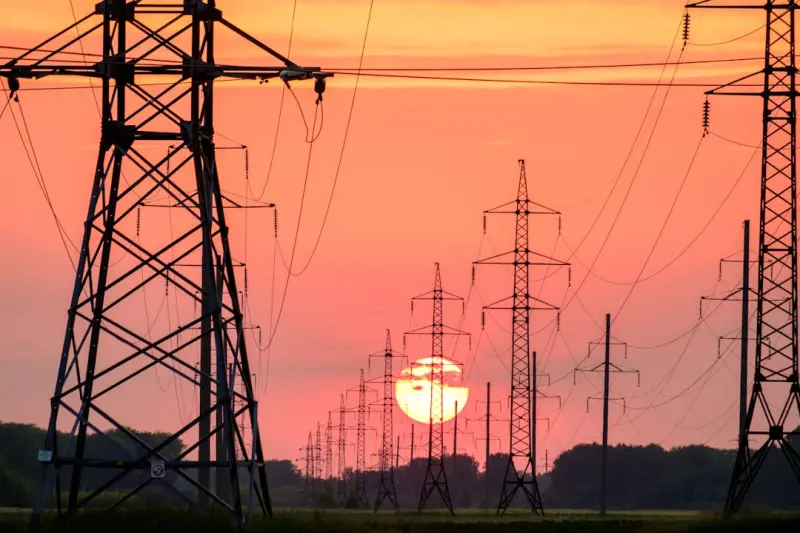
Why the Energy Landscape Needs a Paradigm Shift
When I first walked onto the roof of a solar‑filled warehouse in Shenzhen, I felt a strange mix of awe and impatience. The panels glittered like a field of mirrors, yet the building’s energy bill still whispered a familiar story: dependence on a centralized utility, volatile pricing, and a grid that struggled to accommodate the very renewable sources we were installing. It was a vivid reminder that technology alone doesn’t solve the energy puzzle; the architecture of how we buy, sell, and balance power must evolve.
In the past, “energy strategy” meant long‑term contracts with a handful of utility providers and a handful of internal efficiency projects. Today, the conversation has migrated to microgrids, peer‑to‑peer (P2P) energy trading, and AI‑driven forecasting. Enterprises are no longer passive consumers; they can become prosumers—both producing and consuming energy—while participating in a marketplace that rewards flexibility and sustainability.
The Rise of Decentralized Energy Communities
Think of a neighborhood of office buildings, warehouses, and data centers each equipped with solar, battery storage, or even small wind turbines. Instead of each facility relying on a monolithic grid, they interconnect through a digital platform that tracks generation, consumption, and storage in real time. Surplus power from a warehouse’s rooftop can flow directly to a nearby office that needs a boost during peak hours, and vice versa.
This isn’t a futuristic fantasy; it’s happening now in pilot projects across Asia, Europe, and North America. The key enablers are threefold:
- Blockchain‑based settlement layers that provide transparent, immutable records of every kilowatt‑hour exchanged.
- AI‑enhanced demand forecasting that predicts short‑term consumption patterns down to the minute, allowing participants to price their surplus intelligently.
- Low‑code development environments that let energy managers, without deep software engineering backgrounds, configure custom trading rules, compliance filters, and incentive structures.
AI‑Powered Forecasting: Turning Uncertainty into Opportunity
One of the biggest challenges for any energy market is the inherent variability of renewable sources. Solar output can swing dramatically with passing clouds; wind can be fickle. Traditional utility forecasting models rely on large, centralized datasets and often lag behind real‑time conditions. Modern AI, however, thrives on streaming data. By ingesting weather APIs, IoT sensor feeds from in‑field meters, and historical production curves, machine‑learning models can predict generation and demand with a precision that was unimaginable a few years ago.
For an enterprise, this translates into actionable insights:
- Dynamic pricing—adjusting the price of surplus energy in response to imminent weather changes.
- Strategic storage dispatch—deciding when to charge or discharge batteries to maximize revenue or minimize cost.
- Load shifting recommendations—guiding operational teams to schedule energy‑intensive processes during periods of abundant renewable supply.
These capabilities are not confined to specialist data scientists. With platforms that embed AI as a service, energy managers can set up predictive dashboards, set alerts, and even automate trades through intuitive visual interfaces. This democratization of AI is a game‑changer, and it parallels the way low‑code tools are reshaping enterprise software evolution, allowing non‑technical users to build sophisticated workflows without writing a single line of code.
Blockchain: The Trust Engine Behind P2P Energy
Transparency is the lifeblood of any marketplace. In traditional electricity markets, settlements are handled by a handful of large entities, which introduces latency, opacity, and sometimes mistrust. Blockchain technology offers a decentralized ledger where every transaction—whether a kilowatt‑hour sold by a rooftop array or a battery discharge event—is recorded immutably.
Key benefits include:
- Instantaneous settlement—smart contracts execute trades automatically when pre‑defined conditions are met.
- Reduced administrative overhead—no need for manual reconciliations or third‑party auditors.
- Enhanced regulatory compliance—the ledger can embed compliance checks, ensuring trades respect local grid codes and carbon‑pricing regulations.
Moreover, blockchain’s tokenization capabilities allow participants to bundle energy into tradable assets, opening avenues for new financing models. Imagine a startup issuing “green energy tokens” backed by the firm’s solar production, which investors can purchase to offset their own carbon footprints. The token economy not only fuels sustainability goals but also creates a new revenue stream for enterprises.
Low‑Code Platforms: Empowering Energy Teams to Innovate Quickly
Building a P2P energy marketplace from scratch would traditionally require a multi‑year software development effort, deep expertise in distributed systems, and substantial capital. Low‑code platforms compress this timeline dramatically. By providing pre‑built connectors to IoT devices, AI services, and blockchain nodes, they enable energy teams to prototype, test, and launch trading workflows in weeks rather than months.
Consider a logistics company that wants to monetize the excess solar power generated at its distribution hub. Using a low‑code environment, the team can:
- Drag‑and‑drop a data connector to pull real‑time solar output from the hub’s inverter.
- Integrate an AI forecasting module that predicts the next hour’s generation.
- Configure a smart contract template that automatically offers the surplus to nearby partners at a market‑based price.
- Deploy the solution to a cloud environment with a single click, where it scales automatically as more participants join.
This agility mirrors the insights shared in how AI can become a brand storyteller, where technology amplifies human creativity. In the energy realm, low‑code tools amplify the ingenuity of sustainability officers, allowing them to focus on strategy rather than software plumbing.
Real‑World Case Study: A Manufacturing Cluster’s Energy Turnaround
Last year, a consortium of three mid‑size manufacturers in the Pearl River Delta decided to experiment with a P2P energy market. Each facility installed rooftop solar, battery storage, and smart meters capable of two‑way communication. They partnered with a technology provider that offered a low‑code, AI‑enabled platform built on a private blockchain network.
Within six months, the results were striking:
- Cost reduction: The cluster lowered its average electricity cost by 12% compared to the previous year, thanks to optimized intra‑cluster trading and reduced reliance on peak‑hour grid purchases.
- Carbon impact: On‑site renewable consumption rose from 30% to 68%, cutting the consortium’s Scope 2 emissions dramatically.
- Revenue generation: Surplus solar energy exported to a neighboring office park earned the manufacturers a new, recurring income stream.
- Operational resilience: During a regional grid outage, the cluster operated autonomously for eight hours, keeping critical production lines online.
The success hinged on three pillars: transparent data sharing via blockchain, predictive insights from AI, and rapid iteration enabled by low‑code development. This model is now being replicated in other industrial zones, proving that the approach scales beyond a single pilot.
Overcoming Barriers: Regulation, Interoperability, and Culture
While the technical foundations are solid, widespread adoption faces non‑technical challenges.
Regulatory Landscape
Many jurisdictions still treat electricity as a utility monopoly, restricting direct peer‑to‑peer trades. However, regulators are beginning to recognize the benefits of decentralized grids, especially in terms of resilience and emissions reduction. Engaging with policymakers early—presenting data on cost savings, grid stability, and consumer benefits—can accelerate the path to approval.
Interoperability Standards
Energy devices from different vendors often speak incompatible protocols. The emergence of open standards such as OpenADR (Automated Demand Response) and IEC 61850 helps, but enterprises must prioritize platforms that support flexible integration layers. Low‑code platforms excel here by offering drag‑and‑drop connectors for a wide array of IoT standards, reducing the need for custom middleware.
Organizational Culture
Shifting from a top‑down, utility‑centric mindset to a collaborative, market‑driven approach requires cultural change. Energy teams must embrace experimentation, learn from data, and collaborate across departmental silos. Storytelling—using visual dashboards and real‑time alerts—helps demystify the technology and builds trust among stakeholders.
Strategic Roadmap for Enterprises Ready to Dive In
If you’re considering a move toward decentralized energy, here’s a pragmatic step‑by‑step guide:
- Audit Current Assets—Catalog on‑site generation, storage, and demand profiles. Identify peak‑load periods and potential surplus windows.
- Choose a Platform—Select a low‑code, AI‑enabled solution that integrates with blockchain. Look for modularity, open APIs, and a supportive ecosystem.
- Start Small—Pilot with a single site or a pair of facilities. Focus on a clear metric, such as reducing peak‑hour grid purchases.
- Integrate AI Forecasts—Deploy machine‑learning models that ingest weather, historical consumption, and market price data to drive pricing decisions.
- Enable Smart Contracts—Configure settlement rules that automatically execute trades when price thresholds or storage levels are met.
- Scale Gradually—Add more participants, expand to multi‑site trading, and explore tokenization for external investors.
- Engage Regulators—Document outcomes, share best practices, and advocate for supportive policies.
Each phase should be measured against KPIs such as cost savings, carbon intensity, revenue from energy sales, and system reliability. The iterative nature of low‑code development means you can refine rules, experiment with new pricing models, or onboard additional assets without a major re‑engineering effort.
Looking Ahead: The Convergence of Energy, Data, and Business Strategy
The next decade will witness a blurring of lines between traditional IT functions and energy management. As enterprises digitize every facet of their operations, energy becomes a data asset as valuable as any customer record. By treating kilowatt‑hours as tradable, programmable commodities, companies unlock new levers for cost control, sustainability, and even brand differentiation.
In my view, the most compelling narrative isn’t about technology alone—it’s about the strategic autonomy that decentralized energy grants to businesses. Imagine a future where a multinational corporation can reroute clean power from a solar‑rich facility in one continent to a high‑density data center on another, all through an AI‑orchestrated, blockchain‑secured marketplace. That vision is already taking shape, and the companies that invest in the platform layer today will lead the energy‑enabled economies of tomorrow.
Energy is no longer a static utility; it’s a dynamic, data‑rich ecosystem waiting to be harnessed. The tools are ready, the pilots are proving the model, and the strategic upside is undeniable. It’s time for forward‑thinking enterprises to step into the driver’s seat of their own power destiny.

Mei Chen is a dynamic professional who brings a unique blend of skills to Blogging Fusion. As a key contributor to the Blogging Fusion platform, she leverages her writing expertise to create engaging content that resonates with our audience.
Related Posts

The Quiet Revolution Powering Our World
A personal look at the energy shift: from solar breakthroughs to smart grids, sustainable business m... Read More
Powering SaaS: How Energy‑Smart Architecture Fuels Sustainable Growth
A deep dive into how SaaS firms can integrate edge‑first architecture, carbon‑aware scheduling, ... Read More

Powering SaaS Growth with Energy Intelligence
The article explains why energy management is a strategic lever for SaaS companies, detailing dataâ€... Read More
Top Posts

Sustainable Software: How Green Coding Is Redefining Development in 2024
Discover how sustainable software practices—from green coding to eco‑aware DevOps—are reshaping development, delivering faster apps while protecting the p...Read More

Embracing Sustainable Home Practices for a Greener Tomorrow
Learn how to make your home more sustainable with simple swaps, reducing waste, and incorporating eco-friendly materials into your decor and design. Start your ...Read More

From Data Silos to Search Superhighways: Rethinking SEO for the AI‑First SaaS Landscape
Learn a fresh SEO approach for SaaS: build AI‑generated, entity‑focused content clusters that align with product development, boost organic traffic, and fut...Read More

Why Your Next Health Upgrade Should Be a Data‑Driven Wearable Strategy
Explore how data‑driven wearables can shift corporate wellness from reactive perks to predictive health intelligence, boosting productivity and employee wellâ...Read More
0 Comments
Post Comment
You will need to Login or Register to comment on this post!