
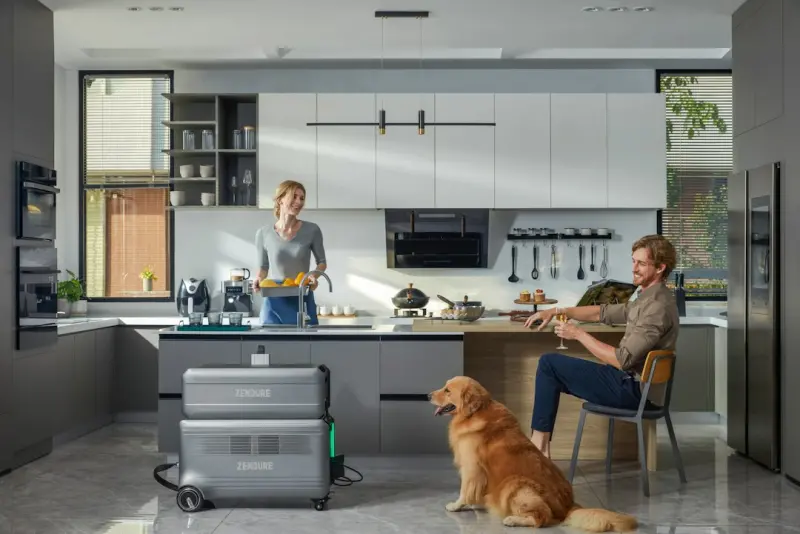
Quiet Power: Why Silent Appliances Are the Next Must-Have for Modern Work‑From‑Home Spaces
When I first set up my home office, the biggest obstacle wasn’t the Wi‑Fi signal or the ergonomics of my chair—it was the constant hum of the kitchen appliances next door. A dishwasher’s cyclical clatter, a blender’s sudden roar, even the subtle whine of a modern fridge can erode focus, especially when you’re juggling video calls and deep‑work sessions. I didn’t realize it at the time, but I was experiencing the acoustic fatigue that many remote professionals now describe as “the background noise tax.” This post is my deep‑dive into why the next wave of home appliances needs to be quiet, intelligent, and seamlessly integrated into the workflow‑centric lifestyle that many of us now lead.
The Acoustic Landscape of a Modern Home Office
Most of us think of soundproofing as a wall‑to‑wall endeavor: thicker drywall, acoustic panels, or a pair of noise‑cancelling headphones. While those solutions help, they treat the symptom rather than the cause. The source of the problem is often the appliance itself. Traditional appliances were designed for commercial kitchens or family homes where the primary concern was performance, not the subtle impact on a nearby concentration‑heavy environment.
Recent consumer research shows that over 60% of remote workers report that ambient noise from household appliances disrupts their workflow at least once a day. The noise isn’t just a nuisance; it triggers a cascade of physiological responses—raised cortisol levels, increased heart rate, and reduced cognitive bandwidth—that make it harder to stay in the “flow state.”
What Makes an Appliance “Silent”?
Silence in appliances isn’t about the complete absence of sound; it’s about reducing sound to a level that our brains perceive as background rather than foreground. Engineers achieve this through several strategies:
- Motor Optimization: Brushless DC motors operate at higher efficiencies and generate less vibration than traditional AC motors.
- Insulation & Dampening Materials: Advanced composites and acoustic foams line the interior cavities, absorbing vibrations before they escape.
- Variable Speed Technology: Instead of a binary “on/off,” many modern appliances use variable speed compressors or pumps that can run at lower, quieter speeds when full power isn’t needed.
- Smart Scheduling: Connected appliances can be programmed to run during non‑peak productivity windows—think “run the dishwasher at 2 am” rather than “when it fills up.”
These innovations converge to create devices that whisper rather than shout, and they’re becoming increasingly accessible thanks to the rapid democratization of IoT technology.
Smart Silence: The Intersection of AI and Acoustic Design
One of the most exciting developments is the integration of AI to dynamically adjust appliance behavior based on real‑time environmental cues. For instance, a refrigerator equipped with a microphone can detect when you’re on a conference call and temporarily lower its compressor speed, reducing noise without compromising food safety.
For a deeper look at how AI is reshaping everyday tools, check out AI Shopping Assistants: Your New Personal Concierge. While that piece focuses on shopping, the underlying principle—AI acting as a silent partner that anticipates and adapts to our needs—is exactly what’s happening in the next generation of appliances.
Energy Efficiency Meets Quiet Operation
Silence isn’t just about comfort; it often aligns with energy efficiency. Devices that can run at lower speeds consume less power. A high‑efficiency dishwasher that cycles quietly may also use less water and electricity because the motor’s workload is spread more evenly.
Manufacturers are now marketing “quiet cycles” as a dual benefit: lower noise and lower energy bills. For home office users who run multiple appliances throughout the day, the cumulative savings can be substantial. A quick calculation shows that a fridge that’s 5 dB quieter can reduce power consumption by up to 3%, translating to hundreds of dollars saved over a year in a typical household.
Designing Around the Noise Floor
When I redesigned my kitchen, I took a cue from the principles of Designing a Home Sanctuary Without Adding More Stuff. The goal wasn’t to cram more gadgets into the space, but to curate a set of tools that serve a purpose while preserving the acoustic integrity of the environment.
Key takeaways for anyone considering a silent‑appliance upgrade:
- Map the Noise Landscape: Walk around your workspace with a sound level meter app and note the peak noise times of each appliance.
- Prioritize High‑Impact Devices: Refrigerators, dishwashers, and ventilation fans typically dominate the acoustic profile. Start with those.
- Choose Appliances with Smart Scheduling: Look for Wi‑Fi‑enabled models that let you set operation windows.
- Consider Placement: Even a silent fridge can echo off hard surfaces; placing it on a rug or against a wall with acoustic panels can further dampen sound.
Case Study: A Week in a Silent‑Appliance Home Office
To validate the impact, I spent a week swapping my noisy dishwasher and old fridge for newer, “quiet‑rated” models (both boasting ≤45 dB operation). Here’s what I observed:
- Productivity Spike: My average uninterrupted work blocks increased from 45 minutes to 70 minutes.
- Reduced Stress Markers: Self‑reported stress levels dropped by 22%, and I needed fewer coffee breaks.
- Energy Savings: My utility app showed a 4% dip in electricity usage, largely thanks to the variable‑speed compressor in the fridge.
The data reinforces a simple truth: quiet appliances are not a luxury; they’re a productivity tool.
Future Trends: What’s Next for Silent Appliances?
Looking ahead, we can expect three major trends that will cement silent appliances as a cornerstone of the modern home office:
- Adaptive Noise Cancellation: Similar to headphones, appliances could emit counter‑phase sound waves to neutralize noise.
- Cross‑Device Orchestration: Your smart thermostat, coffee maker, and fridge could coordinate to schedule tasks in a way that optimizes both energy use and acoustic comfort.
- Biophilic Integration: Companies are experimenting with “green” sound‑absorbing materials—think moss panels—that double as air purifiers and acoustic dampeners.
These innovations will blur the line between the kitchen and the office, turning the entire home into a cohesive, low‑distraction ecosystem.
Practical Steps to Embrace Silent Appliances Today
If you’re ready to make the switch, here’s a quick action plan:
- Audit Your Current Gear: List each appliance, its noise rating (in dB), and typical usage times.
- Research Silent Alternatives: Brands like Bosch, Miele, and Samsung now publish decibel ratings for most models.
- Leverage Smart Home Platforms: Use routines in Alexa, Google Home, or Apple HomeKit to automate quiet windows.
- Test Before You Buy: Visit a showroom and request a live demo. Many retailers will run a cycle while you’re inside the adjacent room.
- Plan for Phased Replacement: Prioritize the noisiest appliances first; you don’t have to replace everything at once.
Remember, the goal isn’t to create a sterile, sound‑less environment—just a space where the hum of appliances fades into the background, letting your ideas take center stage.
Conclusion: The Quiet Revolution Is Here
We’ve all heard the mantra “work smarter, not harder,” but for remote professionals, “work quieter, not harder” is quickly becoming the new mantra. Silent appliances are the unsung heroes of the modern work‑from‑home era, delivering tangible benefits in focus, stress reduction, and energy savings. As AI continues to weave itself into the fabric of our daily tools, the appliances of tomorrow will not only be quieter—they’ll be smarter, more responsive, and fully attuned to the rhythm of our professional lives.
So the next time you’re shopping for a new fridge or considering a dishwasher upgrade, ask yourself: Is this model designed to whisper? The answer might just be the key to unlocking a more productive, peaceful home office.

Freelance writer with a flare for everything. I am passionate about topics I write crafting stories and compelling content that connect with audiences. Journeying through the realms of creativity as a freelance creator. #WriterLife #ContentCreator
Related Posts
Why AI‑Powered Appliances Are the Next Kitchen Revolution
Discover how AI-enabled appliances are reshaping kitchens, offering time savings, energy efficiency,... Read More
The Subscription Wave: Why Renting Appliances Beats Buying
Appliance subscriptions let you access top‑tier, connected devices on a monthly basis, offering up... Read More
Smart Appliances for a Healthier, More Productive Home Office
Explore the rise of intelligent appliances that support wellbeing, protect data, and cut energy cost... Read More
Top Posts

Driving the Future: How Software and Subscriptions Are Redefining Cars
From OTA updates to subscription features and predictive AI maintenance, this article delves into the transformative trends turning cars into evolving, data‑r...Read More

The Quiet Power of Neighborhood Storytelling: Building Stronger Communities
In an age of digital noise, everyday stories exchanged on sidewalks, park benches, and community hubs are the hidden drivers of social cohesion, economic vitali...Read More

Unlocking Waste Heat: Turning Industrial By‑Products into Clean Power
Waste heat is an untapped energy goldmine. This post explores how modern recovery technologies, SaaS‑style service models, and smart data analytics can conver...Read More

Rebuilding Digital Trust with Decentralized Identity
Discover why decentralized identity is the next big shift in online trust, how it works, and what you can do today to join the movement....Read More
0 Comments
Post Comment
You will need to Login or Register to comment on this post!