
From Reactive to Proactive: How Real‑Time Audience Signals Are Redefining Media Agency Playbooks
In the last few years, the media‑agency landscape has been jolted by a relentless surge of data sources—social listening tools, connected‑TV metrics, programmatic buy‑side dashboards, and even IoT‑enabled devices that whisper consumer intent in real time. The old paradigm of quarterly planning cycles and post‑campaign debriefs simply can’t keep pace. Agencies that continue to treat audience insights as a “report‑after‑the‑fact” are watching their relevance evaporate, while those that embed live signals into the creative and activation process are gaining a decisive competitive edge.
So, what does a truly proactive media‑agency operation look like? It’s a blend of three core capabilities: (1) a unified, real‑time data foundation, (2) an agile creative workflow that can ingest and act on fresh insights within hours, and (3) a culture that treats data as a collaborative language rather than a siloed reporting function. Below, we’ll unpack each pillar, spotlight emerging tools, and outline a roadmap you can start implementing tomorrow.
1. Building a Unified Real‑Time Data Foundation
The first step is to break down the data islands that have traditionally plagued agencies. Brands often receive a smorgasbord of PDFs from partners—TV rating sheets, social impression logs, click‑through tallies—each in its own format and cadence. By the time the pieces are assembled, the audience’s mood may have already shifted.
Modern cloud‑native data platforms make it possible to ingest streams from dozens of sources, normalize them on the fly, and surface actionable metrics through a single dashboard. Think of it as the headless content architectures that let developers push content anywhere, but applied to audience data: the “headless” layer decouples ingestion from consumption, letting analytics teams, creative strategists, and media buyers all tap the same live feed.
- Event‑driven pipelines: Use tools like Apache Kafka or managed equivalents to capture clickstreams, viewability events, and social sentiment as they happen.
- Unified identity graphs: Stitch together anonymous device IDs, logged‑in profiles, and third‑party audience segments to create a 360‑degree view without violating privacy.
- Real‑time KPI widgets: Surface key performance indicators (CPM, view‑through rate, sentiment lift) on a shared screen that updates every few minutes, not every week.
When the data foundation is truly live, the agency can move from “once‑a‑month reporting” to “continuous optimization.” The downstream impact is a dramatic reduction in latency between insight and action.
2. Agile Creative Workflows: From Idea to Execution in Hours
Data alone isn’t enough; it must inform creative decisions. Historically, agencies have relied on a linear workflow: brief → concept → production → approval → launch. In a real‑time world, that pipeline needs to become iterative, modular, and highly collaborative.
Enter dynamic creative optimization (DCO). By building ad assets as modular components—headline, visual, call‑to‑action—digital platforms can swap pieces on the fly based on live audience signals. For instance, if sentiment analysis shows a sudden spike in interest around “sustainability,” the system can automatically replace a generic headline with a greener variant, without any human intervention.
But DCO isn’t a magic button. It requires:
- Version‑controlled asset libraries: Store every creative element in a cloud repository where it can be tagged, versioned, and pulled into campaigns at a moment’s notice.
- Real‑time approval loops: Leverage collaborative platforms that let brand stakeholders review and green‑light variations in minutes, not days.
- Performance‑driven triggers: Define rules such as “if CTR drops 15% within 30 minutes, swap to the next high‑performing variant.”
This approach transforms creative teams from static producers into rapid response units—much like a newsroom that drafts, edits, and publishes a breaking story while the event unfolds.
3. Turning Data Into a Shared Language
Even the most sophisticated tech stack falters if the people using it speak different dialects. In many agencies, data lives with analysts, while creatives talk in concepts, and media buyers speak in inventory. Bridging that gap is essential for a truly proactive model.
One effective strategy is to adopt knowledge‑sharing frameworks that turn raw metrics into narrative insights. For example, instead of delivering a spreadsheet that shows a 2% dip in view‑through rate, the analyst could provide a short briefing: “Audience fatigue is rising among 25‑34‑year‑old males on weekday evenings—consider refreshing the hero visual or introducing a fresh call‑to‑action.” This narrative format aligns data with the creative mindset, making it instantly actionable.
Regular “data‑huddles”—short, stand‑up‑style meetings where analysts, strategists, and creatives discuss the latest signals—can cement this habit. Over time, the agency culture shifts from “data is a report” to “data is a conversation.”
4. Emerging Technologies That Accelerate the Shift
While the pillars above lay the groundwork, several cutting‑edge tools can supercharge the transition:
- Generative AI for rapid asset iteration: Prompt‑driven models can produce dozens of headline variations or image concepts in seconds, feeding directly into DCO pipelines.
- Edge computing for low‑latency analytics: Deploying lightweight analytics at the edge (e.g., within CDNs) reduces the time it takes to surface audience signals, crucial for high‑speed programmatic buys.
- Privacy‑preserving measurement (e.g., federated learning): Enables agencies to glean insights from user data without moving raw identifiers, staying compliant while still gaining depth.
These technologies are not silver bullets, but when integrated thoughtfully they amplify the three core capabilities discussed earlier, creating a virtuous cycle of speed, relevance, and impact.
5. A Practical Roadmap for Agencies Ready to Go Live
Transitioning to a real‑time, data‑driven agency model can feel daunting. Here’s a step‑by‑step guide to get you moving without overwhelming your team:
- Audit your data sources: List every feed you currently receive (TV ratings, social metrics, CRM data). Identify which can be accessed via API or real‑time push.
- Prototype a unified dashboard: Use a low‑code BI tool (e.g., Looker, Power BI) to pull two or three live streams together. Focus on a single KPI like “incremental lift” to prove value.
- Introduce modular creative assets: Pick one flagship campaign and rebuild its assets in a component‑based system. Test DCO with a small budget.
- Set up data‑huddles: Schedule 15‑minute cross‑functional check‑ins twice a week. Rotate the facilitator role to keep perspectives fresh.
- Iterate and scale: Based on early wins (e.g., a 12% lift after a dynamic headline swap), expand the workflow to additional clients and channels.
Remember, the goal isn’t to overhaul every process overnight but to embed a mindset of continuous learning and rapid iteration. Small, measurable improvements compound quickly, delivering both client satisfaction and internal efficiency gains.
6. The Business Impact: From Better ROI to Stronger Partnerships
Clients are increasingly demanding agility. They expect campaigns to evolve as consumer sentiment shifts, not just at the start of a fiscal quarter. By delivering real‑time optimizations, agencies can demonstrate tangible ROI improvements—often 10‑20% higher conversion rates and lower cost‑per‑acquisition—while also deepening trust.
Moreover, the data‑first approach opens doors to new revenue streams. Agencies can offer “live‑insight consulting” packages, where they monitor audience signals and advise on strategic pivots for an ongoing fee. This positions the agency not just as a service provider but as a strategic partner embedded in the client’s growth engine.
7. Looking Ahead: The Future of Media Agency Operations
As 5G, AR/VR, and immersive media mature, the velocity of audience interaction will only accelerate. The agencies that survive—and thrive—will be those that have already internalized the habit of “listen, adapt, execute” in near‑real time. The shift is less about buying the latest tech and more about re‑architecting processes, fostering collaborative cultures, and treating every data point as a story waiting to be told.
If you’re ready to start the journey, begin with the fundamentals: unify your data, make creative modular, and speak the language of insight across your teams. The future of media agency work is already happening—your job is to be on the front line, not watching from the sidelines.

Jim Pearse, a seasoned freelance writer, brings a wealth of knowledge and passion to the world of home and garden. From the intricacies of landscaping to the nuances of interior design, Jim delves into every aspect of creating comfortable, beautiful, and functional living spaces.
Related Posts

The Sound of Tomorrow: How Generative AI is Redefining Audio Branding for Media Agencies
Generative AI is reshaping audio branding, enabling media agencies to create adaptive, data‑driven... Read More

Why Media Agencies Must Become Data Stewards, Not Just Buyers
Media agencies are shifting from data buyers to data stewards, adopting consent‑first architecture... Read More

Reimagining Media Agencies for the Sustainable Era
Media agencies are shifting from traditional metrics to sustainable practices, blending technology, ... Read More
Top Posts

Crafting a Narrative‑Driven Wedding That Lives On
A narrative‑first approach transforms a wedding from a checklist into a living story, using digital invitations, immersive tech, and thoughtful partnerships t...Read More
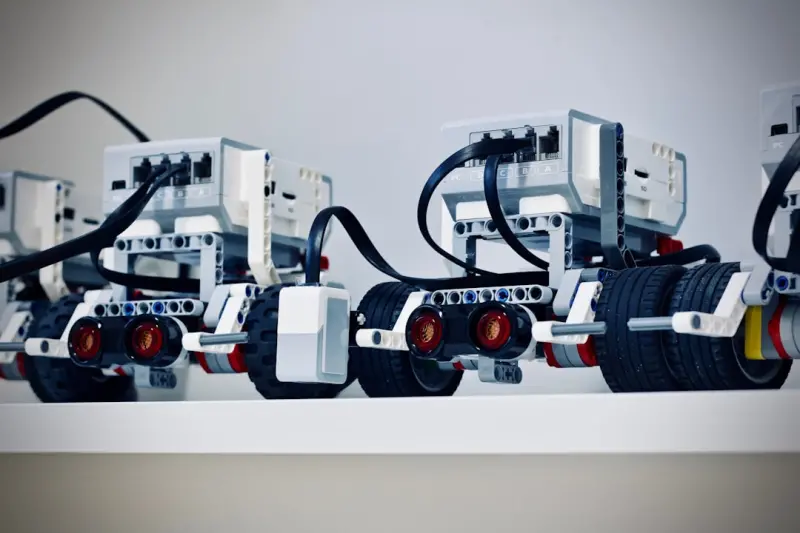
Modular Robotics: Reinventing Industrial Production
Discover how modular robotics and smart sensor networks are redefining manufacturing, offering flexible, cost‑effective, and sustainable solutions for todayâ€...Read More
Reimagining Media Agencies: From Story Factories to Narrative Engineers
Media agencies are evolving into narrative engineers, blending AI, real‑time data, and omni‑channel storytelling to create adaptive, emotionally resonant br...Read More

Reinventing Industrial Products for a Sustainable Future
Industrial products are undergoing a quiet revolution: modular design, clean power, and AI-driven efficiency are turning factories into sustainable innovators. ...Read More
0 Comments
Post Comment
You will need to Login or Register to comment on this post!