
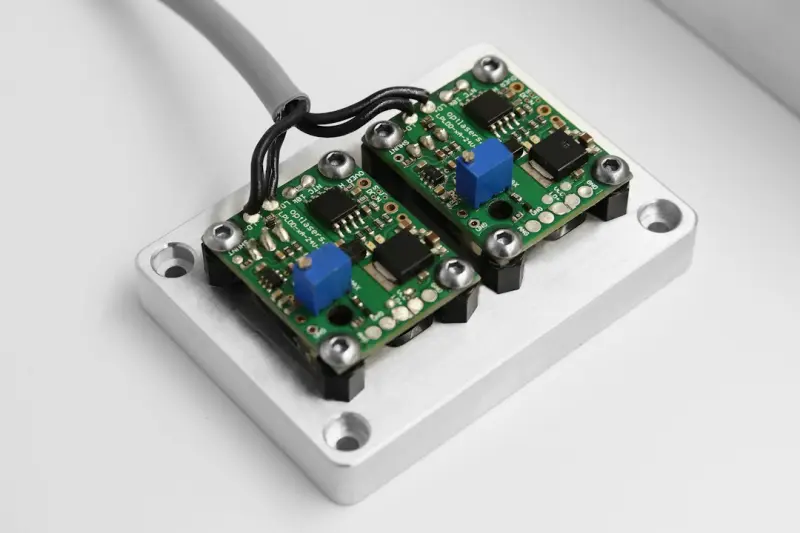
Smart Sensors Are the New Workhorses of Modern Factories
When I first stepped onto a bustling manufacturing floor a decade ago, the hum of massive machines was the soundtrack of progress. Today, that same floor buzzes with a subtler, yet far more powerful, rhythm: the steady chatter of smart sensors. These tiny, networked devices have become the unsung heroes of industrial transformation, turning ordinary equipment into data‑rich, self‑optimizing assets.
In this deep dive, I’ll walk you through why smart sensors matter, how they’re reshaping maintenance, and the strategic moves you need to make to stay ahead. We’ll explore the convergence of edge computing, ethical data handling, and the evolving skill set of the modern plant engineer—all through the lens of a pragmatic industrial insider who’s watched the shift from analog to digital unfold in real time.
Why Sensors Are No Longer an Afterthought
Historically, sensors were added to equipment as a “nice‑to‑have” feature—think temperature gauges or vibration meters that required manual reading. The value proposition was limited to occasional monitoring, and the data often sat in silos, never seeing the light of day beyond a maintenance log.
Fast forward to today, and the story is dramatically different:
- Real‑time visibility: Sensors now stream continuous data to dashboards, giving operators an up‑the‑second picture of machine health.
- Predictive insights: Machine‑learning models can predict failures days or weeks in advance, turning costly downtime into a scheduled event.
- Energy efficiency: By fine‑tuning processes on the fly, factories can shave off kilowatts of waste, directly impacting the bottom line.
- Safety enhancements: Immediate alerts on hazardous conditions protect workers and reduce compliance risk.
The shift from “reactive” to “proactive” is not just a buzzword—it’s a measurable ROI driver. According to recent industry surveys, plants that have fully integrated sensor networks report a 20‑30% reduction in unplanned downtime and a noticeable lift in overall equipment effectiveness (OEE).
The Edge Factor: Processing Data Where It Happens
Collecting data is only half the battle. The other half is making sense of it quickly enough to act. This is where edge computing steps onto the stage. By processing data at the source—right on the sensor or on a nearby gateway—plants avoid the latency and bandwidth costs of shuttling everything to a central cloud.
Edge devices can perform simple analytics, such as threshold alerts, as well as more complex inferencing using lightweight AI models. The result? Immediate, localized decision‑making that keeps production lines humming without waiting for a distant server to respond.
Consider a high‑speed stamping press equipped with vibration and temperature sensors. An edge node on the machine can detect a subtle shift in vibration patterns that precedes a bearing failure. Within seconds, it can trigger a controlled slowdown, alert the maintenance crew, and log the event—all without a round‑trip to the cloud.
Ethical Data Practices: Trust as a Competitive Lever
With great data comes great responsibility. As factories become data farms, the ethical handling of that information becomes a competitive differentiator. Companies that prioritize transparent data governance not only avoid regulatory pitfalls but also build trust with employees and partners.
Implementing ethical data practices means establishing clear ownership, consent, and usage policies for sensor data. It also involves anonymizing worker‑related metrics to protect privacy while still gaining insights into ergonomics and safety.
Beyond compliance, ethical data stewardship fuels innovation. When teams feel confident that their data is handled responsibly, they’re more willing to experiment with advanced analytics, sharing insights across departments and even with trusted suppliers.
From Data to Action: Building a Sensor‑First Culture
Technology alone won’t deliver the promised gains. The real transformation lies in how organizations embed sensor intelligence into daily workflows. Here’s a roadmap to foster a sensor‑first culture:
1. Align on Business Outcomes
Start with a clear definition of success. Is the goal to cut maintenance costs, improve product quality, or boost throughput? Mapping sensor KPIs to these outcomes keeps the effort focused.
2. Empower the Frontline
Operators are the first line of insight. Provide them with intuitive mobile dashboards that translate raw sensor streams into actionable alerts. Training should emphasize not just how to read data, but how to act on it.
3. Integrate with Existing Systems
Don’t build a parallel data silo. Connect sensor streams to your existing MES, ERP, or CMMS platforms. Seamless integration ensures that insights flow into the same decision‑making engines already in use.
4. Iterate with Fast Feedback Loops
Adopt an agile approach. Deploy a pilot on a single production line, measure impact, refine models, then scale. Quick wins generate momentum and justify further investment.
Choosing the Right Sensors: Not All Are Created Equal
With a dizzying array of sensor types—temperature, pressure, acoustic, optical, and more—the temptation is to buy everything at once. A disciplined selection process saves time and money.
- Fit for purpose: Match sensor specs to the environment. Harsh chemical plants need rugged, explosion‑proof devices, while clean‑room facilities benefit from non‑intrusive optical sensors.
- Communication protocol: Ensure compatibility with your network (e.g., MQTT, OPC-UA, or proprietary protocols).
- Power considerations: Battery‑operated sensors are ideal for retrofits where wiring is impractical, but they require low‑power consumption designs.
- Scalability: Look for modular sensors that can be easily added or re‑configured as the plant evolves.
Real‑World Success Stories
To illustrate the impact, let’s explore three diverse case studies that highlight how smart sensors are reshaping industrial landscapes:
Case Study 1: Automotive Paint Shop Reduces Defects by 15%
A major automotive OEM installed humidity and temperature sensors across its paint line. Edge analytics adjusted ventilation in real time, maintaining optimal curing conditions. The result? A measurable drop in coating defects and a faster cycle time.
Case Study 2: Food Processing Plant Cuts Energy Use by 10%
By deploying flow meters and temperature probes on steam lines, a food processor identified inefficiencies in its heat‑recovery system. Predictive control algorithms throttled steam generation during low‑demand periods, slashing energy consumption without compromising product safety.
Case Study 3: Wind Turbine Maintenance Becomes Predictive
A renewable energy firm equipped its turbines with vibration and blade‑load sensors. Cloud‑based analytics detected micro‑fractures months before they became critical, allowing maintenance crews to schedule replacements during planned downtime, avoiding costly emergency repairs.
Overcoming Common Challenges
While the promise is compelling, many organizations stumble on the implementation path. Here are the top hurdles and practical ways to navigate them:
Data Overload
Every sensor adds a stream. Without proper data governance, you can drown in noise. Implement data aggregation at the edge, filter out non‑critical readings, and set hierarchical alert thresholds to keep the signal clear.
Legacy Equipment Integration
Retrofitting older machines can seem daunting. Start with wireless, non‑intrusive sensor kits that attach to existing ports or use clamp‑on vibration probes. These solutions provide immediate value while you plan more extensive upgrades.
Cybersecurity Concerns
Networked sensors expand the attack surface. Adopt a zero‑trust model: authenticate each device, encrypt data in transit, and segment sensor traffic on dedicated VLANs. Regular firmware updates are essential to patch vulnerabilities.
Skill Gaps
The rise of sensor data demands new competencies—data analytics, edge programming, and IoT security. Upskill your workforce through targeted training programs and consider partnering with specialized IoT service providers for knowledge transfer.
The Future Outlook: From Sensors to Autonomous Factories
We’re standing at the cusp of a new industrial era where sensors will be the nervous system of autonomous factories. Imagine a plant that not only predicts failures but automatically orders spare parts, schedules repairs, and re‑optimizes production schedules without human intervention.
Key trends accelerating this vision include:
- Digital twins: Real‑time sensor feeds feed hyper‑accurate virtual replicas of physical assets, enabling simulation‑driven decision making.
- Federated learning: Edge devices collaborate to improve AI models without sharing raw data, preserving privacy while enhancing accuracy.
- 5G connectivity: Low‑latency, high‑bandwidth networks will support massive sensor deployments and real‑time control loops.
As these technologies converge, the competitive edge will belong to factories that have already mastered the fundamentals of sensor integration, data ethics, and edge processing.
Action Steps for Leaders Ready to Accelerate
If you’re a plant manager, operations director, or CTO reading this, here’s a concise checklist to kickstart your sensor journey:
- Audit existing equipment: Identify high‑impact assets where sensor data can deliver immediate ROI.
- Define clear metrics: Align sensor KPIs with business goals (e.g., MTBF improvement, energy reduction).
- Choose a scalable platform: Look for solutions that support edge analytics, secure onboarding, and seamless integration with legacy systems.
- Pilot with a focused use case: Start small—perhaps a single line or critical machine—and measure results.
- Establish data governance: Draft policies for data ownership, access, and ethical usage.
- Invest in talent: Upskill or hire for data science, IoT security, and edge development.
- Iterate and expand: Use pilot learnings to refine models, then roll out across the plant.
Remember, the journey from “sensor‑rich” to “sensor‑smart” is iterative. Each loop of data collection, insight generation, and action creates a feedback loop that fuels continuous improvement.
Closing Thoughts
Smart sensors are no longer a futuristic add‑on; they’re the backbone of modern industrial excellence. By embracing edge processing, upholding ethical data standards, and fostering a culture that values data‑driven action, manufacturers can unlock efficiencies that were once unimaginable.
As we look ahead, the factories of tomorrow will be defined not by the size of their machines, but by the intelligence woven into every bolt, bearing, and conduit. The question isn’t whether you’ll adopt smart sensors—it’s how quickly you’ll turn them into a strategic advantage.

Jessica Gills is a freelance writer carving a niche for herself by empowering others through her words. With a focus on careers, self-development, and business, she helps readers navigate the complexities of the modern professional landscape.
Related Posts

Modular Robotics: Reinventing Industrial Production
Discover how modular robotics and smart sensor networks are redefining manufacturing, offering flexi... Read More

Adaptive Modularity: Re‑Engineering Industrial Products for a Faster Future
Adaptive modularity turns heavy‑industry machines into upgradeable platforms, reducing change‑ov... Read More

Modular Mastery: Unlocking Hidden ROI in Industrial Products
Learn why modular architecture, smart sensors, and digital twins are the secret weapons industrial m... Read More
Top Posts

Building a Greener Playroom: DIY Upcycled Toy Kits for the Modern Family
A deep dive into sustainable, DIY toy kits that empower parents and kids to turn everyday recyclables into imaginative play, fostering creativity while protecti...Read More

How Media Agencies Are Turning Real-Time Data Into Creative Gold
Media agencies can transform the flood of live audience data into a dynamic creative engine, using AI, privacy‑first targeting, and sustainable practices to d...Read More

Regenerative Office Practices: Turning Workspaces into Net‑Positive Assets
Learn how to redesign your office’s material, energy, and digital loops to create a regenerative workplace that saves costs, attracts talent, and delivers mea...Read More

Cultivating a Sensory Garden: A Journey Beyond Aesthetics
Explore the philosophy, design steps, and plant choices needed to create a multisensory garden that soothes the mind, awakens the body, and enriches everyday li...Read More
0 Comments
Post Comment
You will need to Login or Register to comment on this post!