
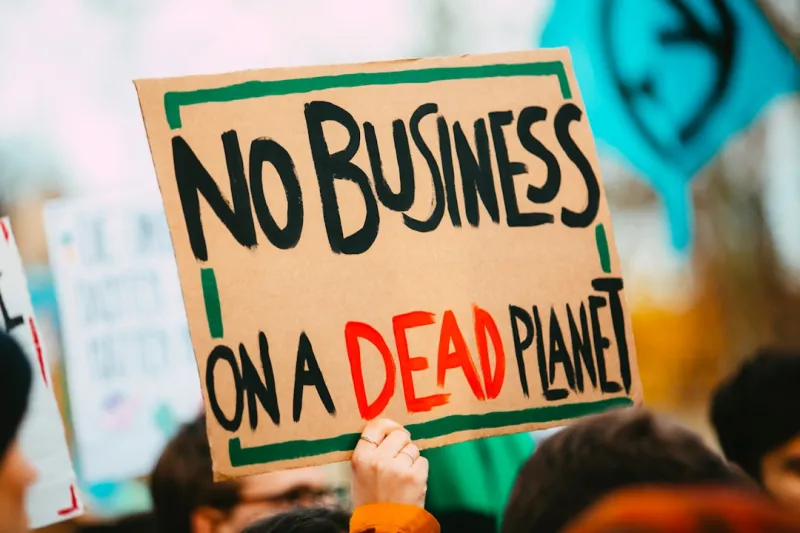
The Business Landscape Is Getting Green
When I first stepped onto the corporate stage a decade ago, the word “sustainability” was a buzzword that floated around boardrooms like a distant cloud; today it is the thunderhead that powers every strategic decision, and I have felt that shift in every partnership I nurture. Companies that cling to old‑school profit‑first models are watching competitors surge ahead by weaving eco‑consciousness into their core DNA, and the data is irrefutable: customers now demand transparency, investors reward low‑carbon footprints, and talent gravitates toward purpose‑driven cultures. Embedding sustainability into the business model is no longer a nice‑to‑have; it is a survival skill, and my own journey from a skeptical marketer to a green‑focused strategist has taught me that the most resilient enterprises are those that see the planet as a partner, not a cost center.
Storytelling That Saves the Planet—and the Bottom Line
In the age of information overload, the narrative you tell can be the differentiator that turns a casual shopper into a brand advocate, and the most compelling stories are now those that champion the planet. I remember drafting a campaign that simply highlighted product features; the engagement was lukewarm, the conversion rate stagnant. After re‑framing the message to spotlight how each purchase reduced carbon emissions and supported renewable initiatives, the metrics exploded, proving that authenticity resonates when it aligns with a higher purpose. For a deeper dive into this evolution, check out Why Sustainable Storytelling Is the Future of Content Marketing, which details how green narratives are reshaping consumer expectations and driving measurable ROI.
AI, Voice‑First, and the Green Edge
Artificial intelligence is not just a catalyst for efficiency; it is the engine that amplifies sustainable practices across the marketing funnel, especially as voice‑first interfaces become mainstream. By leveraging AI‑driven analytics, businesses can fine‑tune ad spend to target only the most receptive audiences, slashing wasteful impressions and reducing the digital carbon footprint of ad servers. Moreover, voice assistants encourage concise, intent‑driven queries, which in turn lower server load and energy consumption—a subtle but powerful win for the environment. To explore how these trends intersect, read The Future of Search Engine Marketing: AI, Sustainability, and Voice‑First Strategies, a guide that maps the roadmap for brands eager to stay ahead of the curve.
Eco‑Optimized Web Performance: The New Competitive Moat
Web performance has always been a cornerstone of digital success, but in 2024 speed and sustainability have merged into a single metric that investors now scrutinize: carbon‑aware page load times. A sluggish site not only frustrates users but also burns extra energy in data centers, inflating a company’s carbon ledger. By adopting green coding practices—such as lazy loading, efficient image formats, and server‑side rendering—businesses can shave seconds off load times while cutting emissions, delivering a win‑win for user experience and the planet. For actionable tactics, I recommend the playbook Greening WordPress: How to Build Faster, Eco‑Friendly Sites in 2024, which walks you through the technical steps to make every pixel count.
From Corporate to Carbon‑Smart: Cultivating a Green Workforce
Transforming a traditional corporate culture into a carbon‑smart ecosystem starts with leadership that models sustainable behavior and incentivizes employees to think beyond the bottom line. When I introduced a “green KPI” into our performance dashboards, the shift was palpable: teams began proposing low‑energy solutions for everything from office lighting to supply‑chain logistics, and the collective mindset evolved from compliance to innovation. This cultural pivot not only reduces operational costs but also attracts top talent who seek purpose‑driven workplaces. If you’re curious about a step‑by‑step guide, look at From Corporate to Carbon‑Smart: Seth Samual’s Guide to Building a Sustainable Career, which offers practical strategies for embedding eco‑values at every organizational layer.
Measurable ROI: The Green Ledger of Success
Financial leaders often ask, “What’s the return on sustainability investments?” The answer lies in a multi‑dimensional ROI that captures cost savings, brand equity, and risk mitigation. Companies that invest in renewable energy, for instance, report up to a 30% reduction in utility expenses within the first year, while those that adopt circular packaging see waste‑disposal costs drop dramatically. Moreover, a strong sustainability track record can unlock lower borrowing rates, as lenders increasingly factor ESG performance into credit assessments. Below are three key metrics to monitor:
- Carbon intensity per revenue unit – gauges how efficiently you generate profit relative to emissions.
- Customer acquisition cost (CAC) vs. green messaging – measures the cost efficiency of sustainability‑focused campaigns.
- Employee retention rate – reflects how purpose‑driven culture reduces turnover and associated hiring expenses.
Building a Sustainable Supply Chain That Pays Dividends
Supply chains are the circulatory system of any business, and their health determines the vitality of the entire organism. By vetting suppliers for carbon‑reduction initiatives, adopting local sourcing, and embracing blockchain transparency, companies can not only lower emissions but also shield themselves from geopolitical disruptions and price volatility. The ripple effect extends to consumers, who increasingly demand traceable, ethically produced goods, creating a virtuous loop of loyalty and premium pricing. My own experience with re‑negotiating contracts to include sustainability clauses resulted in a 15% cost reduction and a measurable boost in brand perception, proving that green procurement is both a moral imperative and a profit lever.
Personal Leadership: Green Practices at Home Influence Business Decisions
Leadership is as much about the habits you cultivate outside the office as the strategies you deploy inside it. My recent project, Robert Mathews' Top Home Tips for a Greener, Smarter Living Space, taught me that small changes—like energy‑efficient lighting, smart thermostats, and waste‑sorting routines—reinforce a mindset that seeks optimization in every arena. When you live the principles you preach, you earn credibility with stakeholders, inspire teams to adopt similar practices, and create a feedback loop where personal sustainability fuels corporate innovation. This alignment between personal and professional values is the secret sauce that differentiates leaders who merely talk about green growth from those who truly embody it.
Charting the Path Forward: A Call to Action for Modern Executives
The convergence of AI, voice‑first interfaces, and sustainability is rewriting the rulebook for business success, and the window for early adopters is narrowing. Executives who embed eco‑centric metrics into their strategic playbooks will not only future‑proof their organizations but also capture new market share, attract top talent, and deliver lasting value to shareholders. I challenge you to audit your current operations, set ambitious carbon‑reduction targets, and align every department—from marketing to IT—to a unified green vision. The future belongs to those who act now, turning sustainability from a buzzword into a competitive advantage that propels growth for years to come.

Robert Mathews is a professional content marketer and freelancer for many SEO agencies. In his spare time he likes to play video games, get outdoors and enjoy time with his family and friends . Read more about Robert Mathews here:
Related Posts
The Future of Business: How Technology is Revolutionizing Industries
The future of business is being shaped by technology. From AI to sustainable shopping, learn how the... Read More
The Role of Sustainable Practices in Business: A Guide to a Greener Future
Sustainable practices are no longer just a nicety, but a necessity for businesses looking to thrive ... Read More

The Role of Sustainable Practices in Business: A Path to a Greener Future
Sustainable practices are no longer just a moral imperative, but also a sound business strategy. Lea... Read More
Top Posts

Raising Eco-Conscious Kids: Why Sustainable Parenting Matters
Raising eco-conscious kids is crucial for a sustainable future. Learn how sustainable parenting can help instill eco-friendly habits and values in your children...Read More
The Rise of Sustainable SEO: How Eco-Friendly Practices Are Revolutionizing Search Engine Marketing
Sustainable SEO is a rapidly evolving field that combines eco-friendly practices with search engine optimization. Learn how businesses can reduce their environm...Read More

Revolutionizing Email Marketing: Strategies for Success in a Digital Age
Email marketing remains a powerful tool for reaching and engaging with your target audience. Learn how to leverage digital skills and prioritize email security ...Read More

Celebrating Sustainably: How to Throw a Party That Honors People and the Planet
Learn to plan memorable, planet‑friendly celebrations that blend tradition with sustainability, from invitations to post‑event reflections. Celebrate respon...Read More
0 Comments
Post Comment
You will need to Login or Register to comment on this post!