
Why Headless WordPress Is Gaining Momentum
WordPress has long been celebrated as a versatile all‑in‑one solution, but the rise of headless architecture is reshaping how developers think about the platform. By stripping the presentation layer from the core CMS, teams can deliver lightning‑fast experiences using modern JavaScript frameworks like React, Vue, or Svelte while still leveraging WordPress’s proven content‑management capabilities. This separation also opens doors to multi‑channel publishing—web, mobile apps, IoT displays, and even digital signage—all powered by a single source of truth. The shift is not merely a trend; it addresses real performance bottlenecks, improves scalability, and future‑proofs sites against ever‑changing front‑end ecosystems. As businesses demand richer interactivity and tighter integration with third‑party services, headless WordPress becomes the strategic bridge between familiar editorial workflows and cutting‑edge user experiences.
The Architecture: Decoupling Front‑End and Back‑End
At the heart of a headless setup lies a clean separation of concerns. The back‑end remains the trusted WordPress installation, exposing content through the REST API or GraphQL via the WPGraphQL plugin. Meanwhile, the front‑end lives in an entirely separate repository, often built with a static site generator (SSG) like Next.js or Gatsby. This architecture enables developers to pre‑render pages at build time, delivering static HTML that loads instantly, while still allowing dynamic content fetching for personalized sections. Moreover, the API‑first approach encourages reusability; the same endpoints can feed mobile apps, progressive web apps, or even voice‑assistant experiences. The result is a system where updates to the UI never jeopardize the stability of the CMS, and vice versa, fostering a more agile development cycle.
Choosing the Right Data Layer: REST vs. GraphQL
When decoupling WordPress, the choice between REST and GraphQL can feel like a pivotal decision. The native REST API offers simplicity and broad compatibility, making it ideal for quick prototypes and projects where granular queries are unnecessary. However, GraphQL shines when you need to fetch exactly the data you require, reducing over‑fetching and improving performance, especially on mobile networks. Implementing WPGraphQL adds a powerful schema layer, allowing front‑end developers to request nested fields in a single request. In practice, many teams adopt a hybrid approach: use REST for straightforward content pulls and reserve GraphQL for complex, relational data. Whichever path you choose, ensure proper authentication mechanisms—OAuth or JWT—are in place to protect your endpoints.
Performance Gains: From Server‑Side Rendering to Edge Caching
One of the most compelling reasons to go headless is the performance boost it delivers. By pre‑rendering pages at build time, you offload the heavy lifting from the WordPress server to a CDN edge network, dramatically reducing Time‑to‑First‑Byte (TTFB). Additionally, modern frameworks support incremental static regeneration, allowing you to update only changed pages without a full rebuild. Pair this with intelligent edge caching strategies—such as stale‑while‑revalidate—so users always receive fresh content without sacrificing speed. The combination of static assets and API‑driven dynamic sections creates a balanced experience where SEO‑critical pages load instantly, while interactive components remain up‑to‑date through background fetches.
Security Advantages of a Decoupled Setup
Separating the front‑end from WordPress inherently reduces the attack surface. Since the public site no longer serves PHP files directly, common vulnerabilities like file‑injection or outdated plugin exploits become less impactful. The API endpoints can be hardened with rate limiting, IP whitelisting, and strict authentication, while the front‑end remains a static bundle that can be hosted on a secure, serverless platform. Additionally, you can implement a zero‑trust model where every request to the CMS must present a valid token, effectively nullifying anonymous brute‑force attempts. This layered security posture not only protects content but also aligns with compliance standards that demand minimal exposure of backend services.
Integrating Third‑Party Services Seamlessly
Headless WordPress shines when you need to stitch together a best‑of‑breed tech stack. Whether it’s a recommendation engine, a marketing automation platform, or a custom analytics suite, the API‑first nature makes integration straightforward. You can pull content from WordPress, enrich it with data from a CRM, and display the combined result in a React component—all without writing custom PHP. For teams that rely heavily on automation, the no‑code automation playbook offers a wealth of pre‑built workflows that can trigger content updates, push notifications, or even sync media assets across cloud storage services. This modularity accelerates time‑to‑market and empowers non‑technical stakeholders to contribute to the digital experience.
SEO Considerations in a Headless World
Critics often claim that decoupling harms SEO because the front‑end is no longer generated by WordPress. In reality, modern frameworks provide robust solutions: server‑side rendering (SSR) and static site generation (SSG) ensure that search crawlers receive fully rendered HTML, preserving indexability. Moreover, you retain full control over meta tags, structured data, and canonical URLs via head management libraries like Next.js’s next/head. Implementing a sitemap generator that pulls URLs directly from the WordPress API keeps search engines informed of new content. For voice‑search optimization, consider how your content hierarchy aligns with conversational queries; the article “Why Voice Search is Redefining Google Strategies” dives deeper into tactics that complement a headless setup.
Future‑Proofing Your WordPress Investment
Adopting a headless approach is not a one‑time project; it’s a strategic evolution that safeguards your digital assets against rapid technological change. As new front‑end frameworks emerge, you can swap the presentation layer without touching the underlying CMS, preserving editorial continuity. This modularity also simplifies scaling: you can spin up additional front‑end instances to handle traffic spikes while the WordPress back‑end remains a stable, single source of truth. Furthermore, the API‑centric model positions your site to leverage emerging trends such as AI‑driven content personalization, progressive web apps, and even immersive experiences in AR/VR. By investing in a decoupled architecture today, you ensure that your WordPress foundation remains relevant and resilient for years to come.

Sanji Patel has dedicated 25 years to the SEO industry. As an expert SEO consultant for news publishers, he emphasizes providing both technical and editorial SEO services to news publishers worldwide. He frequently speaks at conferences and events globally and offers annual guest lectures at local universities.
Related Posts
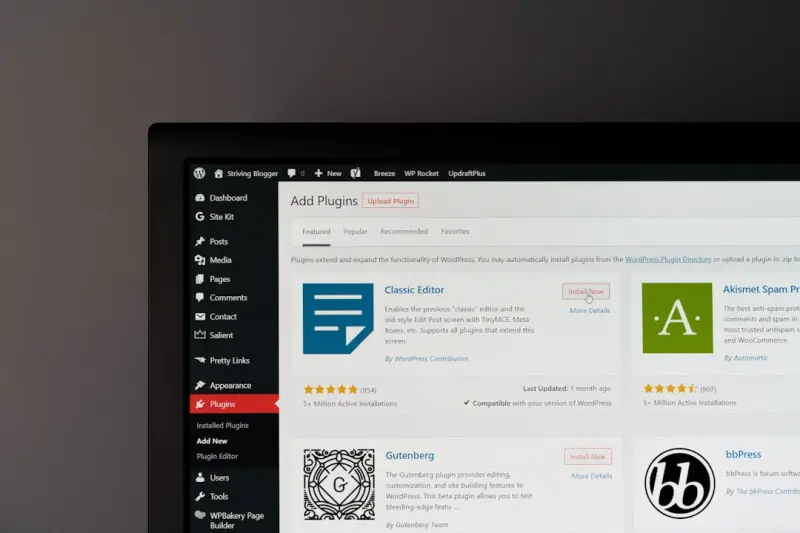
WordPress as the Enterprise Engine: Scaling Content, AI, and Security for Modern Businesses
Explore why WordPress is no longer just a blogging platform but a robust enterprise engine that supp... Read More

Turning WordPress Into a Scalable Learning Management System
Learn how to turn your WordPress site into a scalable learning platform using native tools, smart pl... Read More
From Blog Engine to Business Engine: Reimagining WordPress for Enterprise Use
Discover fresh ways to leverage WordPress beyond blogging—headless architecture, multisite network... Read More
Top Posts

The Impact of Google's Algorithm Updates on Search Engine Marketing
Google's algorithm updates have significantly impacted search engine marketing. Learn how to adapt and evolve your SEM strategies to stay ahead of the curve....Read More

Running the Green Race: How Sustainable Practices Are Shaping Modern Sports
Jessica Gills reveals how sustainability is redefining sports—from eco gear and green stadiums to athlete activism—offering fans practical ways to make a po...Read More

Adventure Gaming Meets the Outdoors
Adventure gaming blends real‑world exploration with interactive narratives, turning hikes into collaborative quests that enhance health, foster community, and...Read More

Design Systems as Living Organisms: Keeping Your UI Kit Agile and Sustainable
A design system shouldn’t be a museum piece. Learn practical ways to keep your UI kit evolving, performance‑focused, and sustainable, turning it into a livi...Read More
0 Comments
Post Comment
You will need to Login or Register to comment on this post!