
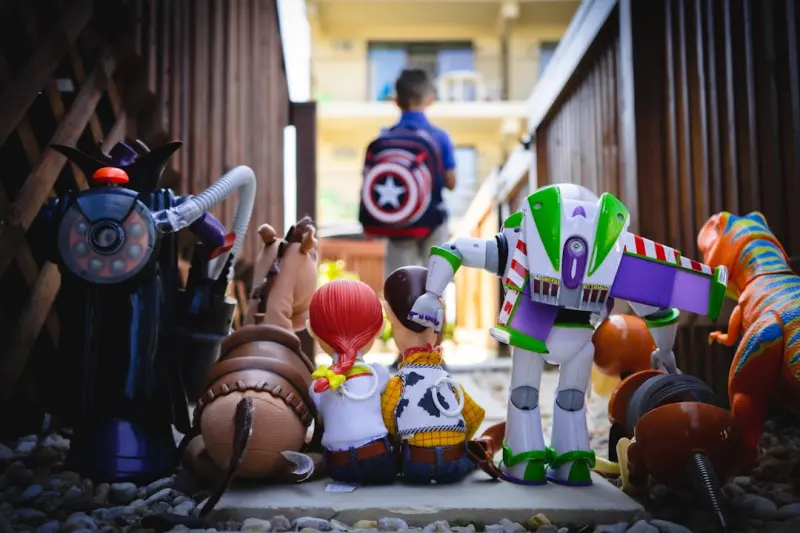
Imagine a toy that not only reacts to a child’s touch but also learns from their moods, anticipates their next question, and adapts its stories in real time. This isn’t a scene from a sci‑fi movie; it’s the emerging reality of AI‑driven play companions. As someone who’s spent a decade watching technology infiltrate every corner of our lives, I’m fascinated by how these smart toys are rewriting the rules of imagination, education, and even family dynamics.
Why AI in Play Matters More Than Ever
For years, parents have faced the paradox of wanting to keep kids engaged while steering them away from passive screen time. Traditional toys—blocks, dolls, puzzles—offer tactile richness but often lack the capacity to evolve alongside a growing mind. Conversely, tablets and video games adapt content but strip away the physical interaction that is critical for fine motor development.
The sweet spot lies in merging the two: a physical object infused with machine‑learning algorithms that can read a child’s voice, facial expressions, and movement patterns. When a plush rabbit senses a child’s excitement, it might speed up its storytelling; when it detects frustration, it could slow down, ask guiding questions, or suggest a new play scenario. This dynamic feedback loop creates a personalized learning environment that feels less like a lesson and more like a conversation with a trusted friend.
From “Smart” to “Sensitive”: The Evolution of Play Companions
Early attempts at smart toys were clunky, relying on pre‑programmed responses that quickly became predictable. Think of a robot that only says, “Hello! I’m Robo‑Buddy!” after being pressed. Modern AI toys, however, leverage natural language processing (NLP) and affective computing to understand nuance.
- Contextual Understanding: Using on‑device speech‑to‑text, the toy can differentiate between “Let’s play pirates!” and “I’m scared of the dark.” It then tailors its actions accordingly.
- Emotion Detection: By analyzing tone, pitch, and even micro‑expressions via built‑in cameras, the toy can gauge whether a child is joyful, puzzled, or upset, and respond in a supportive manner.
- Progressive Learning: Through federated learning, each interaction refines the underlying model without transmitting raw data to the cloud, preserving privacy while improving performance.
This progression from simple interactivity to true sensitivity is what separates a novelty gadget from a genuinely valuable developmental tool.
Design Challenges: Balancing Privacy, Safety, and Fun
When you hand a child a device that can listen, see, and learn, you open a Pandora’s box of ethical considerations. The most pressing concerns are data privacy and physical safety.
Data Privacy: Parents need assurance that their child’s voice recordings or facial snapshots aren’t being harvested for advertising. Leading manufacturers are adopting edge‑computing models where data never leaves the device, a concept echoed in the broader push for on‑device intelligence. Transparent privacy policies, regular audits, and opt‑in consent mechanisms are becoming industry standards.
Physical Safety: Small detachable parts, overheating batteries, and choking hazards remain concerns. Smart toys must meet rigorous safety certifications (e.g., ASTM F963) and undergo durability testing to survive the inevitable rough‑and‑tumble play that defines childhood.
Balancing these constraints while delivering a delightful experience is a design tightrope that only the most disciplined teams can walk.
Impact on Early Childhood Development
Researchers are beginning to map how AI‑enhanced toys affect cognitive, linguistic, and socio‑emotional growth. A few emerging trends include:
- Language Acquisition: Conversational toys that adapt vocabulary to a child’s level can accelerate word learning, especially for bilingual households.
- Problem‑Solving Skills: When a toy presents open‑ended challenges—like building a bridge with magnetic blocks—it can scaffold difficulty based on real‑time assessment of the child’s attempts.
- Emotional Regulation: By mirroring emotions and offering calming strategies (e.g., breathing exercises), AI companions can serve as early practice grounds for self‑soothing.
While the science is still evolving, early case studies suggest that when used responsibly, these toys can complement traditional learning methods rather than replace them.
Business Implications: New Revenue Models and Market Dynamics
From a B2B perspective, AI‑powered toys unlock a suite of monetization avenues that extend beyond the initial hardware sale.
- Subscription Content: Just as streaming services deliver fresh episodes, smart toys can receive monthly story packs, educational modules, or seasonal adventures via secure OTA updates.
- Data‑Driven Insights (Anonymized): Aggregated usage patterns can inform product roadmaps, highlight unmet educational gaps, and even guide third‑party content creators to design experiences that resonate with specific age brackets.
- Co‑Branding Opportunities: Entertainment franchises can license their IP to integrate characters into the toy’s AI persona, creating a win‑win for both the toy maker and the content owner.
These models, however, must be built on a foundation of trust. Parents will only invest in recurring services if they see clear value and know their child’s data is secure.
Real‑World Examples Lighting the Way
Several startups have already taken bold steps into this space. One notable product, StoryBot, is a plush owl that uses a proprietary NLP engine to co‑author bedtime stories with kids, pulling in the child’s name, favorite colors, and recent activities. Another, PlayPulse, integrates a soft‑robotic arm with affective sensors to respond to a child’s excitement level, altering the tempo of its interactive games.
These ventures illustrate how AI can transform a static toy into a dynamic partner. They also highlight the importance of iterative testing: early prototypes often stumble over false positives in emotion detection, leading to frustrating mismatches. Continuous refinement, user feedback loops, and cross‑disciplinary collaboration (engineers, child psychologists, educators) are essential.
Integrating AI Toys with the Broader Learning Ecosystem
Smart toys shouldn’t exist in isolation. The future belongs to ecosystems where a child’s AI companion syncs with tablets, smart speakers, and even classroom platforms. Imagine a scenario where a child’s nightly storytelling session with a plush companion feeds into a school’s reading comprehension dashboard, allowing teachers to see progress without compromising privacy.
This vision aligns with the co‑creating learning adventures philosophy, where technology amplifies parental involvement rather than replaces it. By providing parents with actionable insights—like “Your child showed interest in dinosaurs today”—the toy becomes a conduit for deeper, real‑world exploration.
Potential Pitfalls and How to Navigate Them
Even the most promising technology can go awry if not managed wisely. Common missteps include:
- Over‑Automation: Relying too heavily on AI may diminish spontaneous, unstructured play, which is crucial for creativity. Balance is key; set “offline” periods where the toy remains dormant.
- Bias in Algorithms: If training data isn’t diverse, the toy may misinterpret accents, cultural references, or emotional cues, leading to exclusionary experiences.
- Parental Over‑Reliance: Parents might lean on the toy to fill gaps in engagement, unintentionally reducing direct interaction. Encourage families to treat the toy as a facilitator, not a substitute.
Addressing these challenges requires transparent design documentation, regular bias audits, and clear usage guidelines for caregivers.
Looking Ahead: The Next Frontier of Play
The convergence of AI, advanced sensors, and affordable edge computing is setting the stage for a new generation of toys that are as empathetic as they are intelligent. In the coming years, we can expect:
- Multi‑Modal Interaction: Combining voice, touch, gesture, and even scent to create richer sensory experiences.
- Cross‑Device Continuity: A child could start a puzzle with a physical toy, continue it on a tablet, and finish it in an AR sandbox, all while the AI tracks progress.
- Community‑Driven Content: Parents and educators could co‑create modules, sharing them through curated marketplaces, much like app stores but tailored for play.
These innovations will not only reshape the toy aisle but also influence how we think about early education, family bonding, and the role of technology in nurturing the next generation’s imagination.
Conclusion: Embrace the Partnership, Not the Replacement
AI‑powered toys are not a silver bullet; they are powerful tools that, when wielded responsibly, can deepen the emotional and intellectual fabric of childhood. As we stand at this crossroads, the responsibility falls on designers, parents, and educators to ensure these companions amplify human connection rather than eclipse it. The future of play is bright, dynamic, and—most importantly—human‑centered.

Seth Samual is a name that's quickly becoming synonymous with compelling and insightful writing. As a freelance writer, Seth has carved a niche for himself by delivering high-quality content across a diverse range of subjects.
Related Posts
Why Open-Ended Toys Are the Secret Sauce for Creative Kids
Explore the power of open‑ended toys to unlock creativity, enhance learning, and build lasting ski... Read More
Desk‑Side Distractions: How Curated Toy Collections Boost Executive Focus
A strategic look at why adding high‑quality kinetic sculptures, modular building sets, and analog ... Read More
Playful Power Moves: How Modern Toys are Re‑energizing the Workplace
Modern toys are more than desk ornaments—they’re strategic tools that enhance creativity, teamwo... Read More
Top Posts

When Pixels Become Property: Decoding Copyright for AI‑Generated Art
A deep dive into the legal complexities surrounding AI‑generated art, covering authorship, jurisdiction, fair use, practical safeguards for creators, and the ...Read More

Raising Little Environmentalists: A Parent's Guide to Sustainable Living
As a parent, you have the power to shape your child's values and habits. Learn how to promote sustainable living and raise little environmentalists who care abo...Read More

Turning Search Queries into Revenue with an Intent‑First SEM Playbook
A fresh, intent‑driven approach to Search Engine Marketing reveals how micro‑moments, real‑time data, and low‑code automation can transform clicks into ...Read More

Turn Car Rides into Mini Science Labs for Curious Kids
Discover practical frameworks—Observation Stations, Question Cards, and Mini Experiments—to transform routine commutes into dynamic learning labs, fostering...Read More
0 Comments
Post Comment
You will need to Login or Register to comment on this post!