
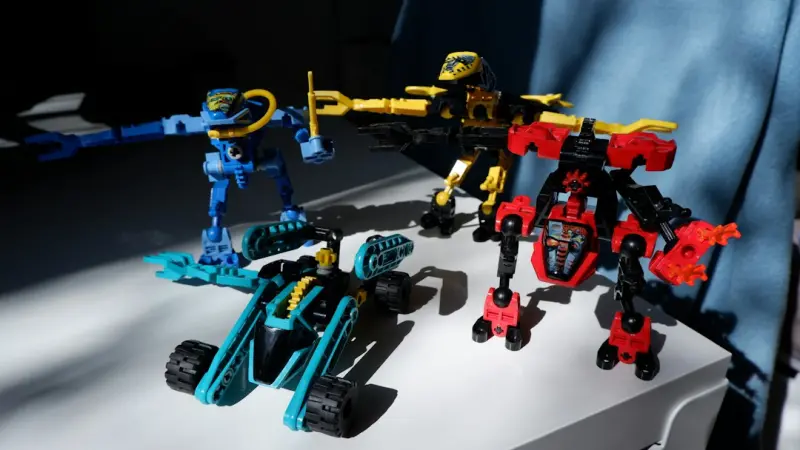
Why the Office Needs a Toy Box (and How to Fill It)
When I was a kid, the best ideas in my neighborhood sprang from a simple Lego set or a rubber‑band‑powered car. Fast forward to the corporate world, and those same tactile experiences are resurfacing as strategic assets. Companies that once relegated toys to the break‑room are now treating them as catalysts for creativity, collaboration, and employee wellbeing. This isn’t a nostalgic gimmick; it’s a data‑driven shift that aligns with the way our brains process information, solve problems, and recharge.
From “Desk Toys” to “Innovation Tools”
Historically, “desk toys” were an afterthought—fidget spinners, stress balls, or a stack of magnetic spheres meant to keep hands busy while the mind drifted. Today, the conversation has evolved. Modern toys are purpose‑built for the workplace, integrating learning science, team dynamics, and even digital safety. Think of programmable building blocks that teach basic coding concepts while fostering cross‑functional dialogue, or tactile puzzles that surface hidden communication patterns within a team.
These tools aren’t just for the “fun” factor. A learning‑in‑the‑flow approach shows that when employees engage in brief, hands‑on challenges during the day, their retention of new skills spikes by up to 70 %. The same principle applies to toys: short, playful interludes can embed learning without the cognitive overload of a formal training session.
The Science Behind Playful Workspaces
- Neuroplasticity Boost: Physical manipulation of objects triggers dopamine release, sharpening focus and reinforcing neural pathways tied to problem‑solving.
- Stress Reduction: Tactile play lowers cortisol levels, creating a calmer environment where strategic thinking can flourish.
- Social Cohesion: Collaborative toys demand communication, mirroring the dynamics of agile sprints and design‑thinking workshops.
Research from leading neuroscience labs confirms that a 10‑minute play break can improve subsequent task performance by up to 30 %. The trick is to make the toys relevant to the work at hand, not just decorative curiosities.
Choosing the Right Toys for Your Team
Not all toys are created equal. Here’s a quick decision matrix to help you match play objects to business outcomes:
- Idea Generation: Open‑ended construction kits (magnetic tiles, modular building blocks) encourage divergent thinking.
- Process Alignment: Puzzle‑based games that require step‑by‑step logic can simulate workflow mapping.
- Digital Literacy: Augmented‑reality (AR) kits that overlay code snippets onto physical objects bridge the gap between tactile and virtual learning.
- Wellness & Focus: Fidget devices with ergonomic design support micro‑breaks without distracting coworkers.
When selecting a toy, ask three questions:
- Does it align with a current business challenge?
- Can it be scaled for remote or hybrid teams?
- Does it reinforce a culture of safety, inclusion, or continuous learning?
Embedding Toys into Everyday Workflow
It’s one thing to buy a set of high‑tech building blocks; it’s another to weave them into the cadence of daily work. Here are three proven rituals that turn toys from novelty to necessity:
- Morning Warm‑Up: Allocate five minutes at the start of the day for a quick “build‑and‑share” challenge. Teams construct a model that represents a project milestone, then explain its symbolism in a stand‑up.
- Mid‑Sprint Play‑Pause: During a two‑week sprint, schedule a 15‑minute “play‑lab” where members swap roles and solve a tactile puzzle together. This cross‑pollination surfaces blind spots and promotes empathy.
- End‑of‑Week Reflection: Use a simple stackable toy to visualize what was achieved versus what’s pending. Physically moving a piece from “In‑Progress” to “Done” reinforces a sense of accomplishment.
These rituals echo the principles of digital hygiene—they’re low‑friction, repeatable, and embed safety into the habit loop. Just as you’d lock down a password, you lock in a play habit that protects mental bandwidth.
Case Study: A Remote‑First Startup’s Toy‑Powered Turnaround
Consider “Nimbus Labs,” a remote‑first SaaS startup that struggled with siloed communication. Leadership introduced a monthly “Innovation Play‑Box” containing:
- Modular robotics kits that required code uploads to move.
- Story‑telling dice that prompted users to craft narratives around product features.
- Physical “feedback cards” that could be pinned to a shared digital board.
Within three months, Nimbus reported a 22 % rise in cross‑team idea submissions and a 15 % reduction in meeting time—teams were already speaking a shared visual language forged during play. The key takeaway? Toys can serve as a lingua franca for distributed teams, translating abstract concepts into concrete, manipulable artifacts.
Sustainability & Ethical Sourcing: Toys That Align With Corporate Values
Modern employees care about the provenance of the objects they handle. When curating a toy collection, prioritize:
- Recycled Materials: Toys made from post‑consumer plastics or reclaimed wood reduce carbon footprints.
- Fair‑Trade Manufacturing: Certifications ensure that workers receive living wages, aligning with ESG goals.
- Modular Design: Products that can be reconfigured extend lifespan, minimizing waste.
By integrating sustainable toys, you reinforce corporate responsibility while giving employees tangible proof of your values.
Measuring Impact: From Playfulness to ROI
Any investment demands metrics. Here’s a simple framework to quantify the return on toy‑enabled initiatives:
| Metric | Method | Target Improvement |
|---|---|---|
| Idea Velocity | Count of new concepts logged per sprint | +20 % |
| Employee Net Promoter Score (eNPS) | Quarterly survey with play‑related questions | +10 points |
| Meeting Efficiency | Average meeting duration vs. agenda items covered | ‑15 % |
| Retention Rate | Annual turnover compared to baseline | ‑5 % |
These numbers aren’t magic; they’re a starting point for continuous iteration. Pair quantitative data with qualitative feedback—ask teams what the toys mean to them, and adjust the collection accordingly.
Future Trends: AI‑Enhanced Play and the Next Wave of Workplace Toys
Artificial intelligence is already infiltrating the toy market. Imagine a smart block that senses the structure you’re building, offers real‑time suggestions, or even translates a physical model into a 3D‑printed prototype. Such hybrid devices blur the line between play and production, turning a casual brainstorming session into a rapid‑prototyping sprint.
Another emerging trend is emotion‑responsive toys that use biometric sensors to gauge stress levels and suggest a break when needed. Coupled with corporate wellness platforms, these toys become proactive agents of digital‑first mental health, reinforcing the same principles championed in our digital hygiene initiatives.
Getting Started: Your First Play‑Box Blueprint
Ready to turn your office into a playground of productivity? Follow this three‑step rollout plan:
- Audit Your Needs: Identify pain points—lack of cross‑team communication, stagnant idea flow, or burnout.
- Select a Core Set: Choose 5‑7 versatile toys that address those needs. Start small; you can always expand.
- Pilot & Iterate: Run a 30‑day pilot with a single department, collect metrics, and refine the collection before scaling organization‑wide.
Remember, the goal isn’t to replace serious work with frivolity—it’s to embed a culture where playful curiosity fuels sustained performance.
Conclusion: Play Isn’t a Perk, It’s a Strategy
The line between work and play has always been porous; we’re finally learning to navigate it intentionally. By thoughtfully integrating toys into the fabric of daily operations, organizations can unlock hidden creativity, strengthen team bonds, and safeguard employee wellbeing. In an era where attention is fragmented and burnout looms, a well‑chosen toy can be the quiet catalyst that turns a routine day into a memorable, productive adventure.

Shawn DesRochers is a certified Microsoft technician and Programmer with 30+ year's experience. He has written many reviews on computer related products, software, and SEO related topics. When he's not writing reviews he can be found at one of the Oldest Directories Online Web Domain Authority which he is the CEO of.
Related Posts

Playful Futures: Sustainable, Smart, and Community‑Driven Toys Redefine Childhood
Discover the new wave of toys that blend sustainability, AI, and community collaboration, turning pl... Read More

Play Green: How Handcrafted Toys Transform Childhood
Explore the rise of handcrafted, eco‑friendly toys that spark creativity, teach responsibility, an... Read More
Building a Greener Playroom: DIY Upcycled Toy Kits for the Modern Family
A deep dive into sustainable, DIY toy kits that empower parents and kids to turn everyday recyclable... Read More
Top Posts

Tokenized Equity: A New Frontier for SaaS Fundraising
Tokenized equity transforms SaaS fundraising by turning shares into programmable digital assets, offering fractional ownership, real‑time liquidity, and autom...Read More

The Rise of Intent‑Driven Network Orchestration: Turning Business Goals Into Real‑Time Connectivity
Intent‑driven network orchestration shifts networking from manual configurations to business‑centric automation, enabling faster provisioning, Zero‑Trust ...Read More
The Evolution of Content Marketing: How Sustainability Can Elevate Your Strategy
Content marketing and sustainability are converging. Learn how to leverage eco-friendly values and practices to create more effective campaigns and drive busine...Read More

Learning at the Speed of SaaS: Adaptive Paths for Continuous Upskilling
A deep dive into building an adaptive learning culture for SaaS companies, leveraging no‑code tools, decision‑making frameworks, and AI‑coached paths to t...Read More
0 Comments
Post Comment
You will need to Login or Register to comment on this post!