
When Kids Call the Shots, Parents Learn to Adapt
There’s a common assumption that parenting is a one‑way street: adults set the rules, kids follow. In reality, the most memorable moments often happen when we step back and let our little ones dictate the agenda. Those spontaneous, child‑led episodes aren’t just adorable—they’re powerful training grounds for the very skills we think we already have.
The Science of Playful Power Shifts
Recent research in developmental psychology highlights that when children lead play, they practice decision‑making, negotiation, and risk assessment. Watching them navigate these challenges offers parents a front‑row seat to problem‑solving in its rawest form. It’s a reminder that expertise doesn’t always come from a textbook; sometimes it’s forged in the sandbox.
When a toddler decides that the living room rug is a “mountain” and the coffee table a “bridge,” the adult’s role morphs from authority figure to facilitator. We find ourselves asking, “How can we cross safely?” or “What tools do we need?” The answer is rarely a lecture; it’s a collaborative brainstorm.
Turning Everyday Chaos into Skill‑Building Sessions
Here are three practical ways to harness child‑directed moments for personal growth:
- Ask Open‑Ended Questions. Instead of saying, “Don’t climb on the couch,” try, “What do you think would happen if you climbed there?” This invites the child to think through consequences while prompting you to articulate your own reasoning.
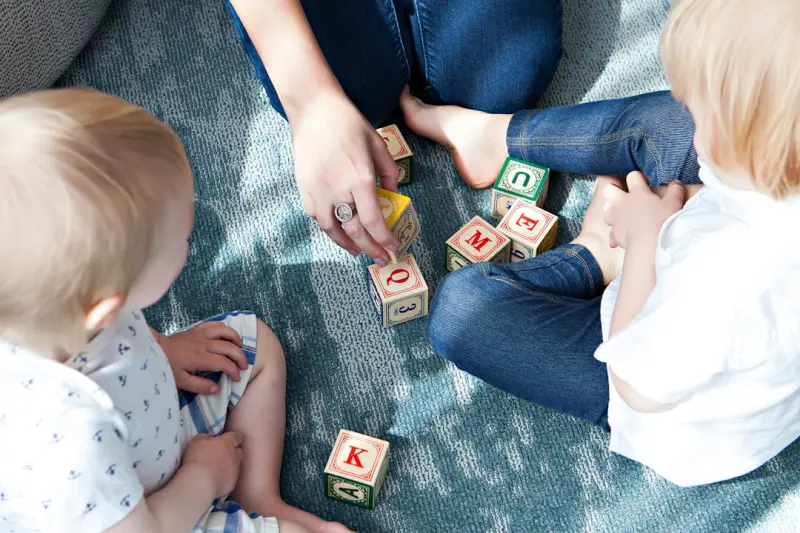
- Model Calm Problem‑Solving. If a tower of blocks topples, narrate the process: “Looks like the base is wobbly. How can we make it steadier?” Your calm demeanor sets a tone that you can carry into high‑pressure work meetings.
- Embrace the Imperfect Outcome. Not every experiment ends in success, and that’s okay. Celebrate the effort, not just the result. This mindset translates directly to professional projects where iteration is key.
Why “Kid‑Led Play” Is a Hidden Training Ground for Emotional Agility
Emotional agility—being able to pivot thoughts and feelings without getting stuck—is a buzzword in corporate circles, but it’s been practiced by parents for generations. When a child suddenly decides they’re “a chef” and wants to stir a pot of imaginary soup, the adult must juggle excitement, distraction, and sometimes a mess. Navigating that swirl builds tolerance for ambiguity, a trait prized in fast‑moving industries.
Moreover, child‑directed activities often surface emotions we might otherwise suppress. A sudden burst of frustration when a puzzle piece won’t fit can be a mirror for our own hidden irritations. Recognizing and naming that feeling in the moment—“I’m feeling impatient”—helps us develop a habit of emotional labeling that benefits both family life and boardroom discussions.
From Playroom to Workplace: Real‑World Transferable Skills
Consider these parallels:
- Negotiation. When siblings argue over a shared toy, the parent who steps in as a mediator practices give‑and‑take tactics that are directly applicable to contract discussions.
- Strategic Planning. Organizing a make‑believe treasure hunt involves mapping out steps, anticipating obstacles, and adjusting on the fly—exactly what project managers do daily.
- Creative Thinking. Turning a cardboard box into a spaceship requires reframing ordinary objects, a skill that fuels innovation in any field.
Integrating Technology Without Overcomplicating Play
While we often hear warnings about screens, the right tools can amplify learning without drowning the experience. For instance, using a simple timer app to track how long a “building challenge” lasts introduces concepts of time management. The key is to keep tech as a subtle enhancer, not the centerpiece.
Read more about how to leveraging tech without the noise and still maintain authentic, hands‑on interaction.
Building a Family Knowledge Base
Every family develops its own set of traditions, shortcuts, and inside jokes. Documenting these—whether in a shared notebook, a digital folder, or a simple voice memo—creates a living repository of what works and what doesn’t. Over time, this “family knowledge base” becomes a reference point for new challenges, much like a company handbook but infused with love.
Explore the concept of building a dynamic family knowledge base and see how it can streamline daily routines and reduce friction.
Turning Everyday Moments into Mini Adventures
One of my favorite tricks is to reframe routine chores as quests. “Let’s see if we can find three different textures in the backyard” turns a walk into a sensory exploration. Turning everyday moments into mini adventures not only keeps kids engaged but also reminds us adults to approach tasks with curiosity.
When the dinner prep becomes a “restaurant simulation,” you’ll notice your own creativity spiking. You start to think about plating, flavor pairings, and storytelling—skills that are surprisingly relevant in marketing, product design, and even client presentations.
Balancing Guidance with Freedom
It’s tempting to intervene the moment a child veers off a safe path, but stepping back a little can foster resilience. Of course, safety remains paramount; the goal isn’t to let kids wander unsupervised, but to allow them to test limits within a controlled environment. This balance mirrors the trust we extend to team members: provide the safety net, but let them take the leap.
Conclusion: Parenting as a Continuous Learning Lab
Every day, our children hand us a fresh experiment in communication, empathy, and creativity. By consciously leaning into their lead, we transform ordinary parenting into a dynamic learning lab. The skills honed in the playroom—flexibility, emotional awareness, collaborative problem‑solving—translate seamlessly to professional arenas, making us not just better parents, but also more adaptable, innovative contributors to any team.
So the next time your five‑year‑old declares they’re building a “rocket ship” out of couch cushions, grab a cushion, join the mission, and watch how that simple act reshapes your perspective on both family and work.

Tyler Johnson is a seasoned freelance writer with a keen eye for detail and a passion for crafting compelling narratives. His years of experience have honed his ability to adapt his style to suit diverse client needs and project requirements.
Related Posts
Raising Eco‑Savvy Kids in a Digital Age
From mindful morning routines to low‑impact tech habits, this guide shows how parents can nurture ... Read More

Raising Little Environmentalists: A Parent's Guide to Sustainable Living
As a parent, you have the power to shape your child's values and habits. Learn how to promote sustai... Read More

Let Kids Fail: The Unexpected Parenting Strategy That Builds Real Resilience
Giving children room to fail transforms everyday mishaps into powerful learning moments, building re... Read More
Top Posts

The Evolution of Sustainable Email Marketing: A New Era for Environmental Stewardship
As a seasoned expert in email marketing, Karen Edwards explores the intersection of email marketing and sustainability, and how businesses can adopt eco-friendl...Read More

The Internet's Secret Pulse: How Collective Bandwidth Shapes Tomorrow
The internet is evolving from a one‑way broadcast channel into a living ecosystem where user contributions become a shared bandwidth. This post examines the r...Read More
The Sustainable Plugin Playbook: How to Choose, Optimize, and Future‑Proof Your WordPress Tools
Learn to pick, optimize, and future‑proof WordPress plugins that deliver speed, security, and sustainability, ensuring a greener, faster site for your audienc...Read More

The Green Marketing Playbook: Turning Sustainability Into Brand Gold
Explore a fresh marketing roadmap that leverages eco‑friendly strategies, authentic storytelling, and data‑driven tactics to turn sustainability into a comp...Read More
0 Comments
Post Comment
You will need to Login or Register to comment on this post!