
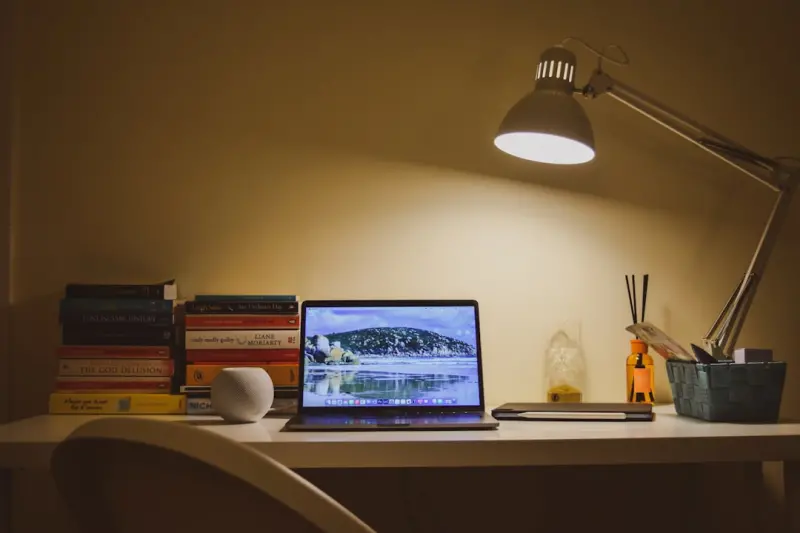
Light, Sleep, and the Hidden Health Toll of Your Desk Lamp
When the pandemic pushed millions of people into home offices, the humble desk lamp went from “nice to have” to “essential.” We all know that a well‑lit workspace can boost productivity, but what most professionals don’t realize is that the quality and timing of that light can silently sabotage sleep, mood, and even metabolic health. In this deep‑dive, I’ll unpack the science of circadian lighting, expose the most common lighting missteps, and give you a step‑by‑step playbook to turn your workbench into a health‑friendly hub.
The Biology of Light: Why Timing Matters More Than Brightness
Our bodies run on a 24‑hour internal clock known as the circadian rhythm. At its core, this rhythm is regulated by a tiny cluster of neurons in the hypothalamus that responds to light cues received through the eyes. When morning light hits the retina, a cascade of neurochemical signals tells the brain “it’s daytime,” suppressing melatonin (the sleep hormone) and boosting cortisol, which helps us feel alert.
Conversely, exposure to bright, blue‑rich light in the evening signals “still daytime,” keeping melatonin at bay. The result? Delayed sleep onset, reduced deep‑sleep stages, and a cascade of downstream effects—impaired glucose tolerance, heightened stress hormones, and a weakened immune response.
The Modern Desk Lamp: A Double‑Edged Sword
Most off‑the‑shelf desk lamps are designed for maximum luminous output, often using LED bulbs that emit a high proportion of short‑wavelength (blue) light. While this is great for reading documents or coding late into the night, it’s exactly what our circadian system interprets as “daytime.” The problem compounds when you pair that lamp with a future‑ready workstation that has a high‑resolution display—another source of blue light.
Studies show that just 30 minutes of exposure to blue light after 7 p.m. can shift melatonin production by up to two hours. For knowledge workers who clock out at 9 p.m. and then binge‑watch a series, the cumulative effect can be a chronic sleep debt that erodes cognitive performance over weeks and months.
Beyond Brightness: The Color Temperature Spectrum
Color temperature is measured in Kelvin (K). Warm light (≈2,700 K) mimics the amber glow of a sunset, while cool light (≈6,500 K) mirrors midday sunlight. Most desk lamps sit somewhere in the middle (≈4,000 K), which is a “neutral white” that looks crisp but still leans toward blue wavelengths.
- Morning (6 a.m.–10 a.m.): Aim for cooler light (4,500–5,500 K) to boost alertness.
- Mid‑day (10 a.m.–2 p.m.): Maintain a neutral temperature; this is the natural daylight window.
- Afternoon (2 p.m.–6 p.m.): Gradually shift toward warmer tones (3,500–4,000 K) to begin winding down.
- Evening (after 6 p.m.): Switch to warm amber (2,500–3,000 K) or use a “night mode” that filters out blue light.
Practical Strategies to Optimize Your Lighting Environment
Below is a tactical checklist you can implement today, regardless of budget.
- Invest in a tunable‑white lamp. Look for products that let you adjust color temperature with a dial or app. Brands now offer Bluetooth‑enabled fixtures that sync with your calendar, automatically shifting hues as the day progresses.
- Leverage ambient lighting. Overhead fixtures should complement, not compete with, your desk lamp. Use dimmable LEDs that you can set to a warm hue after work hours.
- Adopt screen‑filtering software. Programs like f.lux or built‑in “night shift” modes can reduce blue light output from monitors after sunset. Pair this with a warm desk lamp to create a cohesive low‑blue environment.
- Introduce “dark‑adaptation” breaks. Every 90 minutes, spend a few minutes away from screens in a dimly lit space. This helps reset retinal sensitivity and reduces eye strain.
- Consider smart blinds or blackout curtains. Natural light is the gold standard for circadian regulation. If you can’t control outdoor light, simulate sunrise and sunset using programmable LEDs that gradually brighten and dim.
- Use a sound‑optimized environment to reinforce the visual cues. Soft, low‑frequency ambient sounds (like a rain track) can signal “relaxation time,” helping your brain transition from work mode to wind‑down mode.
- Pair lighting with nutrition. A light snack containing tryptophan (e.g., a banana or a handful of almonds) after you dim the lights can support melatonin synthesis.
The Role of Wearables: Measuring Light Exposure in Real Time
Modern health trackers now include photodiodes that log ambient light intensity and spectrum. By reviewing daily exposure reports, you can see whether you’re hitting the ideal “golden window” of daylight (roughly 30–60 minutes of bright light before 10 a.m.) and whether you’re overexposed to blue light after sunset. Use these insights to fine‑tune your lighting schedule, just as you would adjust sleep or activity goals.
Case Study: A Remote‑First Tech Team Reduces Burnout by 27%
One fast‑growing SaaS company piloted a “circadian lighting protocol” across its distributed workforce. They shipped each employee a tunable‑white lamp, installed smart blinds in home offices, and integrated a custom Slack bot that reminded users to switch to warm light at 7 p.m. After three months, the company reported:
- 27% drop in self‑reported burnout scores.
- 15% improvement in average deep‑sleep duration (measured via wearable data).
- 12% increase in next‑day focus metrics, as captured by a proprietary productivity dashboard.
The success hinged on two principles: visibility (making the lighting change obvious) and automation (removing the decision fatigue of remembering to adjust the lamp).
Integrating Voice‑Activated Assistants for Seamless Transitions
Voice assistants have moved beyond setting reminders; they now control smart home ecosystems, including lighting. By linking your lamp to a platform like Alexa or Google Assistant, you can issue simple commands—“Hey Siri, set my desk light to warm at 8 p.m.”—to enforce your evening routine without breaking concentration.
For teams already leveraging voice search for SEO, the same technology can be repurposed internally. A quick voice‑activated assistant can trigger a “focus mode” that dims lights, reduces notification volume, and plays a curated ambient soundscape.
Designing a Health‑First Workspace: The Bigger Picture
While lighting is a powerful lever, it works best when integrated with other ergonomic considerations:
- Ergonomic seating. A chair that supports lumbar curvature reduces musculoskeletal strain, which in turn lowers cortisol levels.
- Screen height. Position your monitor so the top edge aligns with eye level, minimizing neck flexion.
- Movement breaks. Pair visual cues (like a dimming lamp) with timed micro‑stretch alerts to keep circulation flowing.
- Air quality. A small indoor plant or an air purifier can improve oxygen saturation, enhancing cognitive clarity.
When these elements harmonize, you create a holistic health ecosystem that not only supports productivity but also protects long‑term well‑being.
Future Trends: Adaptive Lighting Powered by AI
Emerging AI platforms are learning to predict individual circadian needs based on usage patterns, sleep data, and even mood inputs. Imagine a lamp that automatically shifts from cool to warm as your calendar indicates a late‑night meeting, or that dims when your wearable detects elevated heart‑rate variability (a stress marker). These smart fixtures will soon become a staple in “bio‑responsive” workspaces.
As we move toward increasingly data‑driven health interventions, the line between “technology” and “wellness” blurs. The next frontier will be devices that not only illuminate but also listen—using ambient microphones to gauge stress levels and adjusting lighting accordingly, all while preserving privacy through edge‑processing.
Takeaway Checklist: Your 7‑Day Light Reset
Kickstart your health‑focused lighting overhaul with this simple plan:
- Day 1: Audit your current lamp—note brightness (lumens) and color temperature (Kelvin).
- Day 2: Install a tunable‑white bulb or replace the lamp with a smart fixture.
- Day 3: Set a schedule: cool light 6 a.m.–12 p.m., neutral 12 p.m.–4 p.m., warm after 4 p.m.
- Day 4: Sync the lamp with your voice assistant; test a command like “Set warm light at 8 p.m.”
- Day 5: Enable screen‑filtering on all devices; align it with your lamp schedule.
- Day 6: Add a brief 5‑minute dark‑adaptation break after lunch.
- Day 7: Review wearable data; adjust timing if you notice delayed sleep onset.
By the end of the week, you should feel a subtle but measurable shift: clearer focus during the day, smoother wind‑down at night, and a deeper, more restorative sleep.
Conclusion: Light as a Low‑Cost, High‑Impact Health Hack
We often chase expensive gadgets or complex software solutions to boost performance, yet the simplest lever—light—offers a profound, evidence‑backed boost to both mental and physical health. By aligning your desk lamp with your body’s natural rhythms, you’re not just improving illumination; you’re investing in better sleep, sharper cognition, and a resilient immune system. In a world where remote work is here to stay, mastering circadian lighting is the silent competitive advantage that can keep you and your team thriving.

Seth Samual is a name that's quickly becoming synonymous with compelling and insightful writing. As a freelance writer, Seth has carved a niche for himself by delivering high-quality content across a diverse range of subjects.
Related Posts

Unlocking the Healing Power of Breath: A Simple Practice for Modern Stress
Learn why conscious breathing is a science‑backed stress buster, how to integrate it into daily li... Read More

Reclaiming Play: How Real‑World Fun Boosts Mental and Physical Health
Play isn’t just child’s work—it's a powerful health tool. This article explains the science be... Read More

Why Gut Health Is the New Frontier for Whole‑Body Wellness
A fresh look at gut health reveals its power over immunity, mental clarity, and daily energy—plus ... Read More
Top Posts
Why Low‑Code Platforms Are the Unsung Heroes of Digital Transformation
Low‑code platforms are reshaping how enterprises build applications, delivering speed, cost savings, and broader talent involvement without sacrificing qualit...Read More
AI‑First Development Platforms: Accelerating Software Creation with Intelligent Partners
AI‑first development platforms are reshaping software creation by pairing intelligent code generation with structured data, delivering faster prototypes, demo...Read More
The Rise of Biophilic Interiors: How Nature Can Boost Your Work‑From‑Home Performance
Discover how integrating plants, natural light, sustainable materials, and smart technology can turn any home office into a biophilic sanctuary that enhances fo...Read More
The Hidden Power of Game Soundtracks: How Music Shapes Play
Explore how dynamic game soundtracks transform player experience, boost performance, and foster community, with insights from indie innovators to future AI‑dr...Read More
0 Comments
Post Comment
You will need to Login or Register to comment on this post!