

Why Traditional Content Funnels Are Crumbling
For the past decade, most of us in B2B SaaS have measured content success by the classic funnel: impressions → clicks → leads → conversions. It worked when buying cycles were long, decision‑makers were siloed, and information was scarce. Today, that linear path feels more like a dusty hallway than a bustling marketplace. Your audience isn’t a static audience any more; they’re a dynamic conversation that moves in multiple directions, often looping back on itself.
What used to be a one‑way broadcast now demands a two‑way exchange. Prospects expect to be heard, to co‑create, and to see your brand as a trusted partner rather than a distant vendor. When we cling to the old funnel mindset, we end up with impressive click‑through numbers but a shallow pool of truly engaged advocates.
The Conversational Pivot: From Monologue to Dialogue
Imagine you’re at a networking event. You wouldn’t spend the entire evening monologuing about your product; you’d ask questions, listen, and adapt your story on the fly. The same principle applies to digital content. The pivot is simple in theory—shift from “talking at” to “talking with”—but the execution requires a new set of habits.
Ask, don’t tell. Every piece of content should conclude with a genuine invitation: a poll, a challenge, a request for a story. The goal is to surface the reader’s own insights and weave them back into the narrative.
Respond in real time. Leverage chat widgets, social listening tools, and even AI‑enhanced comment moderation to turn a static blog post into an evolving dialogue. When a reader leaves a comment, reply within minutes, not days.
These tactics aren’t just nice‑to‑have; they’re the backbone of a conversion model that turns readers into brand advocates. When people feel heard, they’re far more likely to champion your message to their peers.
Building a Community Engine Around Your Content
Community isn’t a buzzword; it’s the engine that fuels sustainable advocacy. Think of your content library as the fuel station, and the community as the engine that converts that fuel into motion. Here’s how to build that engine:
- Identify micro‑communities. Within your broader market, there are sub‑groups—by industry niche, tech stack, or even job function. Tailor content hubs that speak directly to each slice.
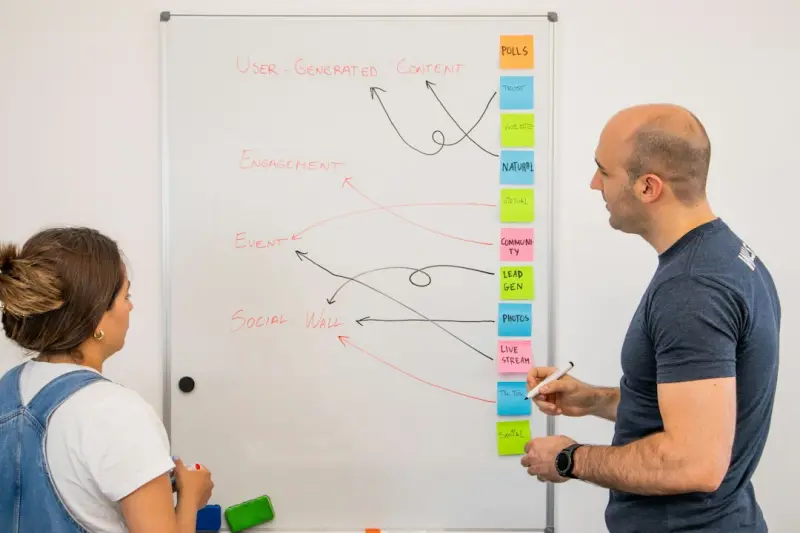
- Empower user‑generated narratives. Invite customers to share case studies, “day‑in‑the‑life” snapshots, or even short video testimonials. Feature these stories prominently, turning customers into co‑authors.
- Reward participation. Badges, exclusive webinars, or early access to product features can incentivize community members to keep the conversation alive.
When you give your audience a platform to speak, you’re not just collecting testimonials—you’re cultivating a living, breathing brand narrative that evolves with every contribution.
Data‑Driven Narrative Maps: Knowing What to Say When
Content shouldn’t be created in a vacuum. The most effective pieces are built on a solid map of audience intent, emotional triggers, and decision‑making timelines. Here’s a three‑step framework I’ve refined over years of SaaS campaigns:
- Intent clustering. Use search analytics, forum threads, and social listening to group topics by buyer intent (awareness, evaluation, purchase). Each cluster gets a narrative arc tailored to its stage.
- Emotion overlay. Attach emotional descriptors—frustration, ambition, curiosity—to each cluster. This tells you the tone and storytelling technique that will resonate most.
- Micro‑moment mapping. Identify the exact moments when a prospect is most receptive (e.g., after a webinar, during a product trial). Align content delivery to those moments for maximum impact.
This map becomes your strategic compass, ensuring that every blog post, whitepaper, or video lands at the right place in the reader’s journey.
Micro‑Moments and Interactive Playbooks
Micro‑interactions are the tiny, delightful details that keep a user engaged—hover states, subtle animations, instant feedback. In content marketing, we can borrow that concept to design interactive playbooks that guide readers step‑by‑step through complex ideas without overwhelming them.
Consider a SaaS pricing guide. Instead of a static table, break it into a series of interactive cards. As the reader clicks “I’m a small team,” the next card reveals pricing tiers tailored to that segment. Each click feels like a mini‑conversation, reinforcing the sense that the content is responding directly to the reader’s needs.
These micro‑moments also generate valuable data. Track which pathways get the most clicks, where users drop off, and refine the experience accordingly. It’s a virtuous loop of insight and iteration.
When AI Becomes Your Co‑Creator
Artificial intelligence is no longer a futuristic experiment; it’s a practical partner in content creation. By integrating AI tools that understand your brand voice, you can generate first drafts, suggest topic clusters, or even personalize copy at scale.
In my own workflow, I treat AI as a brainstorming teammate. I feed it the narrative map, it spits out a handful of headline variations, and I select the ones that feel most authentic. The result is a faster ideation cycle and a richer pool of creative options.
Read more about how AI can augment your product team in AI as a Co‑Creator. The key takeaway? AI doesn’t replace the human touch; it amplifies it, letting you focus on the strategic conversations that truly move the needle.
Putting It All Together: A Blueprint for Action
Below is a concise, actionable checklist you can roll out this quarter:
- Audit your existing content. Map each piece to the intent clusters and emotional overlays described above.
- Introduce conversational hooks. Add at least one poll, question, or CTA that invites a response to every new article.
- Launch a micro‑community hub. Choose a niche segment, create a dedicated forum or Slack channel, and start seeding user‑generated stories.
- Design an interactive playbook. Pick a high‑traffic piece (e.g., pricing guide) and rebuild it with micro‑interactions that adapt to user choices.
- Deploy AI assistance. Set up a content‑generation pipeline that drafts outlines based on your narrative map, then let human editors refine.
- Measure and iterate. Track engagement metrics (comments, shares, time on page) and micro‑moment click paths. Use these insights to refine your next round of content.
Implementing these steps transforms your content from static assets into a living conversation that continuously nurtures and converts. The payoff? A tribe of readers who not only buy your product but also evangelize it across their networks.
Final Thoughts
Content marketing is at a crossroads. The old funnel still has a place, but the future belongs to brands that can turn every piece of content into a dialogue, a community catalyst, and a data‑driven narrative engine. By embracing conversational tactics, micro‑interactions, and AI co‑creation, you’ll move beyond “clicks” and start building genuine advocacy.
Remember, the most powerful brand stories aren’t told by the company alone—they’re co‑written by the very people you aim to serve. Let’s give them the mic.

Karen Edwards is a seasoned freelance writer with a passion for all things furry, feathered, and scaled. With a dedicated focus on pets, she brings a wealth of knowledge and a keen eye for detail to her writing.
Related Posts

Crafting a Narrative Funnel: How Content Sequencing Drives B2B Growth
Learn how arranging content into a narrative funnel—through pillars, episodes, and data‑driven t... Read More

The Evolution of Content Marketing: How Sustainability Can Elevate Your Strategy
Content marketing and sustainability are converging. Learn how to leverage eco-friendly values and p... Read More

The Symphony of Content Orchestration: Turning Disparate Assets into a Cohesive Buyer Journey
Discover a step‑by‑step framework for turning isolated blog posts, videos, and assets into a coh... Read More
Top Posts

Unlocking Google’s AI Playbook for B2B SaaS Success
Discover how to leverage Google’s integrated AI, data, and security services to streamline SaaS workflows, boost observability, and gain a competitive edge in...Read More
Learning in the Flow: Turning Work Hours into Growth Hours
A fresh take on corporate education shows how embedding micro‑learning into everyday workflows, powered by AI and secure knowledge hubs, transforms work hours...Read More

The Silent Threat: Deepfake Voice Scams Are Infiltrating B2B Dealings
Scammers are now using AI‑generated voices to impersonate executives, leading to costly fraud. This article reveals the tactics behind deepfake voice scams an...Read More

Driving the SaaS Revolution: How Intelligent Platforms Are Steering Modern Fleets
A deep dive into how predictive maintenance, resilient networking, subscription models, and AI‑driven driver experiences are turning traditional fleets into d...Read More
0 Comments
Post Comment
You will need to Login or Register to comment on this post!