
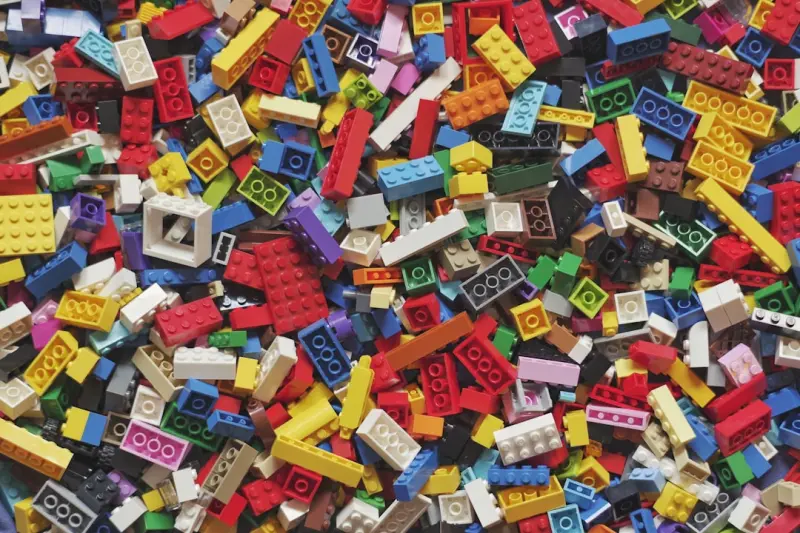
From Playroom to Boardroom: How Toy Engineering Fuels Modern Product Innovation
When I was a kid, the clatter of building blocks and the whirr of a wind‑up robot were more than just noise – they were early lessons in systems thinking, rapid prototyping, and iterative design. Today, as a product leader watching the SaaS landscape evolve at breakneck speed, I keep returning to that same playground mindset. The toys we loved as children aren’t just nostalgic relics; they’re blueprints for how we can engineer better software, craft more resilient teams, and stay ahead of the competition.
The Playroom as a Mini‑Lab
Think about the classic construction set that lets you snap together pieces in countless configurations. Each piece has a defined interface, a clear function, and a set of constraints that guide how it can be combined. In product development, those constraints become the minimum viable product (MVP) rules, while the snapping mechanism mirrors the APIs and integrations we build today. The biggest advantage of this approach? Speed without sacrificing clarity.
Modern toys have taken that concept further. tangible toys renaissance has reminded us that physical feedback loops—clicks, clicks, and the satisfying “clunk” of a piece locking into place—are incredibly powerful for learning. When we translate that tactile immediacy into software, we get features like real‑time validation, instant visual feedback, and micro‑animations that confirm user actions. The result? Higher adoption rates and fewer support tickets.
Iterative Play: Prototyping at the Speed of Childhood
Kids don’t wait for a perfect design before they start playing. They assemble, test, break, and rebuild in minutes. That “fail‑fast” instinct is the cornerstone of agile development, yet many enterprises still get bogged down in exhaustive requirement gathering before they ship anything tangible. By borrowing the rapid‑iteration loop of a child building a LEGO skyscraper, product teams can:
- Launch a minimum viable experience within days rather than months.
- Gather real‑world data from early adopters to inform the next iteration.
- Encourage cross‑functional collaboration, because everyone—from designers to engineers—can see the physical prototype and contribute ideas.
In practice, this means setting up “play stations” during sprint reviews where stakeholders can physically manipulate mockups or digital twins of the product. The visual and tactile cues spark conversations that might never happen over a slide deck.
Designing for Diverse Minds: Lessons from Inclusive Play
Just as a well‑designed toy must be accessible to kids of varying abilities, a successful SaaS solution must serve a diverse user base. The principles behind designing for neurodiversity—clear visual hierarchy, predictable interactions, and optional sensory controls—are directly applicable to UI/UX design. By integrating these concepts early, product teams reduce the need for costly retrofits later on.
For example, offering a “focus mode” that strips away non‑essential UI elements can help users with attention‑related challenges stay on task. Similarly, providing multiple ways to accomplish the same action (keyboard shortcuts, voice commands, drag‑and‑drop) mirrors how toys often have several methods to achieve a goal, catering to different play styles.
Storytelling Through Play: Building Emotional Connections
Every great toy tells a story. Whether it’s a superhero figure defending a city or a puzzle that reveals a hidden image, the narrative hooks children emotionally, prompting repeat play. In SaaS, storytelling is equally vital. Users need to see how a feature fits into their larger business narrative.
One technique borrowed from the toy industry is the use of progressive unlocks. Think of a child earning new accessories for a doll as they complete tasks. In software, gamified onboarding—where users unlock advanced modules after mastering basics—creates a sense of achievement and deepens engagement.
Material Matters: Sustainable Play and Product Longevity
While sustainability has been a hot topic for office spaces, it’s just as critical in the world of toys. Companies that shift to recycled plastics, biodegradable components, and modular designs are not only reducing waste but also extending the life cycle of their products. The same philosophy applies to SaaS platforms.
By building modular, decoupled services—akin to a toy that can be re‑configured with new parts—organizations can replace or upgrade components without a full system overhaul. This approach reduces technical debt and aligns with the growing demand for environmentally responsible tech solutions.
Cross‑Pollination: When Toy Engineers Meet Software Architects
It may sound whimsical, but collaborations between toy designers and software architects are already happening. One startup partnered with a leading toy manufacturer to create a smart building block that syncs with a cloud‑based learning platform. The hardware provides tactile feedback, while the software tracks progress, suggests challenges, and adapts difficulty in real time.
Such partnerships illustrate a broader trend: the convergence of physical and digital play. For B2B SaaS, this means exploring hardware‑as‑a‑service models, AR‑enhanced training tools, and IoT integrations that bring the “feel” of a toy into enterprise workflows.
Practical Takeaways for Product Teams
Ready to infuse your product roadmap with toy‑inspired vigor? Here are five actionable steps:
- Adopt a “sandbox” mindset. Allocate time each sprint for free‑form experimentation, just like a child with a box of blocks.
- Make feedback tangible. Use visual cues, sounds, or haptic responses to confirm user actions instantly.
- Design for modularity. Break down features into interchangeable components that can be upgraded or swapped.
- Embed storytelling. Create a narrative arc for onboarding, guiding users from novice to expert through milestones.
- Prioritize inclusivity. Test your UI with diverse user groups and incorporate accessibility options from day one.
When you start treating your product development process like a playroom—full of curiosity, rapid prototyping, and inclusive design—you’ll find that innovation becomes less a forced sprint and more a natural, enjoyable flow.
Looking Ahead: The Future of Play‑Driven Innovation
The next wave of toys will likely blend AI, AR, and sustainability in ways we can’t fully predict yet. As those technologies mature, the lessons they teach us about iteration, user engagement, and ethical design will become even more valuable for SaaS leaders. By staying attuned to the evolving landscape of play, we ensure that our products remain fresh, resilient, and deeply human.
So the next time you see a child proudly displaying a newly built contraption, remember: that same spark of curiosity could be the catalyst for the next breakthrough feature in your platform. Embrace the playroom mindset, and watch your product—and your team—grow in ways you never imagined.

Shawn DesRochers is a certified Microsoft technician and Programmer with 30+ year's experience. He has written many reviews on computer related products, software, and SEO related topics. When he's not writing reviews he can be found at one of the Oldest Directories Online Web Domain Authority which he is the CEO of.
Related Posts
The Future of Play: How Sustainable Toys are Revolutionizing the Industry
The toy industry is evolving towards more sustainable practices. Learn about the benefits of sustain... Read More
When Play Gets Hands‑On: Rediscovering Tangible Toys in a Screen‑Heavy World
A deep dive into the rise of tactile, DIY toys that blend physical building with digital tools, offe... Read More
When Play Becomes a Platform: The New Age of Smart, Modular Toys
Smart, modular toys are reshaping play into a platform for learning, collaboration, and sustainabili... Read More
Top Posts

Predictive Send Times: Turning Email Into a Personal Concierge
Learn why sending emails at the perfect moment matters, how to implement predictive send‑time optimization without a data‑science team, and the measurable r...Read More

Learning at the Speed of SaaS: Adaptive Paths for Continuous Upskilling
A deep dive into building an adaptive learning culture for SaaS companies, leveraging no‑code tools, decision‑making frameworks, and AI‑coached paths to t...Read More
Invisible Guardians: A Fresh Blueprint for Kids Safety
Learn how to create an invisible‑guardian safety system that blends play‑centric design, predictable routines, subtle tech, and eco‑friendly practices, le...Read More

Transform Your Apartment into a Pet‑Friendly Sanctuary
Living in a compact apartment doesn’t mean compromising your pet’s happiness. Learn practical, budget‑friendly hacks to create a pet‑friendly sanctuary ...Read More
0 Comments
Post Comment
You will need to Login or Register to comment on this post!