
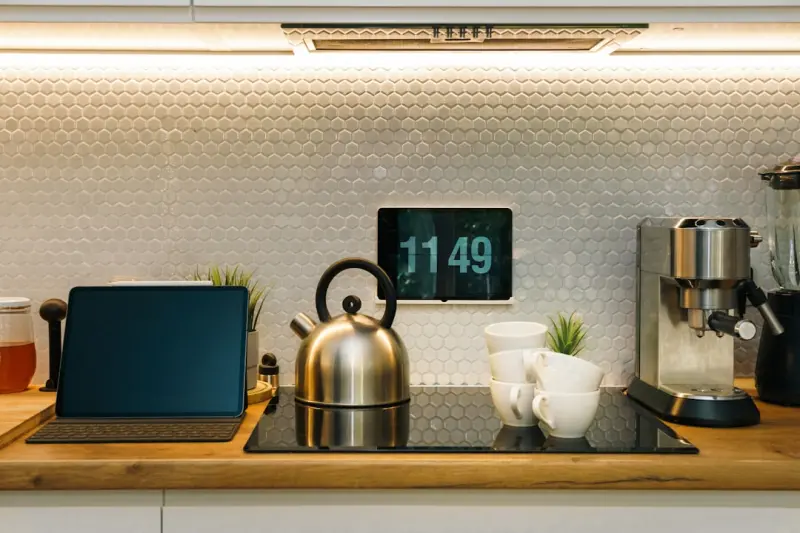
From Cold Metal to Warm Companion: Re‑thinking the Role of Home Appliances
When I was a child, the hum of the refrigerator was just background noise, and the oven was a distant, almost mythical beast that only appeared on weekends. Fast‑forward to today, and the same appliances have become silent sentinels that learn my schedule, adjust their energy draw, and even remind me to replace the water filter before it starts to taste like the bottom of a pond. I’ve spent the last decade watching the tech world chase headlines about AI, micro‑services, and endless APIs, but the most profound shift I’ve observed is happening right in the kitchen, laundry room, and bathroom—where the devices we once called “appliances” are quietly turning into personal assistants.
In this post, I want to walk you through three intertwined trends that are redefining what it means to own a home appliance: (1) the rise of human‑centered, data‑light design, (2) the emergence of a modular design philosophy that treats appliances like living organisms, and (3) the convergence of mobile‑first control with real‑world reliability. Together, these forces are turning a refrigerator into a conversation starter, a washing machine into a health coach, and a thermostat into a silent therapist.
Human‑Centered Design: Making Appliances Feel Like Friends, Not Tools
Designers have long been obsessed with making products beautiful. In the world of consumer electronics, that obsession translated into sleek glass panels and minimalist icons. Appliances, however, have a stubborn legacy of being utilitarian—think boxy white refrigerators and noisy, clunky dryers. The new wave of designers is challenging that narrative by asking a simple question: How does this machine make me feel?
The answer, surprisingly, isn’t about adding more bells and whistles. It’s about reducing friction, honoring privacy, and creating moments of delight that happen without a single tap on a screen. For instance, a new generation of dishwashers now features “quiet cycles” that adapt to the time of day, automatically lowering spin speeds after 9 pm to avoid waking up a sleeping baby. A smart fridge can subtly dim its interior lights when it detects you’re reaching for a midnight snack, preserving both your sleep and your energy bill.
This human‑centered approach also means data lightness. While many devices collect a torrent of telemetry to feed corporate dashboards, the most loved appliances are those that keep the data exchange to a minimum—just enough to personalize the experience without feeling intrusive. Think of a washing machine that learns how often you run a load and prompts you only when it detects an unusually high water usage, rather than bombarding you with daily notifications.
In practice, these subtle gestures translate into deeper brand loyalty. A family that trusts its refrigerator to keep the produce fresh and to whisper a gentle reminder about the expiring milk is far more likely to stay with that brand for the next decade. The quiet, almost invisible, empathy that these appliances display is what separates a product that simply works from one that truly belongs in your home.
Modular Design Philosophy: Building Appliances Like LEGO Sets
When I first read about the modular design philosophy in smartphones, I was skeptical. Phones are small, personal devices; appliances are massive, stationary, and often considered disposable after a few years. Yet the same principles apply: design for upgradeability, repairability, and longevity.
Imagine a dishwasher where the motor, pump, and control board are all separate, interchangeable modules. If the pump fails after two years, you don’t have to replace the entire unit—you simply snap in a new module, much like swapping a LEGO brick. This approach has three cascading benefits:
- Environmental impact drops dramatically. By extending the usable life of core components, fewer appliances end up in landfills, and manufacturers can source fewer raw materials.
- Consumers save money. Instead of paying the full price for a new machine, they invest in a single component, keeping the overall cost of ownership low.
- Innovation accelerates. Manufacturers can release new features—like a more efficient motor or a smarter sensor—without redesigning the whole appliance, allowing faster iteration and better user experiences.
Several forward‑thinking brands have already begun offering “upgrade kits” for their ovens, allowing users to add a convection mode or a built‑in steam function years after the original purchase. This modular mindset aligns perfectly with the growing consumer demand for sustainability and transparency. In a market saturated with throwaway culture, the ability to “future‑proof” a product is a compelling differentiator.
Mobile‑First Control: The Power of Your Phone in the Hand of Your Fridge
We’ve all seen the hype around mobile‑first appliance control. What’s less discussed is how this integration reshapes the relationship between human and machine. When a device can be commanded from your phone, it becomes an extension of your will, not a separate entity you must physically interact with.
Take the example of a smart thermostat that learns your weekly schedule and automatically adjusts the temperature. The real magic happens when you’re on a business trip: a quick glance at your phone tells you the house is still at 68 °F, and with a single tap, you raise it to 72 °F so the living room is warm when you arrive. The thermostat isn’t just a sensor; it’s a collaborative partner that anticipates your needs and lets you confirm or override those predictions in real time.
What’s crucial here is the design of the mobile experience. A cluttered app with endless settings can overwhelm users and erode trust. Successful brands focus on clarity: a single “Energy Saver” toggle, a concise “Filter Needs Replacement” alert, and a visual timeline that shows when the next maintenance window is due. By keeping the mobile interface intuitive, manufacturers reinforce the perception that the appliance is a friend, not a technical puzzle.
Trust and Transparency: Building a Data Relationship That Doesn’t Feel Like Surveillance
Data is the lifeblood of smart appliances, but it’s also the source of anxiety. When a fridge starts suggesting grocery lists based on what it sees inside, many users feel like they’re being watched. To overcome this, manufacturers are embracing a new covenant of trust by design. This means:
- Providing clear, plain‑language privacy policies that explain what data is collected and why.
- Giving users granular control over data sharing—allowing them to opt out of non‑essential analytics without breaking core functionality.
- Ensuring data is processed locally whenever possible, reducing the need to send information to the cloud.
When an appliance can operate fully offline, it not only safeguards privacy but also improves reliability during internet outages—a common pain point for many households. The most successful products today are those that make privacy a feature, not an afterthought.
From Purchase to End‑of‑Life: Rethinking the Appliance Lifecycle
The traditional appliance journey is simple: you buy, you use, it eventually breaks, and you replace. This linear model is unsustainable both environmentally and financially. Forward‑thinking companies are now introducing “circular” models that treat the product as a service.
One innovative approach is a subscription‑style ownership model for high‑end kitchen appliances. For a monthly fee, customers receive the latest model, free maintenance, and an easy upgrade path. When it’s time to switch, the company handles the removal, recycling, and refurbishing of the old unit. This not only reduces waste but also aligns the manufacturer’s incentives with product longevity—because they profit from keeping the appliance in the best condition possible.
Even without a full subscription, manufacturers can offer “take‑back” programs where old appliances are collected and either refurbished for resale or responsibly recycled. By integrating these services into the product’s digital ecosystem, users receive reminders to schedule pick‑ups directly from the appliance’s companion app.
Energy Intelligence: Turning Appliances Into Grid Partners
Energy grids worldwide are under pressure to integrate renewable sources, which are often intermittent. Smart appliances can act as flexible loads, shifting their operation to times when renewable energy is abundant. A washing machine, for instance, can delay its spin cycle by a few hours to align with peak solar production, earning a small credit on the homeowner’s bill.
These demand‑response capabilities are most effective when appliances can communicate directly with utility platforms, a process that requires robust, secure APIs and clear standards. While the technology is still evolving, early adopters are seeing tangible benefits: lower electricity costs, reduced carbon footprints, and a sense of contribution to a greener grid. For the homeowner, this translates into a subtle but powerful feeling of agency—your appliances are not just consuming energy; they’re helping manage it.
Designing for the Senses: The Quiet Revolution of Sound and Light
We often overlook the sensory impact of appliances. A dishwasher that rattles loudly can be a source of daily stress, while a refrigerator that emits a soft, reassuring hum can become a comforting background sound. Designers are now employing acoustic engineering and subtle lighting cues to create appliances that blend into the home’s soundscape rather than dominate it.
For example, many premium ovens now feature “soft‑close” doors that glide silently, and refrigerators are equipped with “night‑mode” lighting that glows faintly, preserving the darkness of a bedroom while still providing enough illumination to locate a midnight snack. These seemingly minor adjustments contribute to an overall perception of quality and thoughtfulness.
Future Outlook: The Appliance as an Extension of Human Intent
Looking ahead, the most compelling vision I have for appliances is one where they act as extensions of human intent. This isn’t about AI replacing decision‑making; it’s about machines that amplify our intentions while respecting our autonomy. A coffee maker that knows you need a caffeine boost before a big meeting, a dryer that adjusts its cycle based on humidity levels, or a water heater that syncs with your shower schedule to provide instant warm water—all these scenarios reflect a future where appliances anticipate, adapt, and collaborate.
Achieving this vision requires a holistic approach: modular hardware that can evolve, software that respects privacy, and mobile experiences that keep control intuitive. When brands succeed in weaving these threads together, the appliance transcends its mechanical origins and becomes a trusted partner in daily life.
As we stand at the intersection of sustainability, technology, and human‑centered design, the humble appliance is poised for a renaissance. It will no longer be a background fixture; it will be a personal, adaptable, and responsible member of the household. And that, dear reader, is a story worth sharing.

Mei Chen is a dynamic professional who brings a unique blend of skills to Blogging Fusion. As a key contributor to the Blogging Fusion platform, she leverages her writing expertise to create engaging content that resonates with our audience.
Related Posts

How to Outsmart Hidden Appliance Energy Drains and Cut Your Bills
Learn how to spot silent energy vampires in your home, use tools and smart strips to cut standby pow... Read More
Smart Appliance Strategies for a Flexible, Future‑Ready Home
Learn practical tips for selecting, maintaining, and future‑proofing home appliances that fit your... Read More
Connected Kitchens: The New Wave of Integrated Appliances
A deep dive into the rise of integrated, data‑driven kitchen appliances, highlighting sustainabili... Read More
Top Posts

Why Car Subscription Services Could Be Your Next Smart Move
Explore the rise of car subscription services, their economic advantages, tech-driven convenience, and sustainability impact, guiding you to smarter, flexible m...Read More

The Impact of Sustainable Practices on the Toy Industry
The toy industry is undergoing a significant transformation, driven by growing demand for sustainable and eco-friendly products. Learn how sustainable practices...Read More

Desk‑Side Distractions: How Curated Toy Collections Boost Executive Focus
A strategic look at why adding high‑quality kinetic sculptures, modular building sets, and analog puzzles to executive workspaces can reset the brain, spark c...Read More
Rethinking Security: Adaptive Zero‑Trust for Dynamic SaaS Environments
A deep dive into adaptive zero‑trust for SaaS, outlining principles, lifecycle integration, automation, and real‑world results to build resilient, future‑...Read More
0 Comments
Post Comment
You will need to Login or Register to comment on this post!