
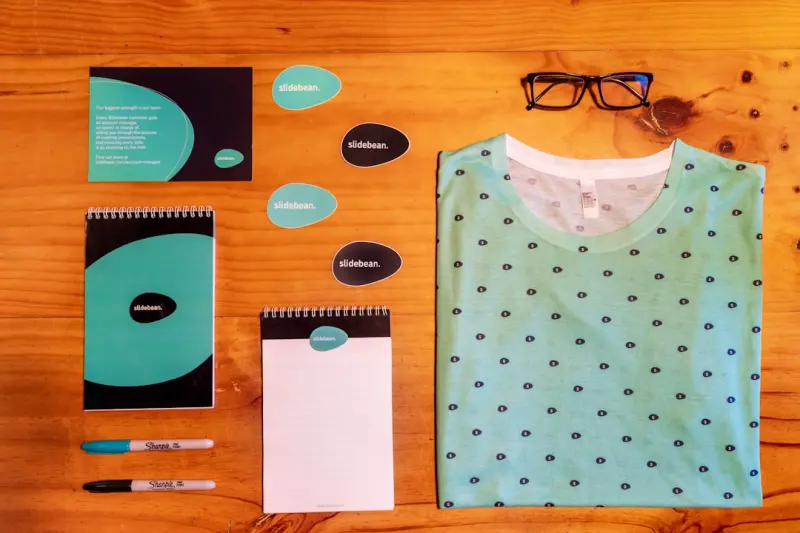
Why Brand Identity Is No Longer a Static Logo, But a Living Experience
When I first walked into a SaaS conference ten years ago, booths were plastered with glossy logos and a handful of tagline cards. Fast‑forward to today, and the same space feels like a kinetic art installation—people are drawn in by immersive soundscapes, on‑demand demos that adapt to their mood, and community lounges where strangers become brand ambassadors before they’ve even signed a contract.
That shift isn’t a coincidence; it’s the inevitable outcome of a market that demands experience over exposition. In the B2B world, the decision‑makers you’re courting have a short attention span and a long list of alternatives. If your brand can’t evolve from a static signpost to a dynamic, conversation‑driven ecosystem, it will be left behind.
The Three Pillars of a Living Brand
To make your brand feel alive, focus on three interlocking pillars that I call the Brand Pulse, the Brand Narrative, and the Brand Community. Each pillar feeds the others, creating a feedback loop that keeps your identity fresh, relevant, and, most importantly, human.
- Brand Pulse: The real‑time signals that tell you how your brand is being perceived—social sentiment, usage patterns, support tickets, and even the cadence of internal Slack emojis.
- Brand Narrative: The story you tell, not just in marketing copy but through product UI, customer success interactions, and data‑driven storytelling. Think of it as the “voice” that your product speaks every time a user clicks a button.
- Brand Community: The tribe of users, partners, and even critics who co‑create the brand experience. This isn’t a forum you bolt on; it’s a living, breathing extension of your product.
Brand Pulse: Listening to the Unspoken Metrics
Traditional brand health surveys are useful, but they’re akin to taking a temperature with a mercury thermometer in a world that now uses infrared scanners. You need a continuous monitoring system that captures both explicit feedback (NPS, surveys) and implicit signals (feature adoption curves, support churn, even the frequency of “Help” clicks).
Start by mapping these data points onto a simple dashboard that updates every 15 minutes. When you see a sudden dip in “feature X” usage, investigate whether the UI is confusing, the onboarding video is outdated, or perhaps a competitor just launched a copycat feature. The goal is to turn every data blip into a brand insight.
When you embed these insights back into your product roadmap, you’re not just fixing bugs—you’re aligning the brand’s promise with the lived experience of your users.
Brand Narrative: From Data to Human‑Centric Stories
Storytelling used to be the domain of marketers. Today, AI‑augmented brand storytelling lets product managers, engineers, and customer success teams co‑author the narrative in real time. Imagine a dashboard that automatically generates a “customer success story” the moment a user hits a milestone, pulling in usage stats, sentiment scores, and even the user’s own comments.
This approach does two things:
- Humanizes data. Numbers become relatable anecdotes that sales can weave into demos.
- Accelerates trust. When a prospect sees a real‑time story of how a peer solved a problem, the perceived risk drops dramatically.
To get started, pick a single KPI—say, “time to first value”—and let an AI model draft a narrative each time that KPI improves for a customer. Review, refine, and publish. Within weeks you’ll have a library of authentic stories that reinforce your brand promise without sounding like a press release.
Brand Community: The Secret Engine Behind Sustainable Growth
Community is no longer a “nice‑to‑have” side project; it’s the core of a living brand. A private social community can serve as both a feedback loop and a distribution channel. Think of it as a private clubhouse where early adopters, power users, and even skeptics gather to share hacks, request features, and celebrate wins.
Here’s how to make that clubhouse work for your brand:
- Curate, don’t broadcast. Instead of posting generic announcements, create micro‑threads that target specific personas—e.g., “Data Engineers: How to Optimize Your Pipelines” vs. “C‑Level: Measuring ROI in Real Time.”
- Gamify contributions. Badges, leaderboards, and exclusive beta invites turn participation into a status symbol, reinforcing the community’s value.
- Co‑create product roadmaps. Open a “Feature Voting” channel where members can upvote ideas. Publicly acknowledge the top contributors and let them see their suggestions move into development.
The result is a virtuous cycle: engaged members become brand advocates, their advocacy brings in new users, and the influx of fresh perspectives fuels the next round of narrative and pulse updates.
Interactive Touchpoints: Turning Static Content into Live Experiences
One of the most underrated ways to make a brand feel alive is to inject interactivity into the very content you deliver. Traditional PDFs or static landing pages are dead weight in a world where attention is a kinetic energy. By leveraging interactive email experiences, you can transform a simple newsletter into a mini‑product tour.
Imagine an email that lets a prospect toggle between “Feature A” and “Feature B” right inside their inbox, or a carousel of user‑generated case studies that updates based on their industry tag. These micro‑interactions signal that your brand is responsive and modern, and they provide fresh data for the Brand Pulse dashboard.
Implementing this isn’t as complex as it sounds. Most email service providers now support AMP for Email, allowing you to embed forms, carousels, and even live chat widgets. Start small: replace your monthly roundup with an interactive version that asks readers to vote on their biggest pain point. The votes become instant pulse data, and the respondents feel heard.
From Brand Guardrails to Brand Growth Levers
Many companies treat brand guidelines as a set of rigid rules—fonts, colors, voice tones—locked away in a PDF that nobody reads. That mindset stifles the living brand you’re aiming to build. Instead, think of brand guidelines as growth levers that adapt as the brand evolves.
Here’s a practical framework to make guidelines dynamic:
- Versioned Style Guides. Every quarter, release a “Brand Update” that includes new visual assets, tone adjustments, and usage examples drawn from recent community conversations.
- Live Asset Library. Host your brand assets in a cloud repository with usage analytics. When a designer pulls an icon, you instantly see where it’s being used and can recommend alternatives if it’s overused.
- Feedback Loop. Allow any team member to suggest a tweak to the brand guide via a simple form. If the suggestion gathers enough internal votes, schedule it for the next version.
This approach turns a static document into a collaborative, data‑driven tool that evolves with the brand pulse and narrative.
Measuring the ROI of a Living Brand
Critics will ask: “All of this sounds nice, but how do you prove it moves the needle?” The answer lies in tying your brand metrics back to revenue‑impacting outcomes.
- Customer Acquisition Cost (CAC) Reduction. A strong community can lower CAC by up to 30% as referrals replace paid ads.
- Expansion Revenue. Brands that deliver consistent, data‑driven narratives see higher cross‑sell rates because existing users trust the brand’s promise.
- Churn Mitigation. Real‑time pulse alerts let you intervene before a dissatisfied user leaves, reducing churn by an average of 15% in pilot studies.
When you map each pillar’s KPI to a financial metric, you can build a business case that convinces even the most skeptical CFO.
Getting Started: A 90‑Day Blueprint
Implementing a living brand doesn’t happen overnight. Here’s a pragmatic 90‑day plan to get your team from static to dynamic:
- Week 1‑2: Pulse Mapping. Identify 5‑7 core signals (e.g., NPS, feature adoption, community sentiment). Build a dashboard with a tool like Datadog or Looker.
- Week 3‑4: Narrative Sprint. Choose one high‑impact KPI and create an AI‑augmented story template. Pilot it with two key accounts.
- Week 5‑6: Community Launch. Set up a private Slack or Discourse community. Invite 20 power users and seed the first conversation topics.
- Week 7‑8: Interactive Content Test. Replace your next email newsletter with an AMP‑enabled version that includes a poll or carousel.
- Week 9‑10: Guideline Refresh. Publish a “Living Brand Guide” with versioning and a feedback form.
- Week 11‑12: ROI Review. Pull the data from your pulse dashboard, narrative engagement, and community growth. Translate into CAC, churn, and expansion numbers.
Iterate. The goal isn’t to perfect each pillar in 90 days, but to establish a rhythm of continuous improvement that makes the brand feel alive for both customers and employees.
Conclusion: Brand as an Ongoing Conversation
In the age of AI‑augmented experiences and hyper‑connected communities, a brand is no longer a monologue shouted from a billboard. It’s a conversation that happens across dashboards, inboxes, Slack channels, and product screens. By treating brand identity as a living system—one that listens, tells, and grows—you turn a static logo into a strategic asset that drives acquisition, retention, and advocacy.
So the next time you sit down to design a new logo or draft a tagline, ask yourself: How will this piece of the puzzle breathe life into the larger brand ecosystem? If the answer is “it won’t,” it’s time to rethink the whole approach.

Robert Mathews is a professional content marketer and freelancer for many SEO agencies. In his spare time he likes to play video games, get outdoors and enjoy time with his family and friends . Read more about Robert Mathews here:
Related Posts

The Secret Life of Micro‑Interactions: How Tiny Touchpoints Shape SaaS Brand Loyalty
Micro‑interactions, the tiny design touches that occur during user actions, are powerful brand bui... Read More
Brand Narrative DNA: How Data, Community, and Consistency Future‑Proof Your SaaS Brand
A strong SaaS brand goes beyond visuals. Discover how to craft a narrative DNA that aligns purpose, ... Read More

The Sensory Edge: Why SaaS Brands Need More Than a Logo
In today’s crowded SaaS landscape, visual design alone isn’t enough. Discover how leveraging sou... Read More
Top Posts

Why Modern SaaS Companies Need a Fresh Approach to Insurance
A deep dive into why insurance should be a strategic asset for SaaS businesses, covering risk mapping, dynamic coverage, product‑integrated dashboards, and ho...Read More

Building a Personal Modular Toolkit: The Future of Handheld Tools
Explore the rise of modular handheld tools, learn how to build a portable, future‑proof kit, and unlock the power of interchangeable hardware for any project....Read More

Playful Planet: How Eco‑Conscious Toys are Re‑Imagining Childhood
Explore the rise of eco‑friendly toys, from renewable materials to modular designs, and learn how mindful choices can transform playtime into a force for envi...Read More

Why Smart Professionals Choose a Minimalist Tool Stack
A deep dive into building a lean, interoperable tool stack that eliminates friction and maximizes productivity, with actionable tips and real‑world examples....Read More
0 Comments
Post Comment
You will need to Login or Register to comment on this post!